
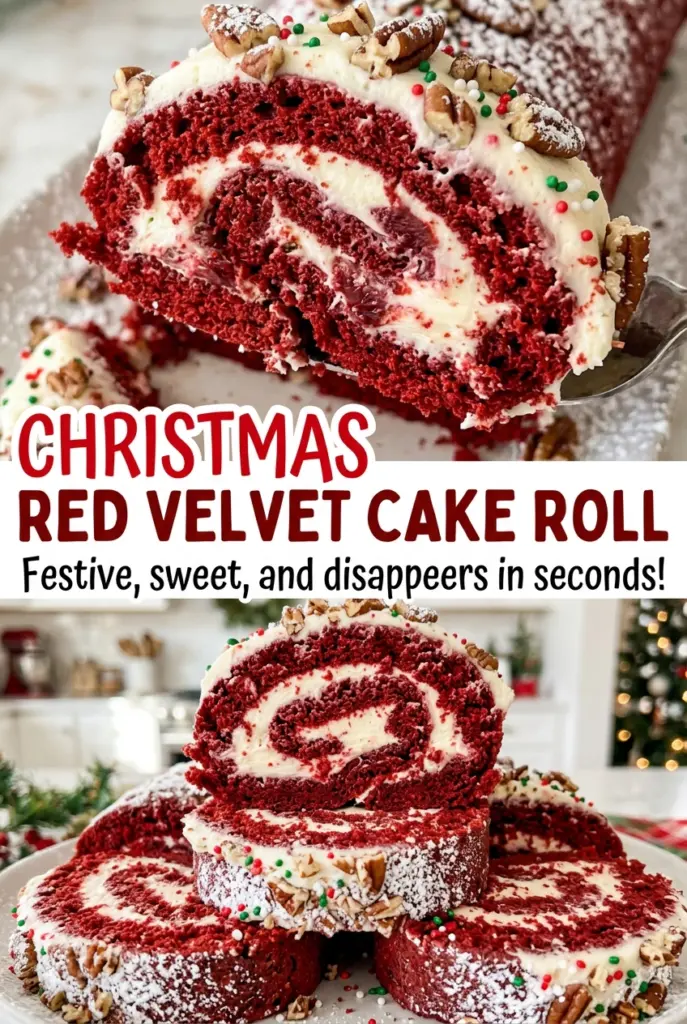
Christmas Red Velvet Cake Roll
The first cut through a cake roll tells you whether the filling is spread evenly: a neat spiral holds its shape, while a thick mound of cream cheese pushes toward…
Tip: save now, cook later.The first cut through a cake roll tells you whether the filling is spread evenly: a neat spiral holds its shape, while a thick mound of cream cheese pushes toward the edge. This Christmas Red Velvet Cake Roll keeps the cake thin and tender, with just enough cocoa to give the red crumb its familiar hint of chocolate.
I like how the cream cheese filling brings a little tang against the sweet cake, and the powdered sugar gives the finished roll a simple snowy finish. The steps are straightforward, but the cake needs a little care while it’s warm and flexible. Once it’s rolled and cooled, the filling goes on smoothly and the spiral stays tidy when you slice it.

Kitchen Note
Wait until the rolled cake is completely cool before you spread on the filling. If it’s still warm, the cream cheese mixture softens and becomes harder to spread in an even layer.
Save this Christmas Red Velvet Cake Roll for a festive dessert with a soft red crumb and a tangy cream cheese spiral.
The Eggs Have to Carry This Thin Cake, Not Just Hold It Together
A cake roll has to bend without breaking, so its structure matters more than it would in a sturdy layer cake. Here, the eggs are beaten with the granulated sugar until thick and airy, then the dry ingredients are folded in gently. That foam gives the thin cake enough lift to stay soft and flexible after baking.
If the eggs aren’t beaten long enough, the batter won’t build the same light structure. If the flour mixture is stirred in too vigorously, some of that air gets knocked out before the cake reaches the oven. The balance is to give the eggs their full beating time, then fold in the dry mixture in three additions and stop as soon as no dry streaks remain. The cake should bake through without turning firm or dry at the edges.
What Gives the Red Cake Its Velvet Texture—and What the Filling Needs

- All-purpose flour and cocoa powder — Flour gives the sponge its framework, while the small amount of cocoa adds a gentle chocolate note rather than making this taste like a dense chocolate cake. Whisk these with the baking powder and salt so the cocoa doesn’t sit in little pockets. I stick with all-purpose flour here; a major change to the flour can affect how well the thin cake bends.
- Eggs at room temperature — Room-temperature eggs beat more readily into the sugar, which helps create the airy base this cake needs. Set them out before you start mixing so they aren’t cold when they go into the bowl.
- Vegetable oil — Oil helps keep the cake tender after it cools, which is useful in a dessert that needs to roll and then slice cleanly. Its neutral taste lets the cocoa and vanilla come through without adding another flavor.
- Red food coloring — This is what gives the cake its vivid red color; the cocoa alone won’t create that look. Mix it in with the oil and vanilla until just combined, rather than stirring it into the flour mixture.
- Block cream cheese and unsalted butter — Both need to be softened before mixing so the filling can become smooth instead of lumpy. The cream cheese supplies its tang, and the butter helps the mixture spread into an even layer. I use unsalted butter so the filling’s sweetness and cream cheese flavor stay balanced.
- Powdered sugar and vanilla — Powdered sugar blends smoothly into the filling and also supplies the dusting on the outside. Vanilla rounds out both the cake and the cream cheese mixture; a standard vanilla extract works well here.
From a Light Batter to a Clean Spiral: The Moves That Matter
Build the Egg Foam
Heat the oven to 350°F, grease a 10×15-inch jelly roll pan, line it with parchment paper, and grease the parchment. Whisk the flour, cocoa powder, baking powder, and salt in a medium bowl. Beat the room-temperature eggs and granulated sugar with an electric mixer on medium-high for 5–7 minutes, until pale and thick enough to fall from the beaters in a ribbon. That ribbon cue matters more than stopping at the first sign of bubbles.
Fold Without Deflating
With the mixer on low, slowly beat in the oil, red food coloring, and vanilla just until combined. Fold the flour mixture in three additions, scraping gently so you don’t leave dry pockets at the bottom of the bowl. Stop as soon as there are no dry streaks; continuing to mix after that point works against the light texture you’ve built. Spread the batter evenly in the prepared pan so it bakes at a consistent thickness.
Roll the Cake While It’s Flexible
Bake for 12–15 minutes, until the cake springs back when lightly touched and a toothpick inserted in the center comes out clean. While it bakes, sprinkle about 2 tablespoons of powdered sugar over a clean, lint-free kitchen towel. As soon as the cake comes out, loosen the edges with a knife, invert it onto the towel, and peel away the parchment. Roll it with the towel from a short end, then set it seam-side down to cool completely, about 1 hour.
Fill, Wrap, and Chill
Beat the softened cream cheese and butter with an electric mixer until smooth, about 1–2 minutes, then beat in the powdered sugar and vanilla until creamy. Carefully unroll the cooled cake and remove the towel; spread the filling evenly, leaving a 1/2-inch border. Roll it again from the same short end, wrap it tightly in plastic wrap, and chill seam-side down for at least 1 hour. Unwrap the roll, dust it with the remaining powdered sugar, and slice to serve.
Two Ways to Change the Look of This Red Velvet Roll
A cocoa-colored roll without the red coloring
Leave out the red food coloring and keep the rest of the ingredients and method the same. The result will be cocoa-brown rather than red, with the same cream cheese filling and rolled format.
A redder, less cocoa-forward cake
Leave out the cocoa powder for a cake with a brighter red color and a milder chocolate note. Keep a close eye on the visual doneness cues; the cake should spring back when lightly touched and a toothpick inserted in the center should come out clean.
Storage and Reheating
- Refrigerator: Keep the wrapped cake refrigerated for 3–4 days. The cake may firm up as it chills, so let each slice sit briefly before serving if you prefer a softer texture.
- Freezer: The filled roll freezes well. Wrap it tightly in plastic wrap, freeze for up to 1 month, and thaw it in the refrigerator before serving.
- Reheating: Don’t reheat this cake; the cream cheese filling is meant to stay chilled. Serve it cold or let a slice sit briefly at room temperature, and dust with powdered sugar just before serving if the finish has softened.
Questions That Come Up When Rolling This Cake
Christmas Red Velvet Cake Roll
Ingredients
Equipment
Method
- Heat the oven to 350°F.
- Grease a 10x15-inch jelly roll pan.
- Line the pan with parchment paper and grease the parchment.
- Sprinkle about 2 tablespoons of the powdered sugar over a clean, lint-free kitchen towel.
- Whisk the flour, cocoa powder, baking powder, and salt together in a medium bowl.
- Beat the eggs and granulated sugar with an electric mixer on medium-high until pale, thick, and able to fall from the beaters in a ribbon, 5–7 minutes.
- With the mixer on low, slowly beat in the oil, red food coloring, and vanilla just until combined.
- Fold in the flour mixture in 3 additions until no dry streaks remain.
- Spread the batter evenly in the pan.
- Bake for 12–15 minutes, until the cake springs back when lightly touched and a toothpick inserted in the center comes out clean.
- Immediately loosen the cake edges with a knife.
- Invert the cake onto the sugared towel.
- Peel off the parchment.
- Roll the cake and towel together from a short end.
- Set the rolled cake seam-side down.
- Let it cool completely, about 1 hour.
- Beat the cream cheese and butter with an electric mixer until smooth, about 1–2 minutes.
- Beat in the powdered sugar and vanilla until creamy.
- Carefully unroll the cooled cake.
- Remove the towel.
- Spread the filling evenly over the cake, leaving a 1/2-inch border.
- Roll it up again from the same short end.
- Wrap the cake tightly in plastic wrap.
- Chill seam-side down for at least 1 hour.
- Unwrap the cake.
- Dust with the remaining powdered sugar.
- Slice to serve.
