
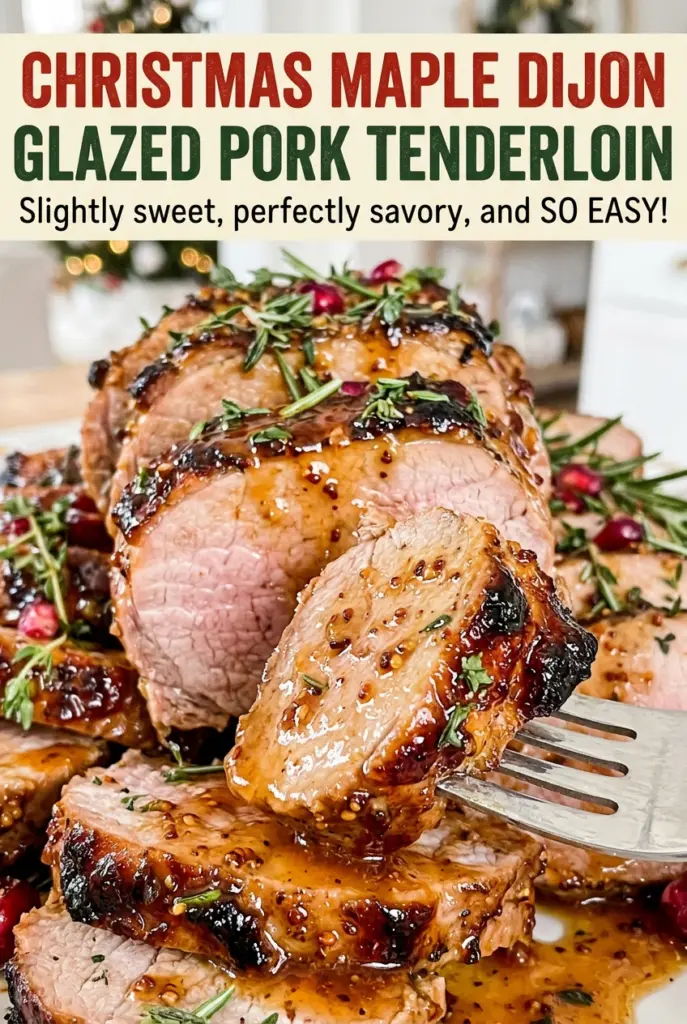
Christmas Maple Dijon Glazed Pork Tenderloin
The skillet gives a sharp hiss as the pork hits the oil, and the rosemary starts to smell warm and piney before the maple ever touches the pan. I brown…
Tip: save now, cook later.The skillet gives a sharp hiss as the pork hits the oil, and the rosemary starts to smell warm and piney before the maple ever touches the pan. I brown the tenderloins first, then let the oven bring them gently to temperature; that gives the outside color without leaving the center to dry out while the glaze cooks.
For Christmas Maple Dijon Glazed Pork Tenderloin, the glaze gets its shine from pure maple syrup, but Dijon and apple cider vinegar keep it from tasting like straight syrup. Brushing it on near the end of roasting lets it cling to the browned pork instead of spending the whole time in a hot oven. Slice the rested tenderloins and spoon the clean, reserved glaze over the top for a bright finish.
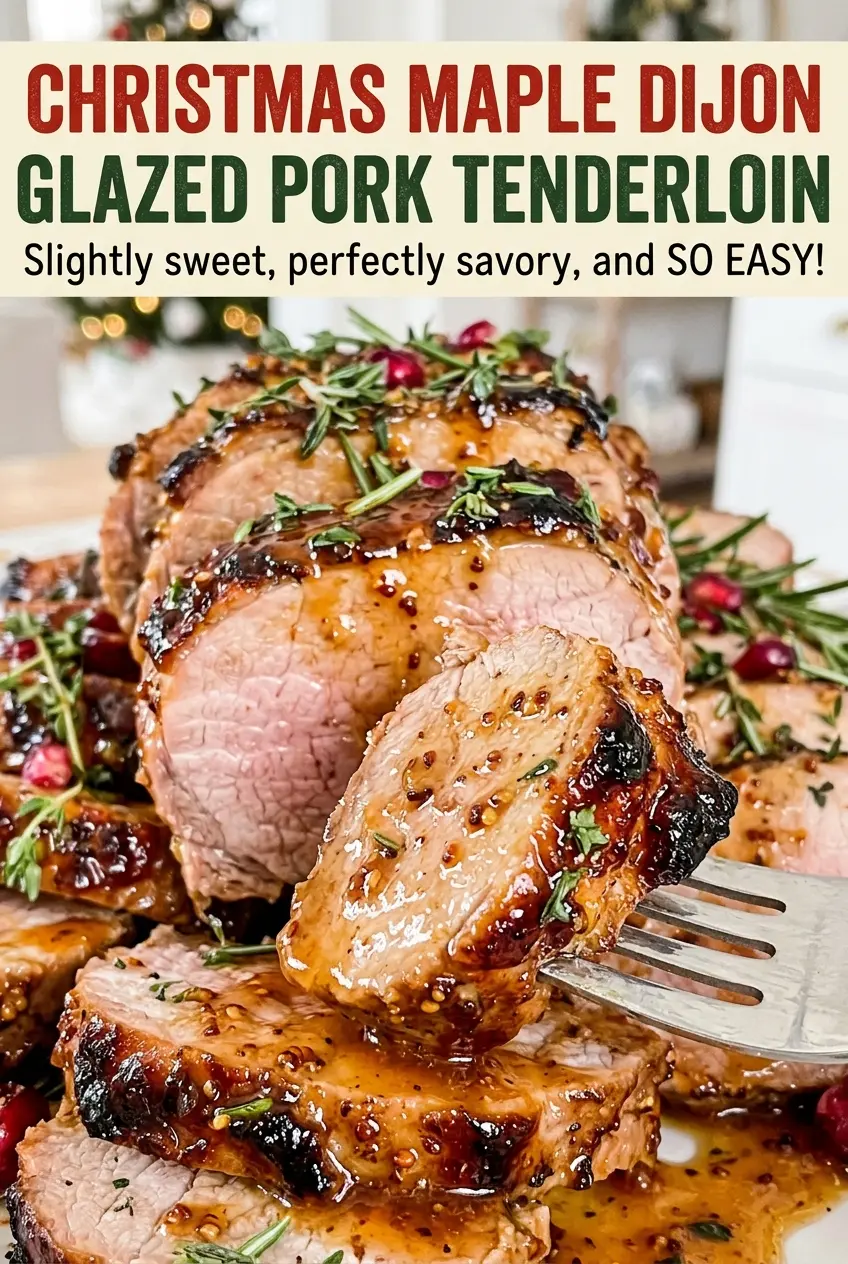
Kitchen Note
Give the tenderloins room in the skillet so you can turn them without scraping them against each other. If the pan feels crowded, work patiently when browning; even contact with the hot surface is what gives the pork color.
Save this Christmas Maple Dijon Glazed Pork Tenderloin for a centerpiece with browned edges, a tangy maple glaze, and extra sauce ready for serving.
Why the Maple Glaze Goes on After the First Roast
Maple syrup brings lovely gloss, but its natural sugars brown quickly under strong heat. If the glaze went on at the start, it would sit in the oven while the pork cooked through and could darken too much before the center was ready. Giving the tenderloins their first stretch of roasting without glaze lets the meat cook on its own, then gives the sweet coating just enough oven time to cling and turn shiny.
Dijon and cider vinegar do more than add sharpness. Mustard gives the glaze body, while vinegar cuts the maple’s sweetness so each slice tastes savory as well as sweet. That balance matters even more when the pork is sliced, because every piece gets some browned surface and a little glaze. The reserved portion adds a fresh, tangy note at the table rather than another layer that has cooked down.
There’s also a useful difference between browning and roasting here. The skillet builds color quickly on the outside; the oven takes over for the center. Keeping those jobs separate helps the tenderloins stay tender while still giving the maple glaze a chance to lacquer the surface at the end.
Why Dijon and Vinegar Keep the Maple Glaze in Balance

- Pork tenderloin — Tenderloin is lean and cooks faster than a pork loin roast, so keep to this cut for the timing to make sense. The silver skin should be removed; it stays tough rather than softening as the pork cooks.
- Pure maple syrup — Pure syrup brings a clean maple taste and a thin texture that blends into the glaze. Pancake syrup is not a close swap: its added thickeners and flavorings can make the coating taste different and behave differently in the oven.
- Dijon mustard — Smooth Dijon gives the glaze a sharp, even mustard flavor. Whole-grain mustard can replace it one-for-one if that is what you have, though the finished glaze will have visible seeds and a less smooth texture.
- Apple cider vinegar — Its gentle fruitiness fits the maple and pork without making the glaze taste harsh. White wine vinegar can stand in one-for-one, with a slightly cleaner, less apple-like tang.
- Fresh rosemary — Fresh leaves give the glaze a woodsy aroma that comes through against the sweet syrup. If you only have dried rosemary, crumble a smaller pinch finely before stirring it in; dried leaves are more concentrated and can feel coarse if left whole.
- Neutral oil — Use an oil with a mild taste so the pork can brown without an olive-oil note competing with the glaze. Canola or vegetable oil both work as neutral alternatives.
- Garlic, kosher salt, and black pepper — Fresh minced garlic gives the simmered glaze a savory edge, while salt and pepper season the pork itself. Grind the pepper fresh if convenient, but there’s no need for an expensive specialty salt here.
The Sear, Simmer, and Roast That Build the Glaze
Dry the Pork and Brown Every Side
Heat the oven to 400°F, then pat the tenderloins dry and season them all over with kosher salt and black pepper. Moisture on the surface slows browning, so take a moment to dry the meat well before it meets the skillet. Heat the neutral oil in a 12-inch oven-safe skillet over medium-high heat, then sear, turning the tenderloins to brown all sides for 6–8 minutes total. Look for golden-brown patches, not a dark crust; if the pork sticks, give that side a little more time before turning.
Simmer the Maple-Dijon Glaze
While the pork sears, combine the maple syrup, Dijon mustard, apple cider vinegar, minced garlic, and finely chopped rosemary in a small saucepan. Simmer over medium heat for 2–3 minutes, stirring so the syrup doesn’t settle and catch at the bottom. The mixture should look glossy and slightly more unified, but it should still be easy to brush. Set aside 2 tablespoons for serving before the rest goes anywhere near the pork.
Roast, Glaze, and Rest
Move the skillet to the oven and roast the pork for 10–18 minutes, checking after 10 minutes. When the thickest part reaches 135°F, brush the tenderloins with all the glaze except the reserved portion, then return them to the oven for 3–6 minutes more, until the thickest part reaches 145°F. Let the pork rest for 3 minutes before slicing; the brief rest keeps the juices from running straight onto the cutting board. Serve with the reserved glaze.
Simple Ways to Adapt This Pork Tenderloin
A gluten-free Dijon version
Use gluten-free Dijon mustard in place of the regular Dijon. The glaze keeps its mustard tang and smooth texture, so the change is subtle; choose a product labeled gluten-free rather than assuming every mustard is made the same way.
A rosemary-free, mustard-forward glaze
Leave out the rosemary if you prefer a less woodsy taste. Maple, Dijon, vinegar, and garlic still make a balanced coating, with the mustard coming through more clearly and no change to the searing or roasting method.
Storage and Reheating
- Refrigerator: Refrigerate the sliced pork and reserved glaze in covered containers within 2 hours; they keep for 3–4 days. The lean meat firms up as it chills.
- Freezer: Freeze the sliced pork airtight, with the glaze stored separately, for up to 2–3 months for best quality. Thaw overnight in the refrigerator.
- Reheating: Reheat covered slices gently in the microwave in short bursts, or warm them covered in a low oven, until they reach 165°F. Uncovered, prolonged reheating dries lean tenderloin quickly.
Questions That Come Up When Cooking Pork Tenderloin
Christmas Maple Dijon Glazed Pork Tenderloin
Ingredients
Equipment
Method
- Heat the oven to 400°F.
- Pat the pork tenderloins dry and season them all over with the salt and pepper.
- Heat the oil in a 12-inch oven-safe skillet over medium-high heat.
- Sear the tenderloins, turning to brown all sides, for 6-8 minutes total.
- While the pork sears, combine the maple syrup, Dijon mustard, vinegar, garlic, and rosemary in a small saucepan.
- Simmer over medium heat for 2-3 minutes, stirring, then set aside 2 tablespoons for serving.
- Roast the pork in the skillet for 10-18 minutes, checking after 10 minutes.
- When the thickest part reaches 135°F, brush the tenderloins with all the glaze except the reserved 2 tablespoons.
- Roast for 3-6 minutes more, until the thickest part reaches 145°F.
- Rest the pork for 3 minutes, then slice and serve with the reserved glaze.
