

Christmas Honey Mustard Glazed Turkey Breast
As the turkey breast reaches its final stretch in the oven, the honey in the glaze turns glossy and the skin takes on a deep, burnished color. That timing matters:…
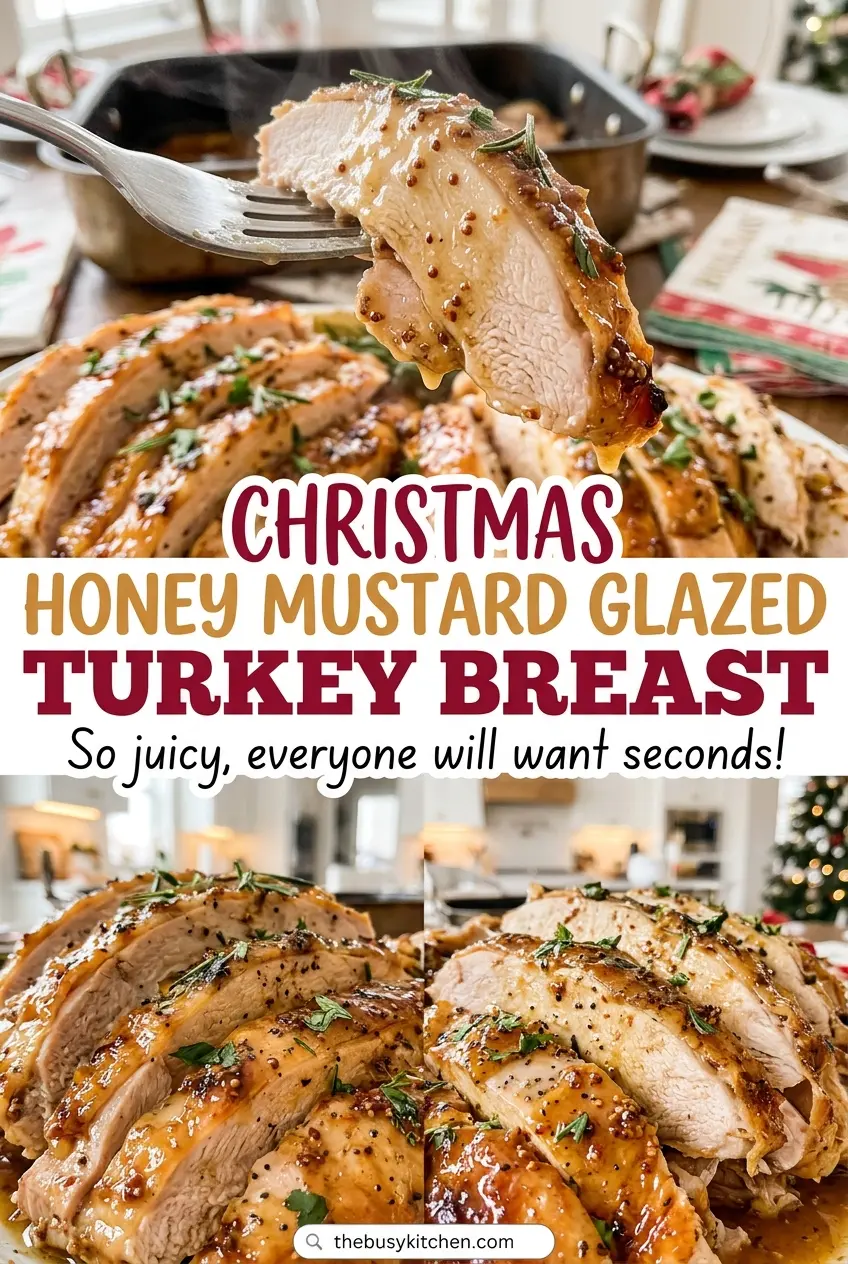
Tip: save now, cook later.As the turkey breast reaches its final stretch in the oven, the honey in the glaze turns glossy and the skin takes on a deep, burnished color. That timing matters: brush honey on too early, and it can darken before the meat is ready. This Christmas Honey Mustard Glazed Turkey Breast gets its glaze only after the first part of roasting, so the turkey has time to cook before the sweet coating goes on.
I roast the breast uncovered on a rack, then brush on the warm glaze in layers while it finishes. The Dijon keeps the honey from tasting flat, and a little apple cider vinegar brings the flavors into balance. Use a thermometer to guide the timing rather than relying on the clock alone; the result is juicy turkey with crisp-edged skin and a shiny honey mustard coating.
Kitchen Note
When you check the breast with a thermometer, place the tip in the thickest part and keep it clear of the bone. A bone reading can give you a misleading number, so take a moment to position the probe carefully.
Save this Christmas honey mustard glazed turkey breast for a glossy, browned centerpiece with a bright Dijon finish.
Why the Honey Mustard Goes On After the First Roast
Honey brings the color and shine, but its sugars brown faster than the center of a thick turkey breast cooks. If the glaze goes on from the beginning, it spends the entire roast in the oven and can get too dark while the meat is still working toward its final temperature. Waiting until the breast has reached the first roasting milestone gives the turkey a head start and limits the glaze’s time in the heat.
The mustard and vinegar help keep the coating balanced, but they don’t prevent honey from browning. Brushing in several layers during the final stretch builds a glossy surface without asking one thick coating to sit in the oven for hours. Watch for both cues at the end: the turkey needs to reach its finished temperature, and the glaze should look glossy and browned. The clock is a useful estimate, not a substitute for either cue.
What the Skin, Butter, and Dijon Each Bring to This Turkey
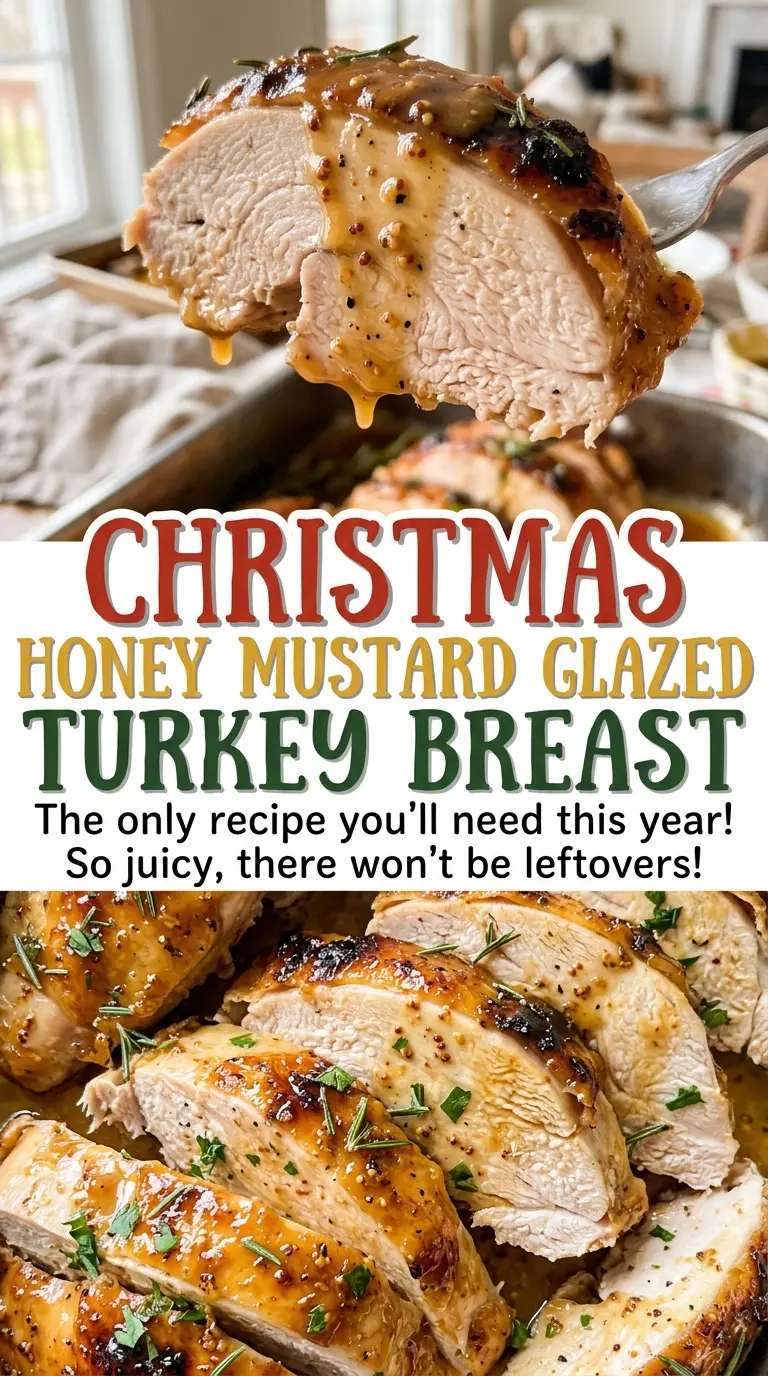
- Bone-in, skin-on turkey breast — The bone helps the breast roast as one substantial piece, while the skin gives the glaze a surface to coat and brown. Buy it fully thawed, as a partly frozen center makes the cooking time harder to judge.
- Olive oil — A light coating helps the salt and pepper cling to the skin. A standard olive oil works well here; there’s no need to use a specialty finishing oil.
- Unsalted butter — Butter gives the glaze a smooth, rich base. Unsalted butter lets the seasoning stay controlled, and an ordinary grocery-store stick is all you need.
- Honey — Honey provides the sweetness and the browning that make the finished skin glossy. A familiar, mild honey is a good choice; a strongly flavored variety will be more noticeable in the glaze.
- Dijon mustard — Smooth Dijon brings a sharp, savory note that keeps the honey from dominating. A standard smooth Dijon works; its tang matters more here than choosing an expensive jar.
- Apple cider vinegar — The acidity cuts through the butter and honey. Use the familiar pantry variety, rather than reaching for a flavored vinegar that would steer the glaze in a different direction.
- Dried rosemary — Crushing it before it goes into the saucepan releases its aroma and breaks up larger needles. The dried herb is useful here because it disperses through the glaze without needing a separate preparation.
Four Stages for Tender Turkey and a Glossy Glaze
Drying and Seasoning the Breast
Heat the oven to 350°F and set a rack inside a roasting pan. Pat the turkey dry, then place it skin-side up on the rack. Rub it with olive oil and season the surface evenly with kosher salt and black pepper; a dry surface helps the skin roast rather than sit damp beneath its seasoning.
Letting the First Roast Set the Pace
Roast the turkey uncovered until the thickest part reaches 145°F, which usually takes about 1 1/2 to 2 hours. The skin will look roasted, but it won’t yet have the honey glaze’s finished sheen. Start checking the temperature as the estimated window approaches, since the shape of the breast and individual ovens affect the timing.
Stirring Together the Glaze
While the turkey roasts, melt the butter in a small saucepan over medium-low heat. Stir in the honey, Dijon mustard, apple cider vinegar, and crushed rosemary until the mixture looks smooth. Keep the heat moderate; the goal is a blended, fluid glaze, not a bubbling reduction.
Layering the Glaze and Resting
Brush the turkey with glaze and return it to the oven. Brush on more every 10 minutes as it finishes cooking, until the thickest part reaches 165°F and the glaze is glossy and browned; this final stretch takes about 20 to 30 minutes. Move the breast to a cutting board, loosely tent it with foil, and let it rest for 20 minutes before carving. A loose tent gives the meat a chance to rest without pressing foil against the glazed skin.
Two Ways to Adjust the Honey-Mustard Turkey Without Reworking the Roast
A cleaner, mustard-forward finish
Leave the dried rosemary out of the glaze and keep the other ingredients the same. The coating will still be buttery, sweet, and tangy, with less herbal aroma competing with the Dijon.
A lower-sodium version
Omit the kosher salt and keep the black pepper and glaze. The turkey will taste less seasoned on its own, while the mustard and vinegar still bring plenty of character to each slice.
Storage and Reheating
- Refrigerator: Refrigerate carved turkey within 2 hours and use it within 3 to 4 days. The skin softens once chilled, though the meat stays tender.
- Freezer: Freeze carved portions in an airtight container for up to 3 months for best quality. The meat freezes well, but the skin won’t be crisp after thawing.
- Reheating: Warm slices covered in the microwave in short bursts, just until hot throughout. Long heating dries turkey breast quickly, so stop once it’s warmed through.
Questions That Come Up Before This Turkey Goes in the Oven
Christmas Honey Mustard Glazed Turkey Breast
Ingredients
Equipment
Method
- Preheat the oven to 350°F.
- Set a rack in a roasting pan.
- Pat the turkey dry and place it skin-side up on the rack.
- Rub the turkey with the olive oil.
- Season the turkey evenly with the salt and pepper.
- Roast uncovered until the thickest part of the breast reaches 145°F, about 1 1/2 to 2 hours; avoid touching the bone with the thermometer.
- While the turkey roasts, melt the butter in a small saucepan over medium-low heat.
- Stir in the honey, Dijon mustard, vinegar, and rosemary until smooth.
- Brush the turkey with the glaze and return it to the oven.
- Brush with more glaze every 10 minutes until the thickest part reaches 165°F and the glaze is glossy and browned, about 20 to 30 minutes.
- Transfer the turkey to a cutting board, loosely tent with foil, and rest for 20 minutes before carving.
