
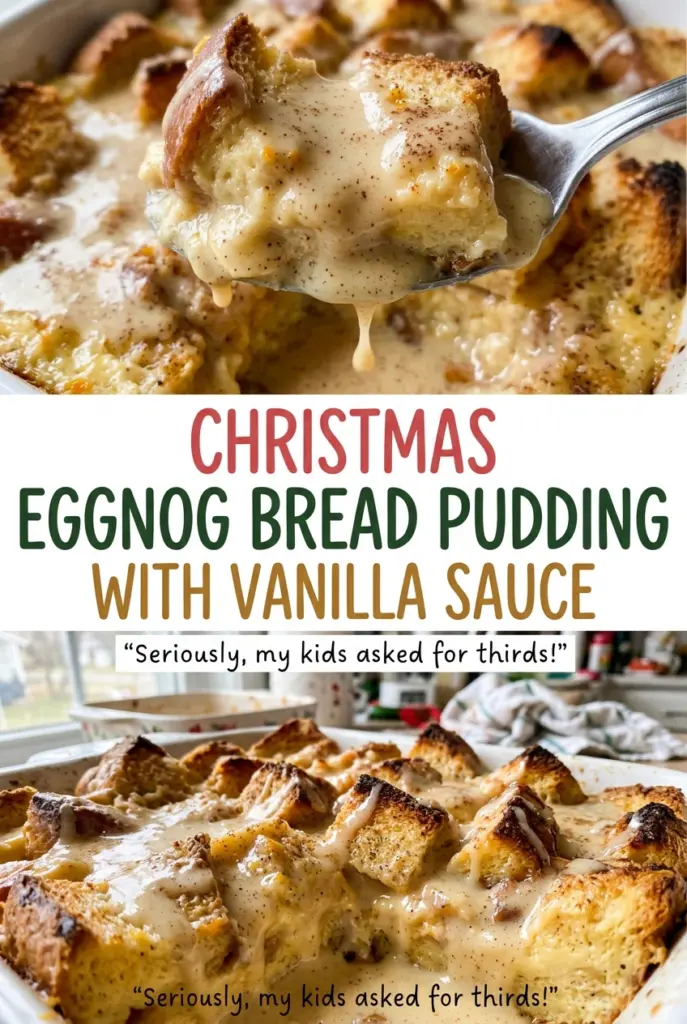
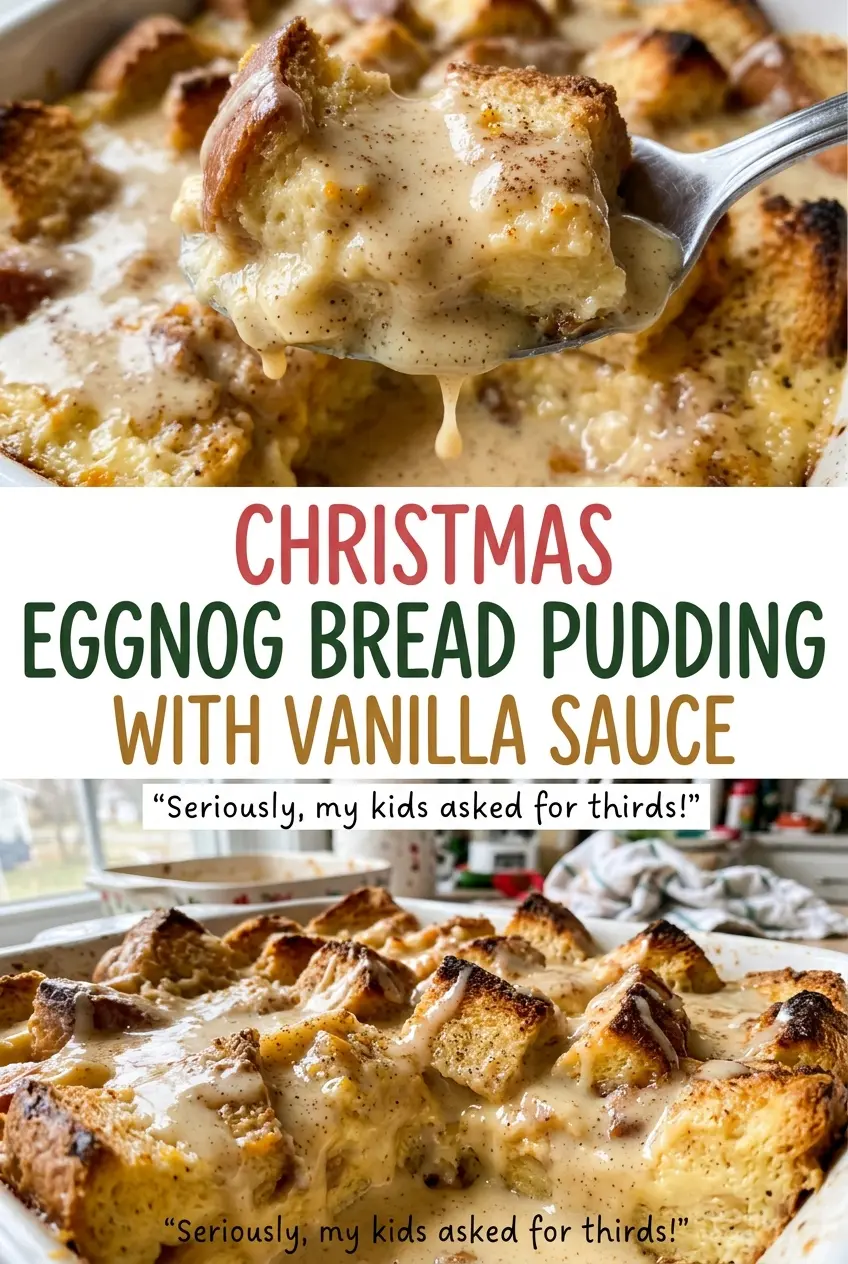
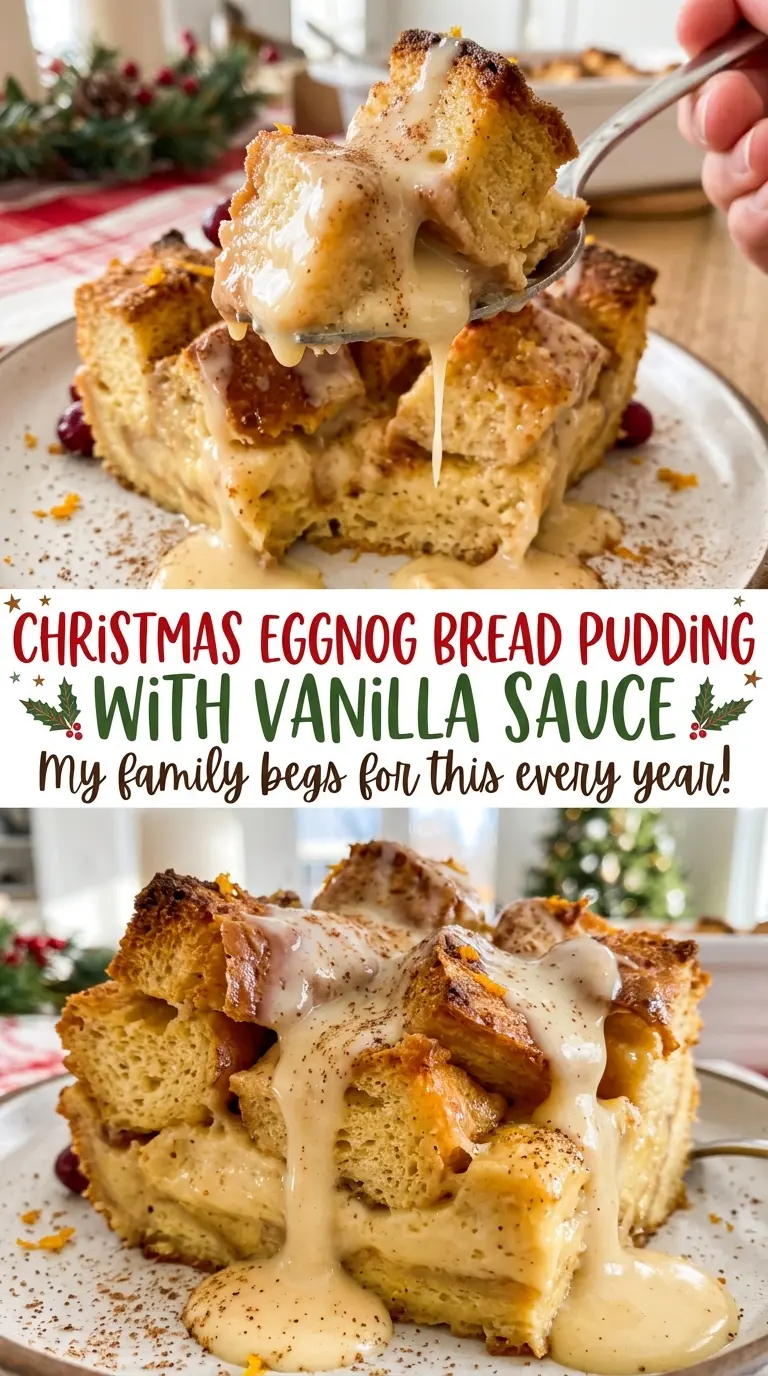
Christmas Eggnog Bread Pudding with Vanilla Sauce
The bread cubes look almost too dry after their short turn in the oven, but that’s exactly when they’re ready for the eggnog. If they go into the custard soft…
Tip: save now, cook later.The bread cubes look almost too dry after their short turn in the oven, but that’s exactly when they’re ready for the eggnog. If they go into the custard soft and fresh, the pudding can turn heavy before the middle has a chance to set. Drying them first gives this Christmas eggnog bread pudding with vanilla sauce a tender, custardy center without losing the shape of the bread.
I use brioche or challah, cut into cubes, and let the eggnog mixture soak in before the baking dish goes into the oven. The cinnamon and nutmeg stay in the background, warming the eggnog rather than taking it over. A little rest after baking helps the center settle, and the lightly thickened vanilla sauce is lovely spooned over each warm portion.
Kitchen Note
Whisk the cornstarch into the cream until the mixture looks smooth before you turn on the burner. Starting without dry pockets keeps the vanilla sauce silky instead of dotted with little starch lumps.
Save this Christmas eggnog bread pudding with vanilla sauce for its custardy center and warm cinnamon-nutmeg finish.
Why Dry Bread Makes a More Tender Eggnog Custard
Bread pudding needs bread that can take in custard without collapsing. Fresh brioche or challah still holds plenty of moisture, so the eggnog has less room to soak in. Drying the cubes first changes their texture: they’re ready to absorb the egg-and-eggnog mixture, then soften in the oven while still keeping some shape.
The bread shouldn’t be toasted brown for this. Browning adds a firmer, drier outer layer, which can leave you with cubes that feel tough against the soft custard. The goal is dry bread, not crunchy toast. That difference is especially useful in a rich pudding like this one, where the eggnog and eggs make a generous custard.
Giving the soaked bread a short pause before baking helps the mixture reach through the cubes instead of pooling only around them. Press the bread gently into the liquid so the top pieces make contact, then let the dish sit before it goes into the oven. You’re looking for the bread to feel saturated, not crushed into a solid mass.
What the Eggnog, Bread, and Cream Each Bring
- Brioche or challah — Either bread makes a rich, tender base that can soak up the eggnog custard. Brioche gives a softer, buttery crumb; challah tends to keep a little more structure. Use day-old bread, and cut the cubes evenly so they dry and soak at about the same pace.
- Eggnog and eggs — Eggnog supplies the creamy, spiced base, while the eggs help the pudding set into a sliceable custard. Because eggnog varies by brand, a classic version gives the most predictable balance with the measured sugar and spices. The eggs should be whisked in thoroughly so the custard is even, with no streaks of egg white.
- Cinnamon and nutmeg — These spices deepen the holiday character without needing a separate spice blend. Ground spices are fine here; fresh grinding isn’t necessary for a custard that bakes with eggnog. Whisk them into the liquid so they disperse instead of clinging to a few bread cubes.
- Heavy cream and cornstarch — Together, these form the body of the vanilla sauce. Heavy cream gives it a richer finish than milk, and cornstarch thickens it lightly without making it a heavy pudding. Confectioners’ sugar blends smoothly into the cream, while unsalted butter and vanilla finish the sauce after it comes off the heat.
Drying, Soaking, and Baking the Custard
Dry the Cubes Without Toasting Them
Heat the oven to 300°F and spread the 1-inch bread cubes across a baking sheet. Bake them for 15–20 minutes, checking near the end for a dry surface and a pale color. They should feel dry rather than soft, but they shouldn’t be browned or crisp all the way through. This stage removes moisture; it isn’t meant to turn the bread into croutons.
Mix the Eggnog Custard and Let It Soak In
Raise the oven temperature to 350°F and brush a 9×13-inch baking dish with the neutral oil. In a large bowl, whisk the eggnog, eggs, granulated sugar, cinnamon, nutmeg, and kosher salt until combined. Add the dried cubes to the dish, pour the custard evenly over them, and gently press the bread down so it meets the liquid. Let it soak for 15 minutes before baking.
Bake Until the Center Sets, Then Rest
Bake the dish uncovered for 45–55 minutes. The edges should turn golden, while the center should be set rather than liquid; check that the middle reaches 160°F. If the edges look ready before the center, use the center temperature as your guide instead of pulling the pudding early. Let it rest for 15 minutes before serving so the custard can settle.
Thicken the Vanilla Sauce Gently
Whisk the heavy cream, confectioners’ sugar, cornstarch, and kosher salt together in a small saucepan. Set it over medium heat and whisk constantly as it comes to a simmer, about 3–5 minutes, until it thickens lightly. Take the pan off the heat, whisk in the butter until melted, then stir in the vanilla extract. Spoon the warm sauce over portions of bread pudding.
Two Bread Choices and a Less-Sweet Finish
Choose brioche for a softer pudding
Brioche gives the baked custard a particularly tender, buttery feel. The cubes soften readily as they absorb the eggnog, so this is the choice when you want the pudding to lean plush rather than hold a distinct, chewy bread texture.
Choose challah for more defined cubes
Challah is the other bread option and gives the finished pudding a slightly more structured bite. It still absorbs the custard well after drying, but the pieces keep their shape more clearly when you spoon out portions.
Leave off the sauce for a less-sweet version
The bread pudding has sweetness from both the eggnog and granulated sugar, so you can serve it without the vanilla sauce if you prefer a plainer finish. You’ll lose the creamy vanilla contrast, but the spiced eggnog custard still carries the dish.
Storage and Reheating
- Refrigerator: Refrigerate leftovers promptly in a covered container and use within 3–4 days. The custard firms and the bread softens as it chills.
- Freezer: Freeze portions of the pudding without sauce in an airtight container for up to 2 months. The texture may be softer after thawing; freeze the sauce separately only if you’re comfortable with a possible change in texture.
- Reheating: Warm individual portions in the microwave in short bursts until heated through, then add warm sauce. Long heating can dry the bread and make the custard firm.
Questions That Come Up Before the First Slice
Christmas Eggnog Bread Pudding with Vanilla Sauce
Ingredients
Equipment
Method
- Heat the oven to 300°F.
- Spread the bread cubes on a baking sheet and bake for 15–20 minutes, until dry but not browned.
- Increase the oven temperature to 350°F.
- Brush a 9x13-inch baking dish with the neutral oil.
- Whisk the eggnog, eggs, granulated sugar, ground cinnamon, ground nutmeg, and kosher salt in a large bowl until combined.
- Add the dried bread cubes to the baking dish.
- Pour the eggnog mixture evenly over the bread cubes.
- Press the bread gently into the custard and let it soak for 15 minutes.
- Bake uncovered for 45–55 minutes, until the edges are golden and the center reaches 160°F.
- Let the pudding rest for 15 minutes before serving.
- Whisk the heavy cream, confectioners' sugar, cornstarch, and kosher salt together in a small saucepan until smooth.
- Cook over medium heat, whisking constantly, until the sauce simmers and thickens lightly, about 3–5 minutes.
- Remove the sauce from the heat and whisk in the unsalted butter until melted.
- Stir in the vanilla extract.
- Spoon the warm vanilla sauce over portions of the bread pudding.
