
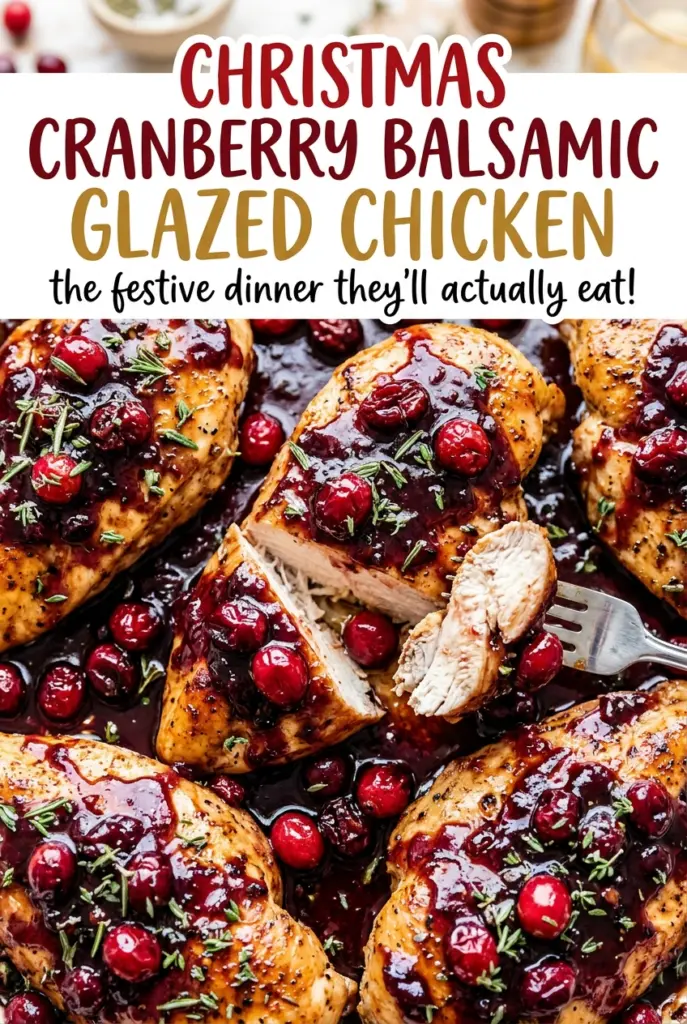
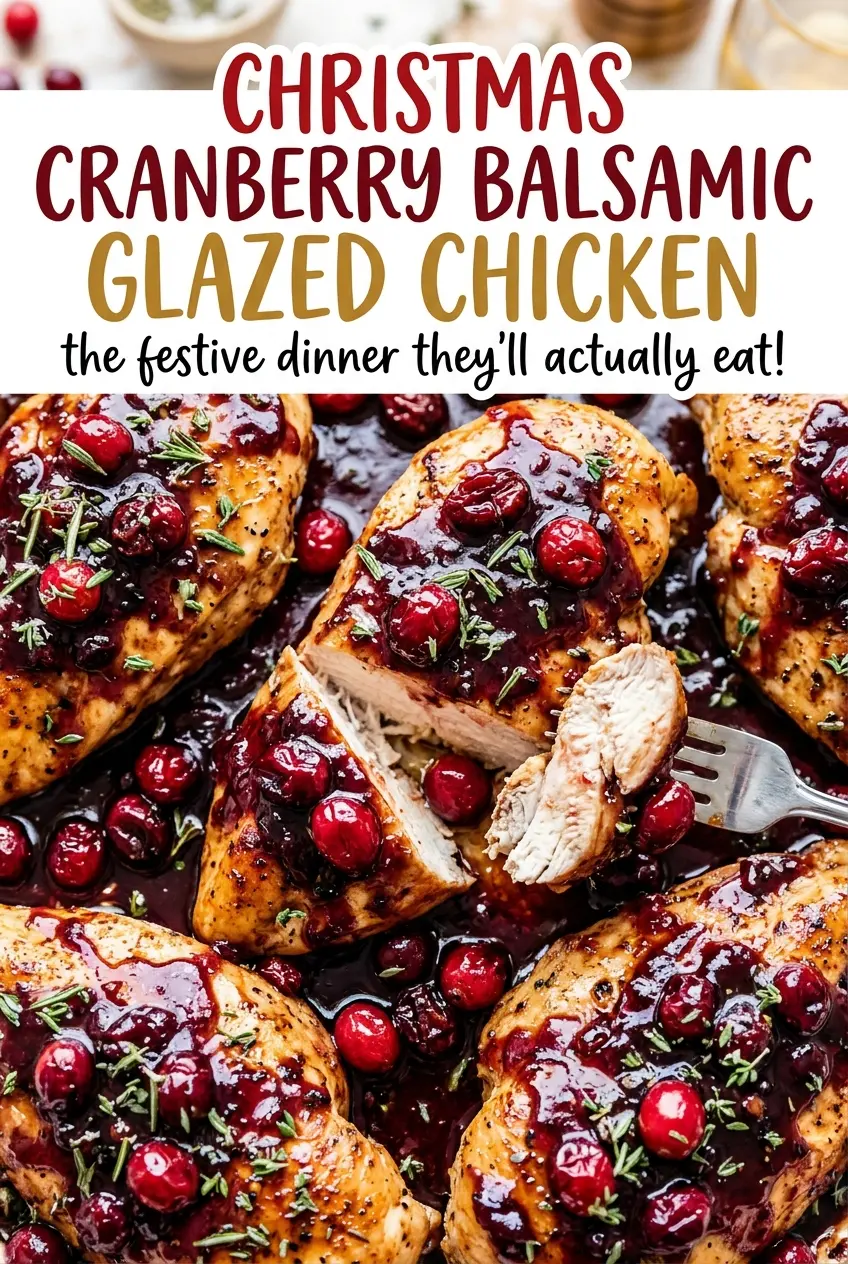
Christmas Cranberry Balsamic Glazed Chicken
The first cranberries pop against the side of the saucepan, and the balsamic turns from sharp and vinegary to dark, sweet-tart glaze. I let the berries simmer until they burst…
Tip: save now, cook later.The first cranberries pop against the side of the saucepan, and the balsamic turns from sharp and vinegary to dark, sweet-tart glaze. I let the berries simmer until they burst and the sauce clings to a spoon; that gives these Christmas cranberry balsamic glazed chicken thighs a bright, glossy finish without a long list of ingredients.
The chicken roasts skin side up on a foil-lined baking sheet, so there’s no pan sauce to babysit while it cooks. I wait until the thighs have had their first 30 minutes in the oven before brushing on the glaze. The skin gets time to brown, and the honey-sweetened sauce has just enough time to cling before the chicken is done. Each bite brings crisp-edged skin, tender chicken, and tart cranberry glaze.
Kitchen Note
Set the serving glaze aside before you brush any onto the chicken. Keeping that portion untouched means you’ll have a clean, glossy sauce to spoon over the finished thighs.
Save this Christmas cranberry balsamic glazed chicken for a dinner with crisp-skinned thighs and a tangy cranberry finish.
Why This Cranberry Glaze Goes on After the Chicken Has Roasted
Honey helps the glaze thicken and gives it its rounded sweetness, but it also means the sauce can darken faster than the chicken needs to cook. Brush it on too early and it spends the whole roast in the hot oven, where the sugars can get overly dark before the thighs are tender. Waiting until the first 30 minutes are up gives the skin time to roast without a coating over it.
That timing also keeps the cranberry flavor lively. The glaze gets a shorter turn in the oven, just long enough to warm through and settle onto the chicken rather than reducing into a sticky layer on the pan. If a little glaze runs onto the foil, that’s normal; the chicken is still getting a generous coating on top. You’ll finish with a clear contrast between browned skin and the glossy, tart-sweet sauce.
What Cranberries, Balsamic, and Dijon Each Bring to the Glaze

- Cranberries — Fresh or frozen both work here, and either will burst as the glaze simmers. The berries bring the tartness and body; lightly mashing some gives the sauce a thicker, more spoonable texture while leaving a few whole adds little pockets of fruit.
- Balsamic vinegar and honey — Balsamic brings acidity and depth, while honey rounds out the cranberries’ sharp edge and helps the sauce coat the back of a spoon. Use the balsamic you keep for cooking; there’s no need to reach for an aged finishing vinegar. The listed honey is the sweetener for this balance, so a different sweetener would change the glaze.
- Dijon mustard — Dijon adds a gentle tang that keeps the glaze from tasting one-note sweet. Its flavor is subtle after simmering, so use Dijon rather than a coarse mustard if you want the sauce to stay smooth.
- Low-sodium chicken broth — Broth gives the cranberries liquid to simmer in and adds savory depth. Low-sodium broth is useful here because the chicken is seasoned separately; a regular salted broth could make the finished glaze taste saltier.
- Fresh rosemary and garlic — Rosemary gives the sauce a woodsy note that fits the tart fruit, and fresh garlic softens as it simmers. Chop the rosemary finely so it disperses instead of leaving large, tough pieces in each spoonful.
- Bone-in, skin-on chicken thighs — The bone-in thighs suit the roasting time, and the skin browns while the meat stays juicy. Patting the skin dry before adding the oil helps it roast rather than steam. This particular timing is built around thighs with the bone and skin still on.
How to Roast the Thighs Before the Glaze Goes On
Simmer the Cranberry Mixture Until It Coats a Spoon
Put the cranberries, balsamic vinegar, chicken broth, honey, Dijon, minced garlic, and chopped rosemary in a 2-quart saucepan over medium heat. Bring the mixture to a simmer, then leave it uncovered for 10 to 15 minutes, stirring occasionally. You’re looking for berries that have burst and a sauce thick enough to coat the back of a spoon, not a thin liquid that runs right off. Lightly mash some of the berries, then take the pan off the heat and reserve one-third cup for serving.
Give the Skin Its First Roast
Heat the oven to 400°F and line a rimmed baking sheet with foil. Pat the chicken thighs dry, rub them with olive oil, and season them with kosher salt and black pepper. Arrange them skin side up with space around each thigh, then roast for 30 minutes before adding glaze. Dry skin and an uncovered first roast give the surface a chance to brown instead of sitting under a wet layer.
Brush on the Glaze for the Final Roast
After the first roast, brush the thighs generously with the glaze, keeping the reserved serving portion separate. Return the baking sheet to the oven for 8 to 15 minutes. Check the thickest part of each thigh without touching the bone; the chicken is ready when it reaches 165°F. Thighs can vary a little in size, so use the temperature and don’t rely on color alone.
Rest Before Serving
Take the chicken out of the oven and let it rest for 5 minutes before serving. That brief pause lets the juices settle, so they don’t immediately run out when you cut into a thigh. Spoon the untouched reserved glaze over the chicken or serve it alongside. The browned skin and bright cranberry sauce are at their best together.
Two Small Changes for a Different Cranberry Finish
Start with frozen cranberries
Frozen cranberries are already an option for this glaze, and they save you from sorting fresh berries. Simmer until they’ve burst and the sauce coats a spoon; use the texture cue rather than expecting the berries to look exactly like fresh ones as they cook.
Make the sauce smoother or chunkier
For a smoother, more even glaze, mash more of the softened cranberries with a spoon. Leave more berries whole for a fruitier, chunkier spoonful. Both approaches use the same glaze ingredients; it’s just a matter of how much fruit you break down.
Storage and Reheating
- Refrigerator: Store cooked chicken in an airtight container for 3 to 4 days. Keep any reserved glaze in a separate covered container; the skin will soften as the chicken chills.
- Freezer: Freeze the cooked chicken tightly wrapped for up to 3 months for best quality. Freeze the glaze separately so it’s easy to thaw only what you need.
- Reheating: Warm the chicken covered in a 325°F oven until hot throughout, adding the reserved glaze after reheating. The skin won’t be as crisp as freshly roasted, and uncovered reheating can dry out the meat.
Questions That Come Up When Making Cranberry Balsamic Chicken
Christmas Cranberry Balsamic Glazed Chicken
Ingredients
Equipment
Method
- Combine the cranberries, balsamic vinegar, chicken broth, honey, Dijon mustard, garlic, and rosemary in a 2-quart saucepan over medium heat.
- Bring the mixture to a simmer.
- Simmer uncovered for 10-15 minutes, stirring occasionally, until the cranberries burst and the sauce thickens enough to coat the back of a spoon.
- Lightly mash some of the berries.
- Remove the glaze from the heat.
- Reserve 1/3 cup for serving.
- Heat the oven to 400°F.
- Line a rimmed baking sheet with foil.
- Pat the chicken thighs dry.
- Rub the chicken thighs with the olive oil.
- Season the thighs with the salt and pepper.
- Arrange them skin side up on the baking sheet.
- Roast for 30 minutes.
- Brush the thighs generously with the glaze, leaving the reserved portion untouched.
- Return the chicken to the oven and roast for 8-15 minutes more, until the thickest part of each thigh reaches 165°F without touching the bone.
- Rest the chicken for 5 minutes before serving with the reserved glaze.
