

Cheesy Sloppy Joe Biscuit Casserole
When the biscuit pieces puff up over the filling, the edges turn golden first while the centers are still soft. That’s the moment I watch most closely with this cheesy…
Tip: save now, cook later.When the biscuit pieces puff up over the filling, the edges turn golden first while the centers are still soft. That’s the moment I watch most closely with this cheesy sloppy joe biscuit casserole: the topping needs enough time to cook through before the cheddar goes on. Cutting each biscuit into four pieces helps the topping bake more evenly than laying whole biscuits across the filling.
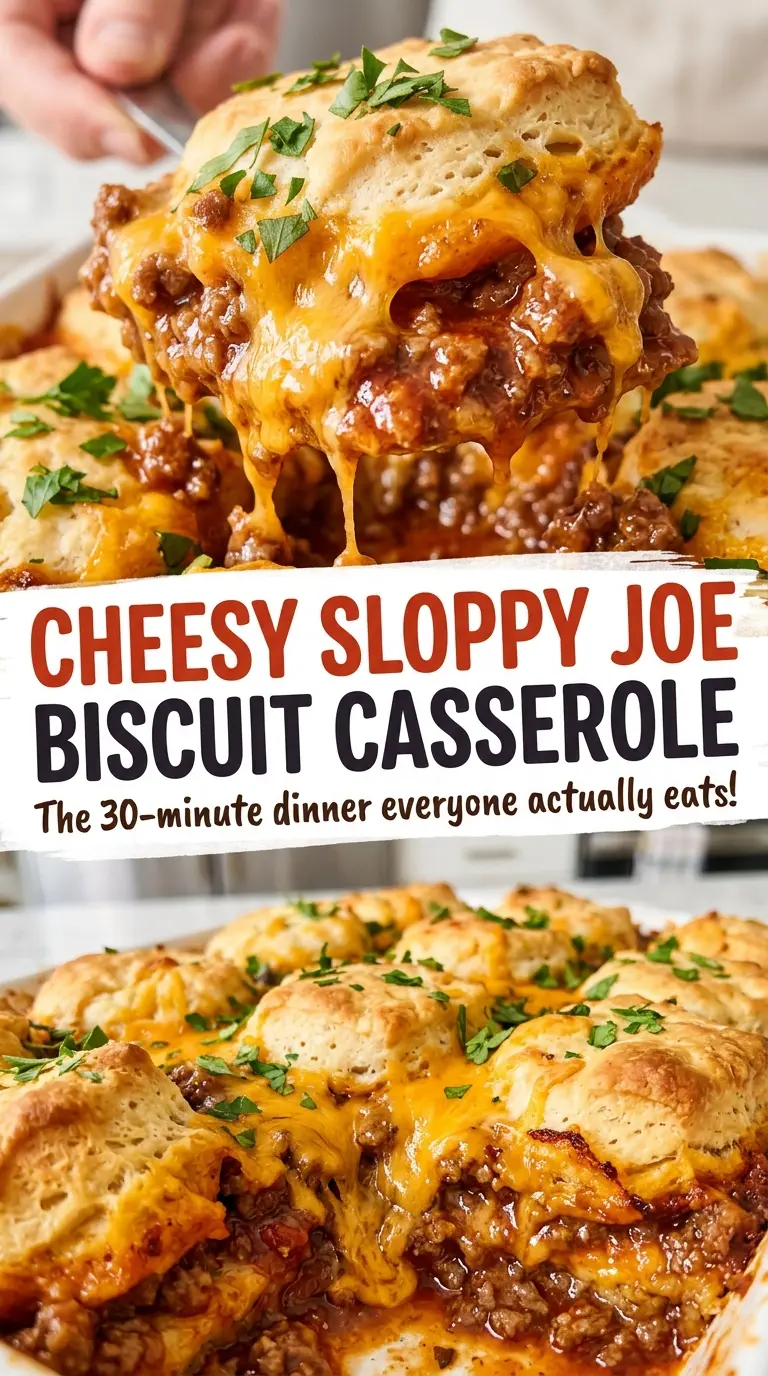
The filling tastes like a classic sloppy joe, but it’s thick enough to sit beneath the biscuits instead of making them sink into a puddle. I simmer the sauce until it clings to the beef, then give the biscuit topping its own time in the oven before adding the cheese. The result is a saucy, savory base with fluffy biscuit pieces and melted cheddar on top.

Kitchen Note
Don’t rush the sauce once it’s in the skillet. Give it the full 5 to 7 minutes to thicken so the filling holds together beneath the biscuits instead of leaving excess liquid in the dish.
Save this cheesy sloppy joe biscuit casserole for a cozy dinner with a saucy beef filling and golden, cheesy biscuit topping.
Why Biscuit Pieces Work Better Than Whole Biscuits on This Filling
Whole refrigerated biscuits can look like the obvious shortcut, but the filling beneath them changes how the topping bakes. The bottom of each biscuit sits over a moist, dense layer, while its top is exposed to the oven’s heat. Cutting the dough into smaller pieces gives more surface area to brown and leaves less dough in each piece that has to cook through. That’s especially helpful in the center of a casserole, where the topping is surrounded by other biscuits.
Even coverage matters more than making a perfect pattern. Spread the pieces across the filling so none are stacked on top of another; a pile of dough can stay soft inside while the exposed pieces get dark. The filling should show through the gaps, not swallow the biscuits. Then use the center piece as your doneness check rather than judging only by the color around the edges. Once the biscuits are cooked through, the cheddar needs just a short return to the oven to melt.
What Gives the Sloppy Joe Filling Its Sweet-Tangy Balance
- Ground beef — The 85% lean beef brings enough richness for a hearty filling without leaving as much excess fat as a fattier grind. Brown it in small pieces so it mixes evenly with the vegetables and sauce; drain off excess fat if the skillet has a pool of it.
- Tomato sauce, ketchup, and tomato paste — Each has a different job: tomato sauce forms the base, ketchup adds sweetness and tang, and tomato paste makes the mixture more concentrated. Regular pantry brands work well here; tomato paste is worth keeping in because it helps the sauce thicken without turning the filling into a ketchup-heavy mixture.
- Worcestershire sauce, brown sugar, and yellow mustard — Worcestershire adds savory depth, brown sugar rounds out the tomato tang, and mustard gives the sauce a sharper edge. Packed brown sugar blends readily into the simmering sauce, and yellow mustard keeps the flavor familiar rather than bringing the stronger bite of a specialty mustard.
- Yellow onion, green bell pepper, and garlic — Finely chopping the onion and pepper helps them soften in the short skillet cook and keeps the filling easy to spoon. Fresh garlic adds a more aromatic note than garlic powder; mince it before it goes into the hot pan so it can be stirred in quickly.
- Refrigerated biscuits and cheddar — Canned refrigerated biscuits give the topping its soft, bready center and rise in the oven without mixing a separate dough. Shredded cheddar melts into a savory finish; freshly shredded cheese tends to melt more smoothly than pre-shredded, though either works.
Build the Filling Before the Biscuits Go on
Brown the Beef in a Wide Skillet
Heat the oven to 375°F and grease a 9×13-inch baking dish with the softened butter. In a 12-inch skillet over medium-high heat, cook the ground beef, breaking it into small pieces as it browns. It should take 6 to 8 minutes and reach 160°F; drain excess fat if needed. Small, evenly broken pieces make a more cohesive filling than large chunks.
Soften the Vegetables Without Browning the Garlic
Add the finely chopped onion and green bell pepper to the browned beef. Stir often for 4 to 5 minutes, until the vegetables have softened. Stir in the minced garlic and cook for about 30 seconds, just until fragrant. Garlic can turn bitter if it sits too long against the hot skillet, so have the sauce ingredients ready to follow.
Simmer the Sauce Until It Clings
Stir in the tomato sauce, ketchup, tomato paste, Worcestershire sauce, packed brown sugar, yellow mustard, salt, and black pepper. Let the mixture simmer for 5 to 7 minutes, stirring occasionally, until it thickens. If it still looks loose and runny, keep it at a gentle simmer rather than moving on early. A thicker filling stays under the biscuit topping instead of pooling around it.
Bake the Biscuit Topping, Then Add the Cheddar
Spread the filling evenly in the prepared baking dish. Cut each biscuit into four pieces and arrange them evenly over the top, keeping the pieces in a single layer. Bake for 20 to 25 minutes, until the biscuits have risen and turned deep golden; split a center piece to check that it’s cooked through. Sprinkle the cheddar over the biscuits, bake another 3 to 5 minutes until melted, then rest the casserole for 5 minutes before serving.
Three Simple Ways to Adapt the Biscuit Casserole
Swap in red bell pepper
Use finely chopped red bell pepper in place of the green pepper. It softens in the same skillet stage and gives the filling a slightly sweeter, less grassy pepper flavor.
Bring a little heat with pepper Jack
Replace the cheddar with shredded pepper Jack for a mild chile kick in the melted topping. It still gives you a cheesy finish, though the casserole will taste a bit spicier and less sharp than it does with cheddar.
Make a gluten-free biscuit topping
Use gluten-free refrigerated biscuit dough and gluten-free Worcestershire sauce. Cut the biscuits into four pieces and arrange them over the filling as usual; gluten-free dough can bake differently by brand, so check the center piece for doneness before adding the cheese.
Storage and Reheating
- Refrigerator: Store cooled leftovers in an airtight container for 3 to 4 days. The biscuit topping softens as it sits against the filling.
- Freezer: Freeze cooled portions in airtight containers for up to 2 months. Thaw overnight in the refrigerator; the biscuits will be softer after freezing.
- Reheating: Cover a portion with foil and warm it in a 350°F oven until the center reaches 165°F. Uncover for the last few minutes if you want to dry the biscuit top a little; microwaving works, but makes the topping softer.
Questions That Come Up Before the First Slice
Cheesy Sloppy Joe Biscuit Casserole
Ingredients
Equipment
Method
- Heat the oven to 375°F.
- Grease a 9x13-inch baking dish with the softened butter.
- In a 12-inch skillet over medium-high heat, cook the ground beef, breaking it into small pieces, until browned and it reaches 160°F, 6–8 minutes.
- Drain excess fat if needed.
- Add the onion and bell pepper and cook, stirring often, until softened, 4–5 minutes.
- Stir in the garlic and cook until fragrant, about 30 seconds.
- Stir in the tomato sauce, ketchup, tomato paste, Worcestershire sauce, brown sugar, mustard, salt, and black pepper.
- Simmer until thickened, 5–7 minutes.
- Spread the filling evenly in the prepared baking dish.
- Cut each biscuit into 4 pieces and arrange the pieces evenly over the filling.
- Bake until the biscuits are risen and deep golden, 20–25 minutes; split a center biscuit piece to check that it is cooked through.
- Sprinkle the cheddar over the biscuits.
- Bake until melted, 3–5 minutes.
- Rest the casserole for 5 minutes before serving.
