
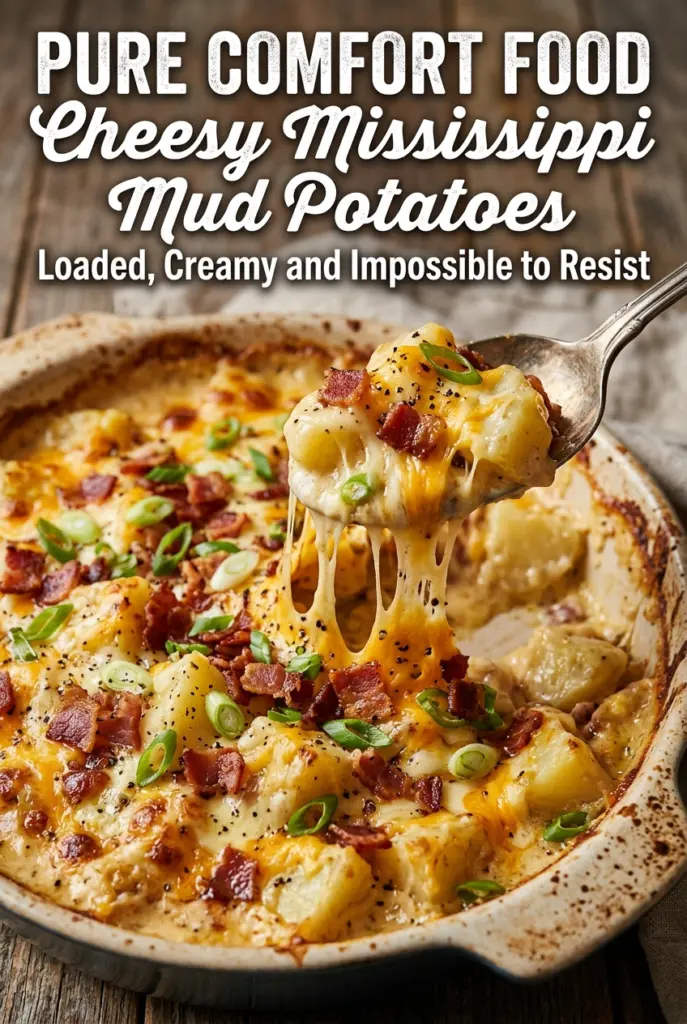
Cheesy Mississippi Mud Potatoes
Cheesy Mississippi Mud Potatoes hit that sweet spot between a proper side dish and the thing everyone keeps sneaking bites of before dinner lands on the table. The potatoes turn…
Tip: save now, cook later.Cheesy Mississippi Mud Potatoes hit that sweet spot between a proper side dish and the thing everyone keeps sneaking bites of before dinner lands on the table. The potatoes turn tender underneath a creamy, savory coating, while the top bakes into a bubbling layer of cheddar with crisp bacon scattered over everything. It’s rich without being fussy, and it disappears fast because every bite has a little salt, smoke, and melt-in-your-mouth comfort.
What makes this version work is the balance of texture. Russet potatoes soften beautifully and soak up the sour cream-mayo mixture without turning watery, and the first half of the cheese melts into the casserole so it tastes seasoned all the way through, not just cheesy on top. Bacon goes in two stages for a reason: some gets folded into the base so the whole dish tastes smoky, and the rest stays crisp enough to finish the top. That little split is what keeps the casserole from tasting flat.
Below, I’ve laid out the parts that matter most: how to keep the potatoes tender instead of mushy, why the bake time is split in two, and the swaps that still give you a creamy, crowd-pleasing result.
The potatoes stayed tender all the way through and the cheese on top browned just enough after I took the foil off. I brought it to a cookout and there wasn’t a spoonful left.
Cheesy Mississippi Mud Potatoes bring that creamy bacon-and-cheddar finish you’ll want to keep on repeat for potlucks and BBQs.
The Part That Keeps These Potatoes Creamy Instead of Gritty
The biggest mistake with a casserole like this is treating the potatoes like they’ll behave once they hit the oven. Raw diced potatoes need enough coating and enough time for the heat to work all the way through, or you end up with soft edges and a stubborn center. The sour cream and mayonnaise aren’t just there for richness; they hold the seasoning in place and keep the potatoes from drying out while the top bakes uncovered.
Russet potatoes are the right call here because they turn fluffy and absorb the sauce instead of staying waxy and firm. If your potatoes are cut too large, the bake time stretches and the outside starts to break down before the middle is tender. Keep the dice even, and the whole dish cooks at the same pace.
- The foil-covered bake does the heavy lifting. It traps steam so the potatoes soften before the top has a chance to brown.
- The uncovered finish is where the texture happens. That’s when the cheese melts fully and the edges pick up a little color.
- Folding some bacon into the base matters. It seasons the whole pan instead of leaving all the flavor on top.
What Each Ingredient Is Actually Doing in This Dish
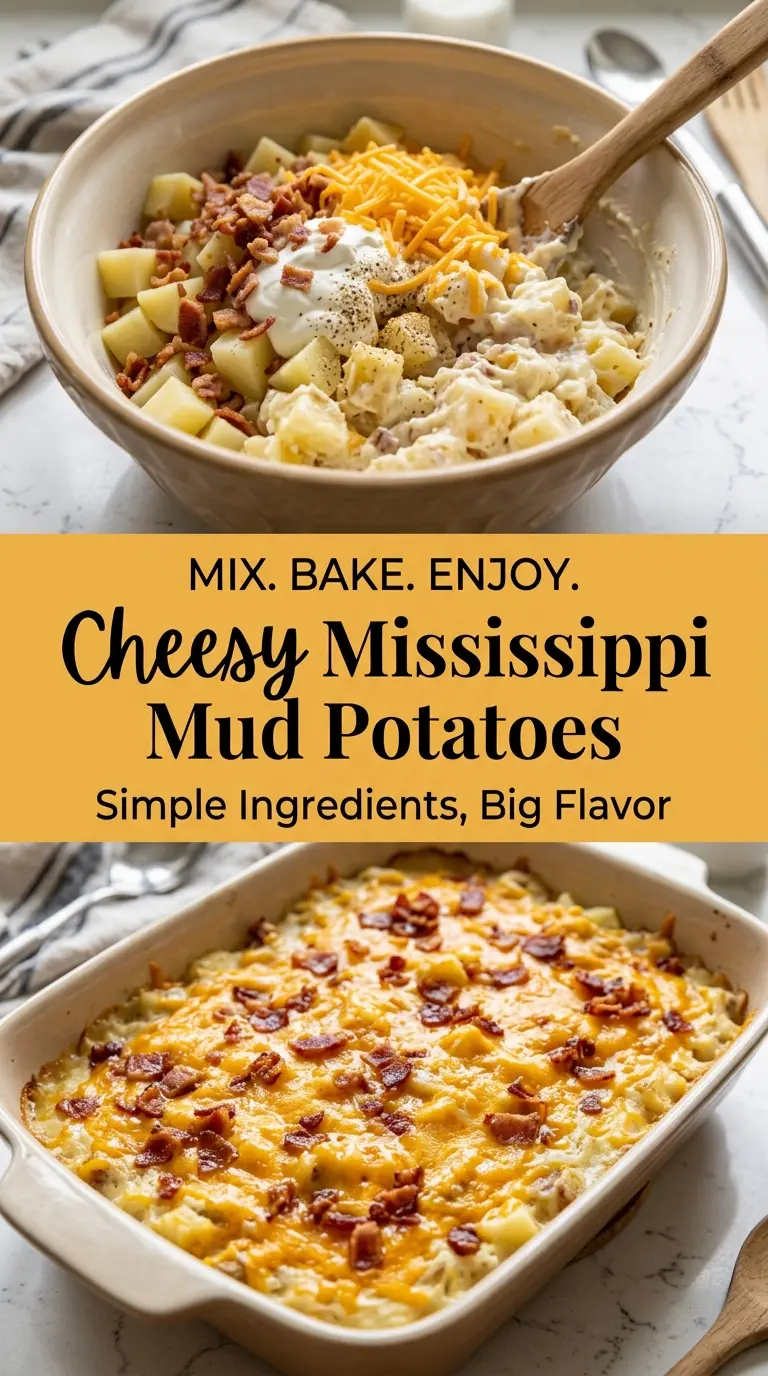
- Russet potatoes — These soften into a fluffy, creamy bite and soak up the sauce well. Yukon golds will work if that’s what you have, but they stay a little denser and less absorbent.
- Bacon — Cook it until crisp enough to crumble cleanly. Thick-cut bacon is fine, but it should still be fully rendered so it doesn’t go chewy in the casserole.
- Cheddar cheese — Sharp cheddar gives the best payoff because it stands up to the potatoes and cream. Pre-shredded works, but freshly shredded melts smoother and gives you a better top.
- Sour cream and mayonnaise — This is the creamy backbone. Sour cream adds tang, mayo adds body, and together they keep the mixture luscious instead of heavy.
- Green onions — They brighten the finished dish and cut through the richness. Add them at the end so they stay fresh and don’t lose their bite.
Building the Casserole So the Center Cooks Before the Top Burns
Coating the Potatoes Evenly
Start with a large bowl so you can stir without smashing the dice. The potatoes should look fully coated, with no dry, chalky spots clinging to the sides of the bowl. If the mixture seems too thick to spread, a spoonful more sour cream helps, but don’t thin it out with liquid or the bake turns loose and greasy.
Layering in the Bacon and Cheese
Fold in half the bacon and half the cheddar before the casserole goes into the dish. That puts flavor all the way through the pan, not just on the surface. If you dump everything on top, the bottom tastes plain and the top can turn oily before the potatoes are tender.
Baking Covered, Then Exposed
Cover the dish tightly with foil for the first bake so the potatoes steam and soften. Pull the foil off only after the potatoes are nearly tender, then add the remaining cheese and finish uncovered until it melts into a glossy lid. If the top browns too fast, the heat was too high or the foil came off too early.
Finishing With Fresh Bacon and Onions
Save the last bit of bacon for the end so it stays crisp. Scatter the green onions over the hot casserole right before serving. That final contrast matters because the dish is rich, and the fresh onion bite keeps it from feeling heavy.
Three Useful Ways to Tweak These Potatoes Without Ruining the Texture
Make it gluten-free without changing the method
This dish is naturally gluten-free as written, so you don’t need any special flour swaps or thickeners. Just check that your bacon and shredded cheese are certified gluten-free if you’re cooking for someone who needs that level of caution. The texture stays exactly the same.
Swap in Greek yogurt for a lighter tang
You can replace some or all of the sour cream with full-fat plain Greek yogurt if you want a sharper edge and a little less richness. The casserole will taste a touch brighter and a bit less plush, but it still bakes up creamy. Use full-fat yogurt so it doesn’t split or turn watery in the oven.
Use ham instead of bacon for a different salty finish
Diced cooked ham gives you the same savory hit with a softer texture and less smoke. You’ll lose the crisp bacon bits, so it helps to add a little extra black pepper or a pinch of smoked paprika to keep the flavor from going flat. This is a good swap if you’re using leftovers from a holiday ham.
Add jalapeños for a sharper, punchier casserole
A few diced pickled or fresh jalapeños give the potatoes a little heat that cuts through the cheese. Fresh peppers bring more bite; pickled peppers bring tang. Either way, keep the amount modest so the casserole still tastes like Mississippi mud potatoes, not nacho dip.
Storage and Reheating
- Refrigerator: Store leftovers covered for up to 4 days. The potatoes hold up well, though the topping softens as it sits.
- Freezer: It freezes, but the texture gets a little softer after thawing. Cool completely, wrap tightly, and freeze for up to 2 months if you don’t mind a slightly looser casserole.
- Reheating: Reheat in a 350°F oven, covered at first, until hot in the center. The microwave works for a quick bowl, but the oven gives the cheese a better finish and keeps the bacon from turning rubbery.
Answers to the Questions Worth Asking
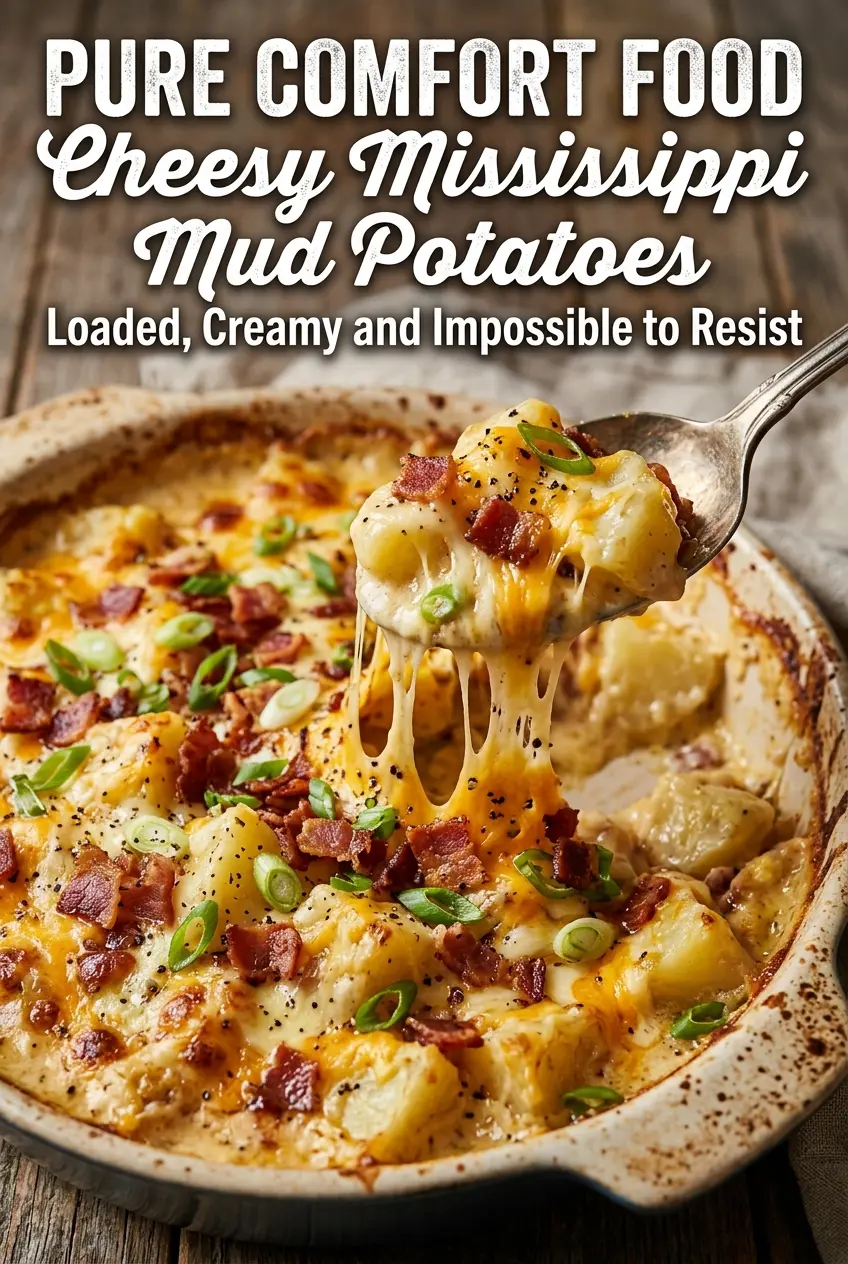
Cheesy Mississippi Mud Potatoes
Ingredients
Equipment
Method
- Preheat the oven to 375°F (190°C).
- Lightly grease a 9×13-inch baking dish with cooking spray.
- Place the diced russet potatoes in a large bowl.
- Add sour cream, mayonnaise, garlic powder, onion powder, salt, and black pepper to the bowl.
- Stir until the potatoes are evenly coated.
- Fold in half of the bacon and half of the shredded cheddar cheese.
- Transfer the potato mixture to the prepared baking dish.
- Cover the dish with foil and bake for 45 minutes.
- Remove the foil and sprinkle the remaining shredded cheddar cheese over the top.
- Bake uncovered for 15–20 minutes, until the potatoes are tender and the cheese is melted, with a visibly bubbly surface.
- Top with the remaining bacon and the green onions.
- Serve hot.
