

Cheesy Ground Beef and Cauliflower Casserole
When the cheddar starts bubbling around the edges of the baking dish, the middle is still creamy and the cauliflower has kept its shape. That’s the moment I look for…
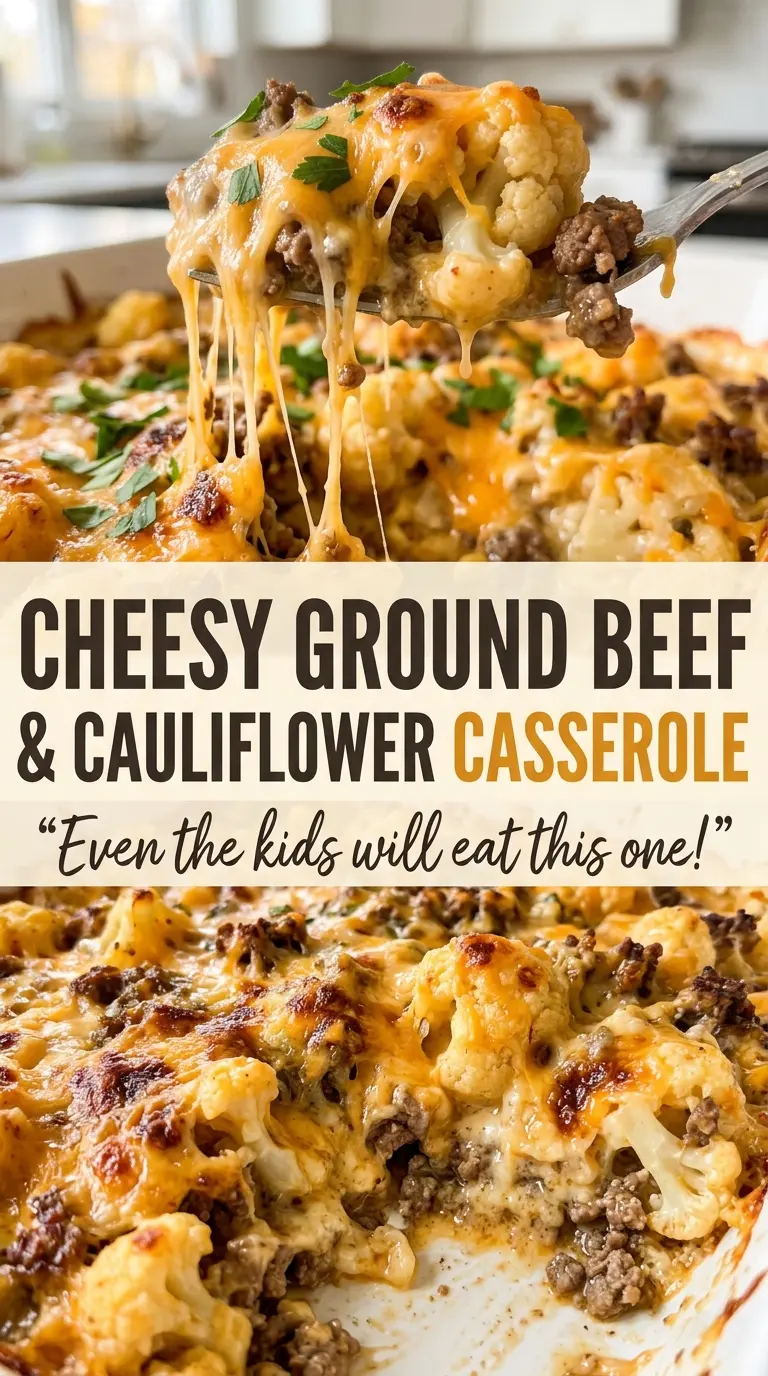
Tip: save now, cook later.When the cheddar starts bubbling around the edges of the baking dish, the middle is still creamy and the cauliflower has kept its shape. That’s the moment I look for with this cheesy ground beef and cauliflower casserole: a browned beef layer folded through tender florets, all wrapped in a smooth, tangy cheese sauce. It gives you the comfort of a baked casserole without relying on pasta or potatoes.
The cauliflower needs a little more attention than the beef. It cooks first, then gets drained before it meets the sauce; leaving water behind is the fastest way to thin out the creamy texture. I keep the florets just fork-tender, too, since they’ll spend another 20 to 25 minutes in the oven. Each bite comes out rich and savory, with sharp cheddar on top and a gentle Dijon tang underneath.

Kitchen Note
Keep the cauliflower just fork-tender, not soft enough to crumble. It has a second stretch of cooking in the oven, and starting with firm florets gives the finished casserole a better bite.
Save this cheesy ground beef and cauliflower casserole for a bubbling cheddar top and a creamy center without pasta or potatoes.
Why Draining the Cauliflower Is the Difference Between Creamy and Watery
Cauliflower holds water between its florets, and that moisture doesn’t disappear just because the casserole goes into a hot oven. The cheese sauce is meant to cling to the beef and cauliflower, not get loosened by leftover cooking water. Drain the florets well after steaming, before you combine them with anything else. That small pause protects the texture of the whole pan.
There’s another reason to keep the sauce and cauliflower separate until both are ready: the sauce has a balanced thickness before it meets the vegetables. If the cauliflower is still dripping, it can dilute that carefully whisked base and leave a puddle at the bottom after baking. The beef also gets cooked and drained on its own, so excess fat doesn’t collect in the casserole. Once everything is combined, you’re looking for a creamy coating around the florets and beef, not a loose mixture swimming in liquid.
What Sharp Cheddar, Cream Cheese, and Dijon Each Bring to the Sauce
- Cauliflower — Its mild flavor lets the beef and cheese come through, while the florets give the sauce something substantial to cling to. Choose firm, unblemished florets; this is a good place for ordinary grocery-store cauliflower rather than a specialty variety.
- Ground beef — The 85% lean beef brings savory richness without leaving the casserole overly greasy once the excess fat is drained. A very lean grind will taste a little less rich, while a fattier one leaves more fat to drain from the skillet.
- Cream cheese and sour cream — Cream cheese gives the sauce its body, and sour cream adds a mild tang that keeps the dairy from tasting flat. Let the cream cheese soften before you start so it can whisk into the sauce smoothly. Plain full-fat Greek yogurt can stand in for sour cream in the same quantity; it gives a slightly tangier, less rich result.
- Whole milk — Milk loosens the cream cheese and sour cream into a sauce that can coat the casserole. Whole milk keeps it full-bodied; a lower-fat milk will make the sauce a little thinner.
- Sharp cheddar and Dijon — Sharp cheddar gives the sauce a more pronounced cheese flavor than mild cheddar, and Dijon adds a quiet savory edge rather than making the casserole taste like mustard. Freshly shredded cheddar melts into a smoother sauce than pre-shredded cheese, though either works.
- Yellow onion and garlic — The onion softens into the beef and gives the filling a sweet-savory base. Fresh minced garlic brings a brighter aroma than jarred garlic, but jarred works if that’s what you have on hand.
How to Build the Creamy Beef-and-Cauliflower Casserole
Steam the Cauliflower Until It’s Just Fork-Tender
Heat the oven to 375°F and grease a 9×13-inch baking dish with the softened butter. Put the cauliflower and water in a covered 5-quart pot, then cook over medium-high heat for 7–9 minutes, stirring once. A fork should meet a little resistance rather than slide through a collapsing floret. Drain the cauliflower well before it goes into the mixing bowl.
Brown the Beef, Then Soften the Onion
Cook the ground beef in a 12-inch skillet over medium-high heat for 6–8 minutes, breaking it into small pieces as it browns. Check that it reaches 160°F, then drain off excess fat. Add the diced onion and cook for 4–5 minutes, until softened and no longer crisp. Stir in the garlic, salt, and pepper and cook for 30 seconds; garlic can turn bitter if it browns.
Whisk the Sauce Gently Over Low Heat
Combine the softened cream cheese, sour cream, whole milk, and Dijon mustard in a 2-quart saucepan. Heat over low heat for 3–5 minutes, whisking until the sauce looks smooth, with no visible cream cheese lumps. Stir in 1 1/2 cups of the cheddar and keep stirring until it melts into the sauce. If the sauce looks uneven, lower heat is more useful than trying to rush it.
Top the Casserole and Bake Until the Edges Bubble
Combine the drained cauliflower, beef mixture, and cheese sauce in a large bowl, then spread the mixture in the prepared baking dish. Sprinkle the remaining 1/2 cup cheddar over the top in an even layer. Bake for 20–25 minutes, until you see bubbling around the edges. Let the casserole rest for 5 minutes before serving so the hot sauce can settle back around the filling.
Three Swaps That Change the Casserole Without Losing Its Creamy Center
Use Monterey Jack for a Milder Cheese Flavor
Swap Monterey Jack for the cheddar in both the sauce and topping, keeping the same total amount. It melts smoothly and makes the casserole gentler and creamier, but you’ll lose some of the sharp, tangy cheese bite.
Make a Vegetarian Mushroom Version
Replace the ground beef with an equal weight of finely chopped mushrooms. Cook them in the skillet until their released liquid has cooked away, then add the onion and continue with the garlic, salt, and pepper. The filling will be softer and more earthy, without the same hearty chew as beef.
Make It Dairy-Free With Plant-Based Alternatives
Use dairy-free butter for the dish, dairy-free cream cheese and sour cream, plain unsweetened soy milk, and dairy-free cheddar-style shreds. The sauce will be less rich, and plant-based shreds may not melt as smoothly as cheddar, so whisk the base until smooth before adding them.
Storage and Reheating
- Refrigerator: Store leftovers covered for 3–4 days. The cauliflower softens a little as it sits, but the sauce stays creamy.
- Freezer: Freeze cooled portions in airtight containers for up to 2–3 months. Thaw overnight in the refrigerator; the sauce may look a little less smooth after freezing.
- Reheating: Reheat covered in a 350°F oven until hot in the center, or warm individual portions in the microwave in short intervals. Heat leftovers to 165°F, and avoid leaving the dish uncovered for a long reheat, which can dry the edges.
Questions That Come Up Before This Casserole Goes in the Oven
Cheesy Ground Beef and Cauliflower Casserole
Ingredients
Equipment
Method
- Heat the oven to 375°F.
- Grease a 9x13-inch baking dish with the butter.
- Put the cauliflower and water in a covered 5-quart pot.
- Cook over medium-high heat for 7–9 minutes, stirring once, until just fork-tender.
- Drain the cauliflower well.
- Cook the ground beef in a 12-inch skillet over medium-high heat for 6–8 minutes, breaking it into small pieces, until browned and it reaches 160°F.
- Drain excess fat from the beef.
- Add the onion to the skillet and cook for 4–5 minutes until softened.
- Stir in the garlic, salt, and pepper and cook for 30 seconds.
- Combine the cream cheese, sour cream, milk, and Dijon mustard in a 2-quart saucepan.
- Heat over low heat for 3–5 minutes, whisking until smooth.
- Stir 1 1/2 cups of the cheddar into the sauce until melted.
- Combine the drained cauliflower, beef mixture, and cheese sauce in a large bowl.
- Spread the mixture in the prepared baking dish.
- Sprinkle the remaining 1/2 cup cheddar over the top.
- Bake for 20–25 minutes until bubbling around the edges.
- Rest for 5 minutes before serving.
