
Cheesy Ground Beef and Biscuit Casserole
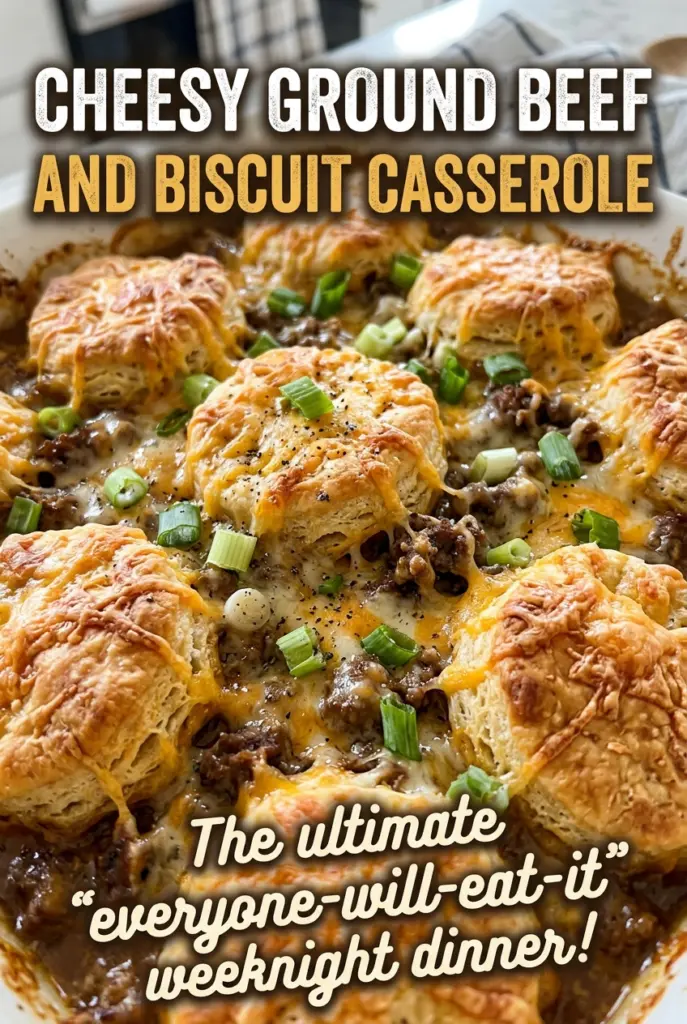
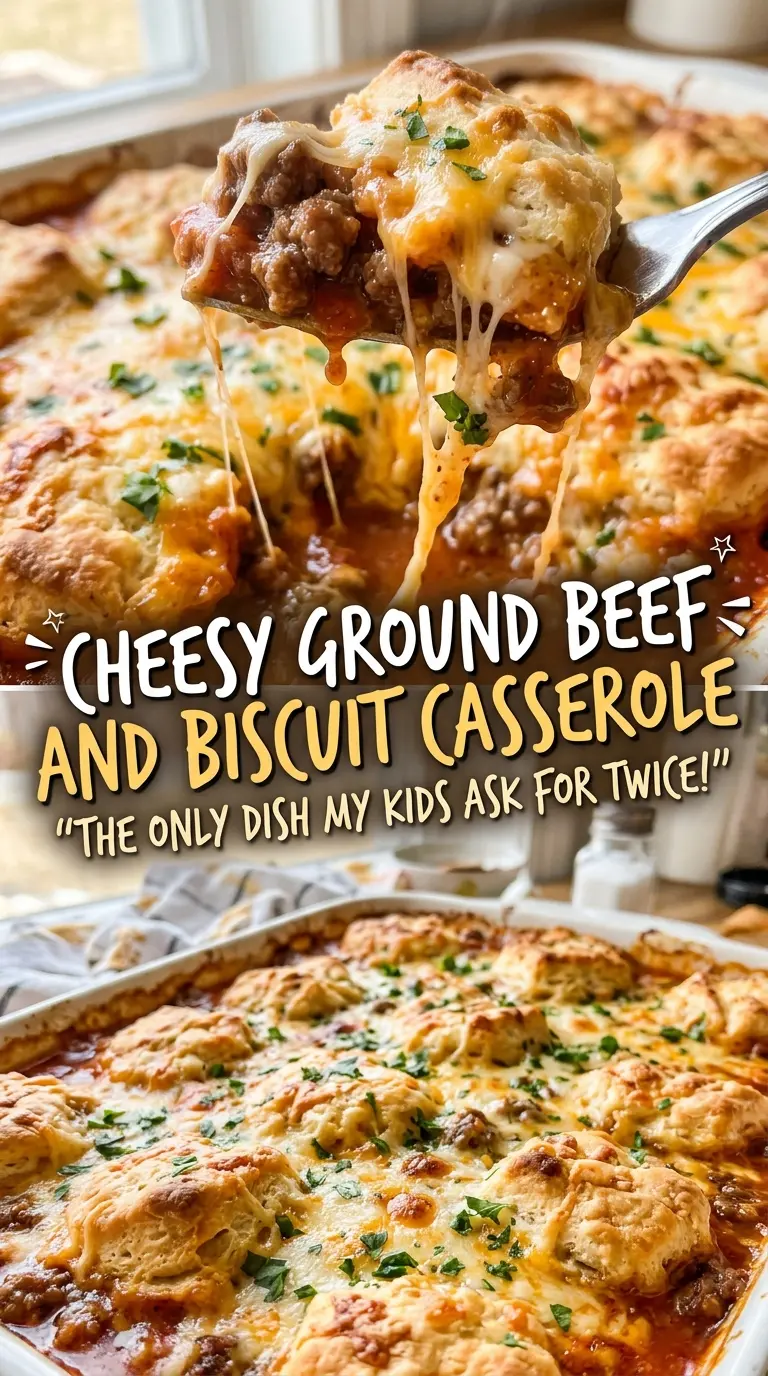
As the casserole bakes, little bubbles of tomato sauce start showing around the biscuit mounds, and the tops turn golden while the beef filling stays saucy underneath. That contrast is…
Tip: save now, cook later.As the casserole bakes, little bubbles of tomato sauce start showing around the biscuit mounds, and the tops turn golden while the beef filling stays saucy underneath. That contrast is what I want from cheesy ground beef and biscuit casserole: a proper browned biscuit on top, not a blanket of dough that disappears into the filling.
I cook the beef and vegetables in a skillet first, then layer the cheddar and biscuit dough over the filling in a 9×13-inch dish. The topping is made with cold butter, and I stop mixing as soon as the flour is hydrated; that keeps the biscuits tender instead of tough. It’s a hearty one-dish dinner with familiar flavors and enough structure to serve in generous spoonfuls, with bubbling tomato sauce tucked under every golden biscuit.
Kitchen Note
With 85% lean ground beef, I check the skillet after browning before draining anything. Pour off excess fat if there’s a noticeable pool, but don’t drain automatically; a little fat keeps the filling from tasting dry.
Save this cheesy ground beef and biscuit casserole for the bubbling tomato filling, melted cheddar, and golden biscuit topping.
Why the Biscuit Topping Needs Gaps, Not a Solid Lid
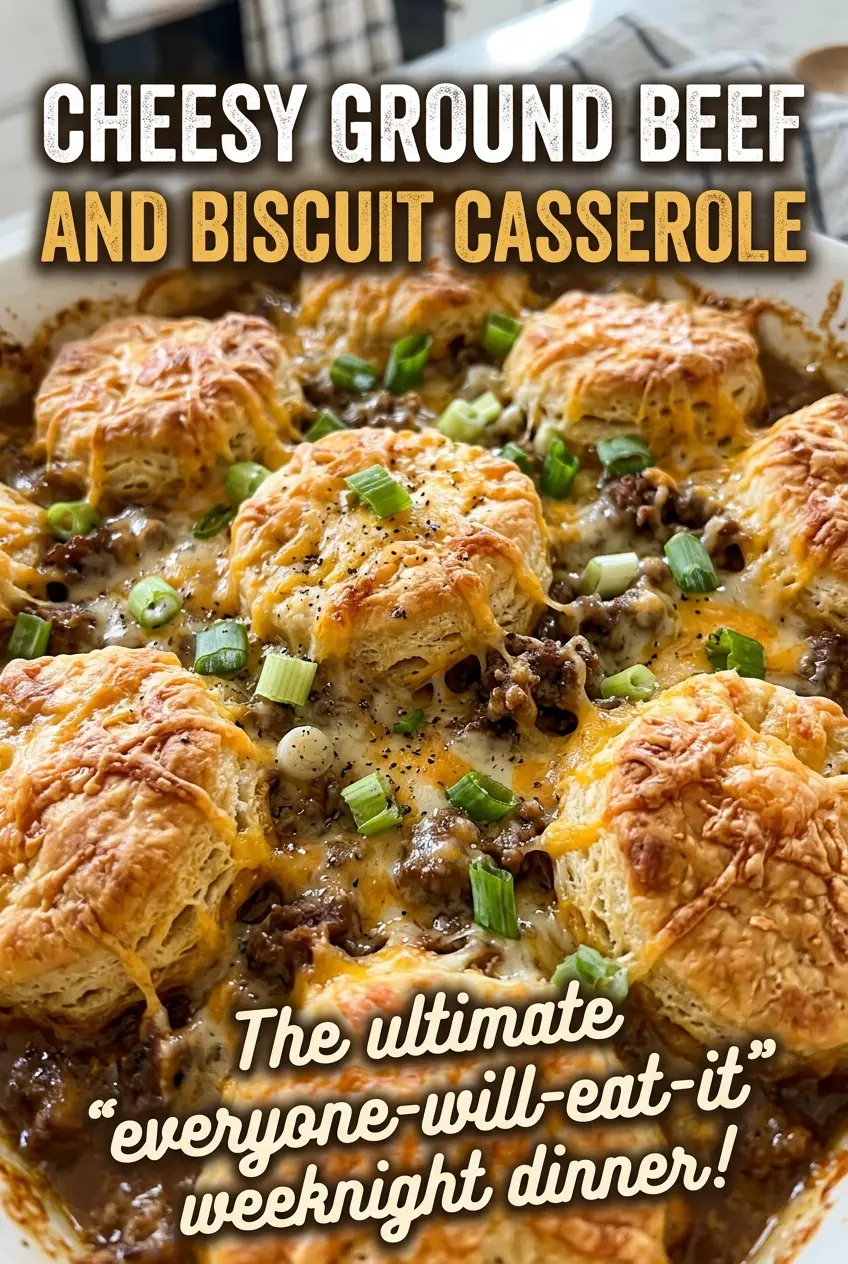
It’s easy to assume biscuit topping should cover every inch of a casserole. Here, that would work against the texture. The dough is dropped in eight portions with small gaps between them, leaving little windows where the filling can bubble as the biscuits bake.
Those openings also keep the topping from behaving like one thick, sealed layer. Each biscuit has room to brown on its own, while the edges stay tender where they meet the saucy beef. You’ll still get plenty of biscuit in each serving, but the casserole won’t feel like a heavy slab of dough over a hidden filling.
Keep the portions even and resist spreading them together. The filling should be visible between the mounds before the dish goes into the oven; once baked, those gaps become the glossy, bubbling edges that make the casserole look and serve the way it should.
What the Beef, Tomato Sauce, and Cold Butter Each Bring
- 85% lean ground beef — The fat gives the filling a savory base without making it overly greasy when you drain only what’s in excess. A standard package of this grind works well; break it into small pieces as it browns so it spreads evenly through the vegetables.
- Tomato sauce and Worcestershire — Plain canned tomato sauce gives the filling its smooth, spoonable texture, while Worcestershire adds a deeper savory note. Use plain tomato sauce rather than a seasoned pasta sauce, which can shift the flavor and salt level.
- Frozen mixed vegetables — They go straight into the skillet frozen, so there’s no thawing step and the vegetables keep their shape through the simmer and bake. Keep them frozen until you stir them in.
- Sharp cheddar — Its stronger flavor stands up to the beef and tomato sauce, so the cheese stays noticeable in each bite. Freshly shredded cheese melts into a smoother layer, though packaged shredded cheddar works when convenience matters.
- All-purpose flour and baking powder — Together they form the structure and lift for the biscuits. Measure the flour carefully; packing it into the cup can make the dough dry and the baked topping dense.
- Cold salted butter and whole milk — Small cold butter pieces make the biscuit crumb tender, and whole milk brings enough richness for a soft interior. Cut the butter into small pieces before mixing, and use cold butter rather than letting it soften on the counter.
Build the Filling First, Then Keep the Biscuit Dough Light
Soften the Onion and Brown the Beef
Heat the oven to 400°F and coat a 9×13-inch baking dish with nonstick cooking spray. In a 12-inch skillet, warm the vegetable oil over medium heat, then cook the finely chopped onion for 3 to 4 minutes, stirring now and then, until softened. Add the ground beef and break it into small pieces as it cooks for 6 to 8 minutes. The beef should be browned and reach 160°F; drain excess fat if needed.
Simmer the Tomato Filling
Stir in the minced garlic and cook for 30 seconds, just until fragrant. Add the frozen mixed vegetables, tomato sauce, Worcestershire sauce, kosher salt, and black pepper, then simmer for 5 minutes. The mixture should look cohesive and saucy, not like separate pools of liquid and grease. Transfer it to the prepared baking dish before adding the cheese.
Mix the Biscuit Dough Without Overworking It
Whisk the flour and baking powder together in a medium bowl so the leavener is distributed through the flour. Cut in the cold butter until the pieces are about pea-sized; a few small irregular pieces are fine. Stir in the whole milk only until no dry flour remains. Stop there, even if the dough looks a little rough, because extra mixing can make the biscuits firm.
Top and Bake Until the Centers Are Set
Sprinkle the cheddar evenly over the beef filling, then drop the biscuit dough in 8 even portions, leaving small gaps between them. Bake for 25 to 30 minutes, until the biscuits are golden brown, a toothpick inserted into a biscuit comes out clean, and the filling bubbles at the edges. If the tops look golden but the toothpick still has wet dough on it, give the casserole more time in the oven. Let it rest for 10 minutes before serving so the filling settles and portions are easier to lift.
Two Good Ways to Adapt the Biscuit Topping
A Milder, Stretchier Cheese Layer
Replace the sharp cheddar with the same amount of Monterey Jack. It melts smoothly and gives the casserole a gentler cheese flavor, though you’ll lose some of the cheddar’s tang. Keep the cheese layer in the same spot, between the beef filling and biscuit portions.
A Gluten-Free Biscuit Topping
Use 2 cups of a cup-for-cup gluten-free baking flour blend in place of the all-purpose flour. Keep the baking powder, cold butter, and milk the same, and stir only until the flour is moistened. The biscuits may have a slightly more delicate crumb, so lift servings gently after the resting time.
Storage and Reheating
- Refrigerator: Cool leftovers and refrigerate within 2 hours. Keep covered for 3 to 4 days; the biscuit topping will soften as it sits against the filling.
- Freezer: Freeze cooled portions in airtight containers for up to 2 to 3 months. Thaw overnight in the refrigerator; the biscuits may be a little more tender after freezing.
- Reheating: Reheat portions uncovered in a 350°F oven until the center reaches 165°F. The oven helps the topping regain some texture; microwaving is quicker but leaves the biscuits softer.
Questions I Get Asked About This Beef and Biscuit Casserole
Cheesy Ground Beef and Biscuit Casserole
Ingredients
Equipment
Method
- Heat the oven to 400°F.
- Coat a 9x13-inch baking dish with nonstick cooking spray.
- Heat the vegetable oil in a 12-inch skillet over medium heat, add the onion, and cook for 3 to 4 minutes, stirring occasionally, until softened.
- Add the ground beef and cook for 6 to 8 minutes, breaking it into small pieces, until browned and it reaches 160°F.
- Drain excess fat if needed.
- Stir in the garlic and cook for 30 seconds.
- Stir in the frozen vegetables, tomato sauce, Worcestershire sauce, salt, and pepper, then simmer for 5 minutes.
- Transfer the mixture to the prepared baking dish and sprinkle the cheddar evenly over it.
- Whisk the flour and baking powder together in a medium bowl.
- Cut in the cold butter until the pieces are about pea-sized.
- Stir in the milk just until no dry flour remains.
- Drop the biscuit dough in 8 even portions over the filling, leaving small gaps between them.
- Bake for 25 to 30 minutes, until the biscuits are golden brown, a toothpick inserted into a biscuit comes out clean, and the filling bubbles at the edges.
- Rest for 10 minutes before serving.
