
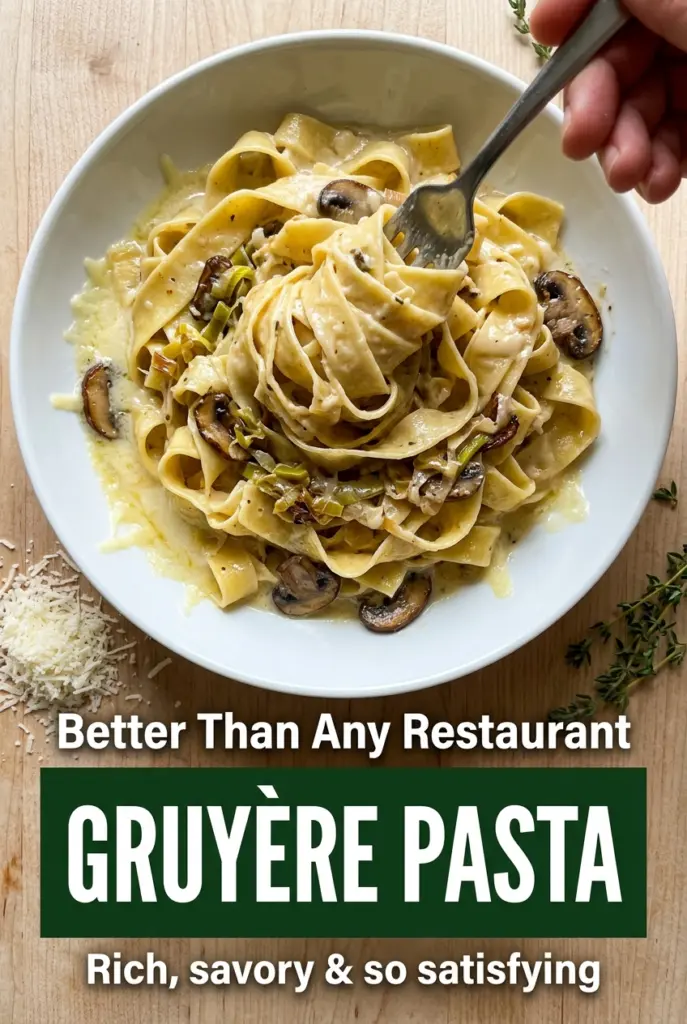
Caramelized Leek and Mushroom Gruyère Pasta
Caramelized leeks and browned mushrooms give this pasta the kind of deep, savory flavor that tastes like it took hours, even though the stove does most of the work while…
Tip: save now, cook later.Caramelized leeks and browned mushrooms give this pasta the kind of deep, savory flavor that tastes like it took hours, even though the stove does most of the work while you stir and wait. The leeks turn sweet and silky, the mushrooms add that earthy, meaty note, and the gruyère melts into a sauce that clings to every ribbon of pasta instead of sliding off the plate.
What makes this version worth making again is the order of operations. The leeks need real time to soften and caramelize before anything else goes in, and the mushrooms need enough heat to lose their moisture and take on color. Rush either one and you end up with a pale, wet pan instead of the rich base that makes the whole dish taste finished.
The pasta water matters here, too. It loosens the sauce just enough to coat the noodles while the starch helps everything emulsify into something glossy and restaurant-like. Below, you’ll find the exact point where the sauce should go from thin to silky, plus the swaps that still keep the dish balanced if you need to work with what you have.
The leeks went sweet and jammy without burning, and the sauce coated the pasta beautifully once I added the pasta water. My husband kept going back for “just one more bite” until the pan was basically empty.
Save this Caramelized Leek and Mushroom Gruyère Pasta for the night you want a silky, one-pan sauce with deep browned flavor and almost no cleanup.
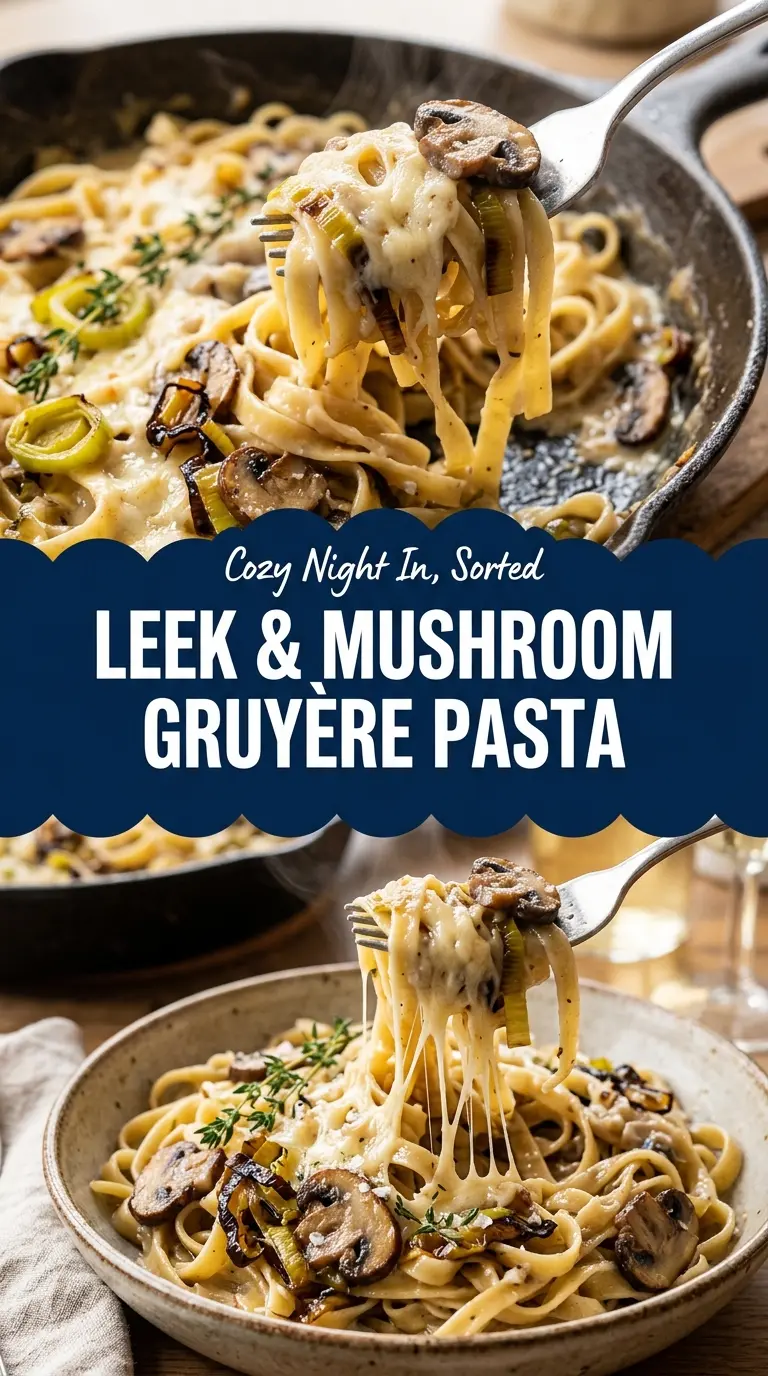
The Secret Is Not Letting the Leeks Rush the Pan
Leeks are the backbone of this pasta, but they only do their job if you give them enough time to turn soft and sweet before the heat goes up. If they go in and out of the pan too quickly, they stay sharp and watery, and the sauce never gets that slow-cooked depth. The goal is a deep golden, almost jammy texture that tastes savory instead of grassy.
The mushrooms have a different job. They need room and heat so their moisture can evaporate before they start browning. If the skillet looks crowded or the heat is too low, they steam, and the final sauce ends up thinner and flatter than it should.
- Leeks — Slice them thin and rinse them well, because grit hides between the layers. Only the white and light green parts belong here; the darker tops can be tough and stringy.
- Cremini mushrooms — These bring the earthy base that balances the sweet leeks. Button mushrooms work too, but cremini have a deeper flavor and brown better.
- Gruyère — This is the cheese that gives the sauce its nutty pull and smooth melt. Pre-shredded cheese is more likely to clump, so grating it fresh gives you a silkier finish.
- Dry white wine — It sharpens the sauce and lifts the browned bits from the pan. Use something you’d drink, because the flavor concentrates as it reduces.
- Heavy cream — This gives the sauce body without relying on flour. Half-and-half can work in a pinch, but it will be looser and a little less luxurious.
How to Build the Sauce So It Stays Silky
Cooking the Pasta First
Start the pasta in well-salted water and pull it when it still has a firm bite in the center. It finishes in the sauce, so if you cook it all the way through in the pot, it turns soft while the cheese melts. Reserve a full cup of pasta water before draining; that starchy liquid is what helps the sauce cling instead of pooling at the bottom of the bowl.
Caramelizing the Leeks Slowly
Melt the butter with the olive oil over medium-low heat, then add the leeks and stir only now and then. They need 15 to 18 minutes to soften, collapse, and turn golden. If the heat is too high, the edges scorch before the centers sweeten, and that bitter note carries through the whole dish.
Getting the Mushrooms Brown Instead of Watery
Add the mushrooms and raise the heat to medium so they can give off their moisture and then brown in the same pan. Keep cooking until the pan looks mostly dry again and the mushrooms have real color on the edges. If liquid is still sitting around, wait it out; adding garlic too early just lets it burn before the mushrooms are ready.
Finishing With Cheese Without Breaking the Sauce
Stir in the garlic and thyme for just 30 seconds, then add the wine and let it reduce before the cream goes in. Lower the heat before the gruyère and parmesan hit the pan, then add them a handful at a time so they melt smoothly. If the sauce looks grainy, the heat was too high — pull the skillet off the burner and stir in a splash of pasta water to bring it back together.
Three Practical Ways to Make This Pasta Work for Your Table
Make it gluten-free with a sturdy pasta shape
Use a gluten-free pasta that holds up well, like brown rice or a corn-rice blend. Cook it just to al dente and toss it gently, because gluten-free pasta can turn fragile once it sits in a hot sauce. The sauce still works the same way; you just need to be a little more careful with stirring.
Go dairy-free with a different finish
Swap the butter for olive oil, use a rich unsweetened oat or cashew cream, and finish with a dairy-free parmesan-style topping if you like. You won’t get the same nutty melt from gruyère, but you will still get a creamy, savory pasta with browned leeks and mushrooms carrying the flavor.
Swap the gruyère if you need to
Fontina melts in a similar way and keeps the sauce smooth. Comté gives a deeper, slightly firmer flavor, while Swiss cheese makes the dish milder and less nutty. Avoid hard aged cheeses alone; they can make the sauce taste sharp without giving you the same creamy pull.
Storage and Reheating
- Refrigerator: Store leftovers in an airtight container for up to 3 days. The sauce thickens as it chills, so the pasta will look a little tighter the next day.
- Freezer: This one doesn’t freeze well. Cream and cheese sauces tend to split after thawing, and the leeks lose their soft texture.
- Reheating: Warm it gently in a skillet over low heat with a splash of water or cream, stirring often. High heat is the mistake here; it tightens the cheese and can turn the sauce grainy before the pasta is hot.
Answers to the Questions Worth Asking
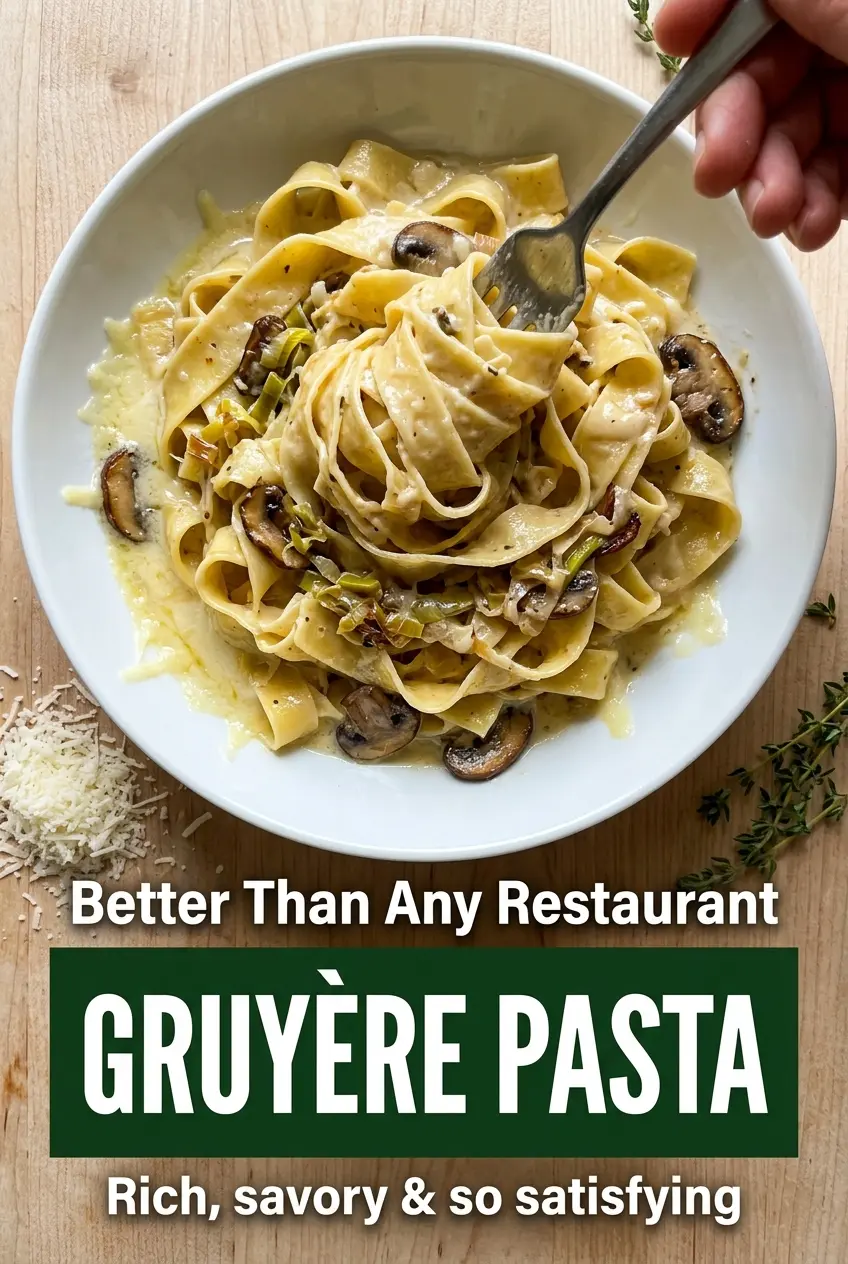
Caramelized Leek and Mushroom Gruyère Pasta
Ingredients
Equipment
Method
- Bring a large pot of salted water to a boil, then cook the pasta until al dente. Reserve 1 cup pasta water before draining.
- Melt the butter with the olive oil in a large skillet over medium-low heat. Add the leeks and cook, stirring occasionally, for 15–18 minutes until deeply golden and caramelized.
- Add the mushrooms to the skillet and raise the heat to medium. Cook for 6–8 minutes until browned and any liquid has evaporated.
- Stir in the garlic and thyme and cook for 30 seconds until fragrant.
- Pour in the white wine and simmer for 2 minutes, scraping up any browned bits from the pan.
- Lower the heat and stir in the heavy cream. Simmer for 2–3 minutes until slightly thickened.
- Add the gruyère and parmesan a handful at a time, stirring until melted and glossy.
- Toss in the cooked pasta, adding splashes of reserved pasta water until the sauce coats every strand.
- Season with kosher salt and black pepper to taste, then serve immediately topped with extra gruyère and cracked pepper.
