
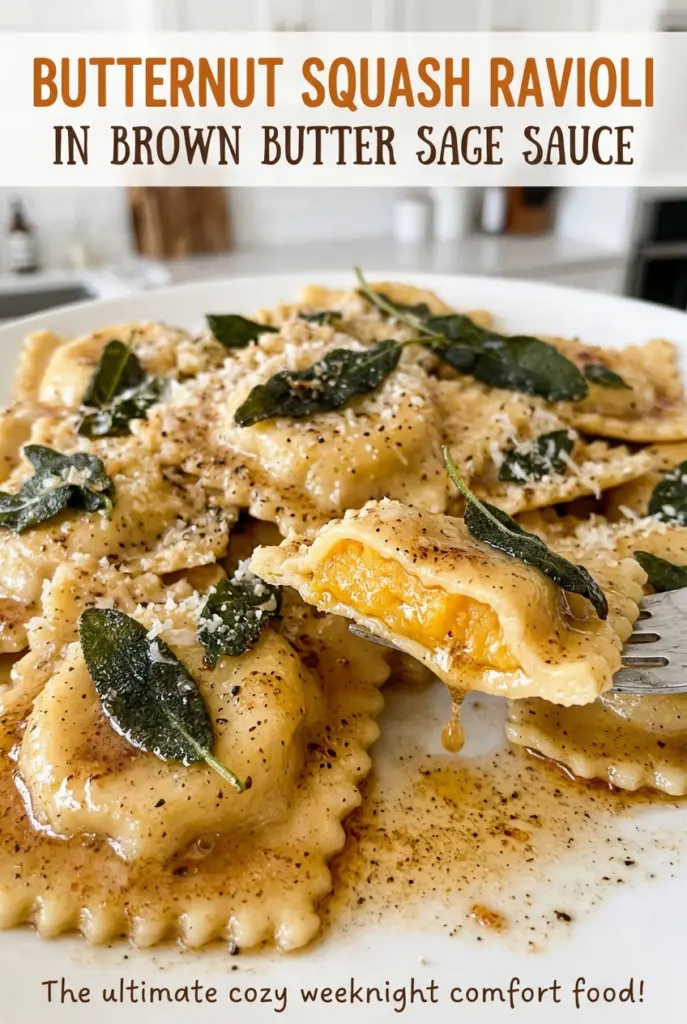
Butternut Squash Ravioli in Brown Butter Sage Sauce
The butter changes fast: first it melts quietly, then brown flecks collect in the skillet and a nutty smell rises. That’s the moment to add the sage; give the butter…
Tip: save now, cook later.The butter changes fast: first it melts quietly, then brown flecks collect in the skillet and a nutty smell rises. That’s the moment to add the sage; give the butter another minute and those delicate leaves have less room to turn crisp without scorching. I make this butternut squash ravioli in brown butter sage sauce when refrigerated pasta needs a finish that feels special without adding another complicated part to dinner. The sauce comes together in the skillet, and the ravioli cook while the butter browns.
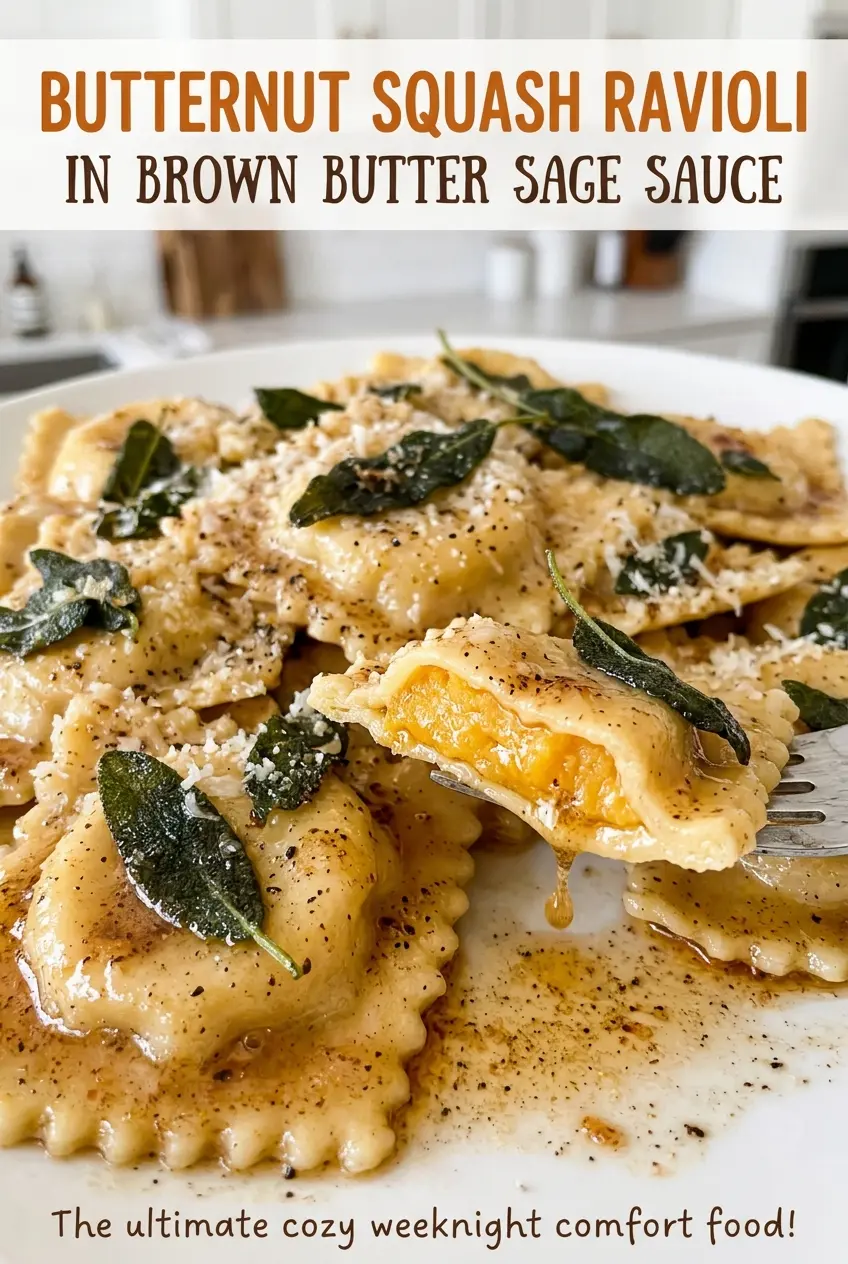
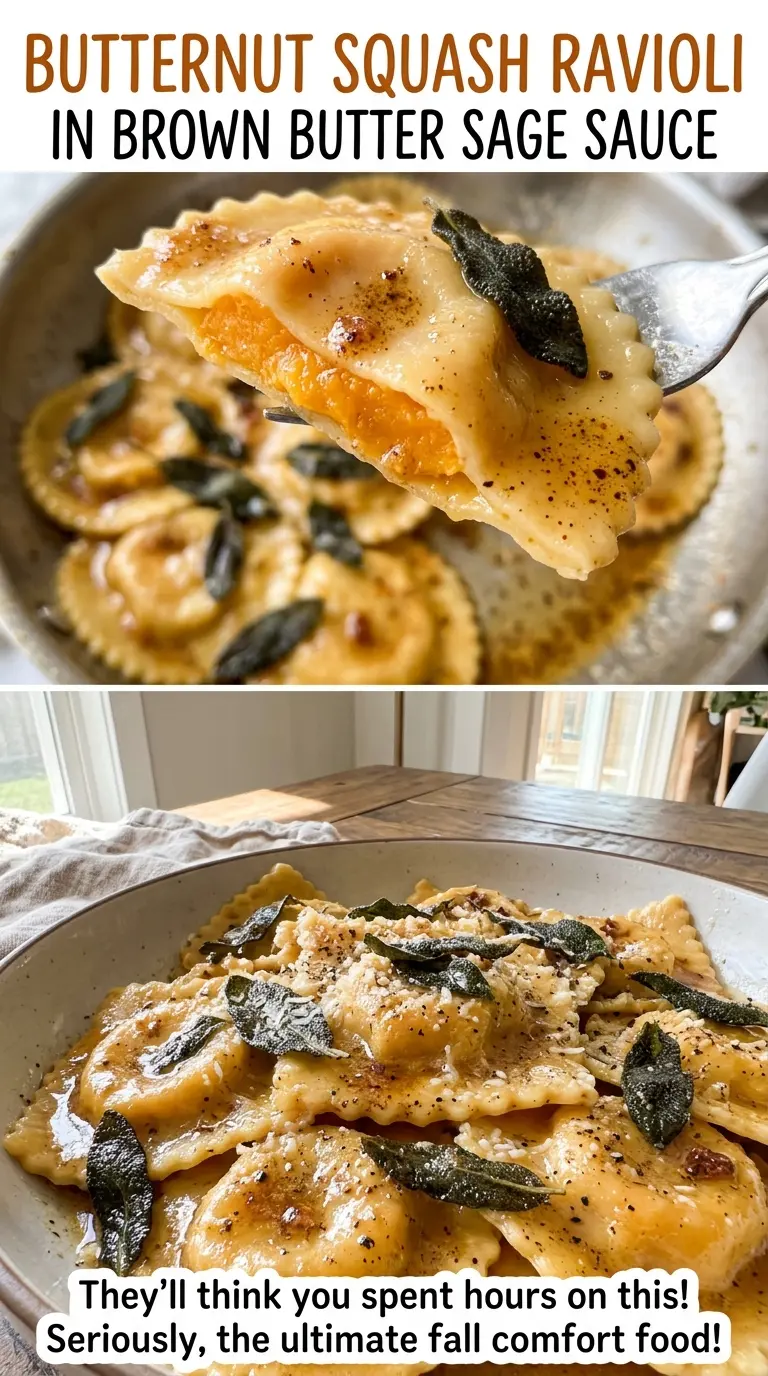
Butternut squash filling is naturally sweet, so the sauce needs to balance it rather than cover it up. Fresh sage brings an earthy edge, black pepper adds a little warmth, and finely grated Parmesan rounds out the butter without turning the dish into a heavy cream sauce. The finished ravioli should look glossy, with the sauce clinging to the pasta and crisp sage scattered among the pieces.
Kitchen Note
I grate the Parmesan before the ravioli go into the water. The finish moves quickly once the pasta reaches the skillet, and having it ready keeps the browned butter from sitting while I reach for a grater.
Save this butternut squash ravioli with glossy brown butter and crisp sage for a dinner that feels polished but comes together in minutes.
Why the Pasta Water Belongs in the Skillet Before the Parmesan
The reserved cooking water does more than loosen the butter. As ravioli cook, a little starch escapes into the pot, and that starchy water helps the butter cling to the pasta instead of gathering in a slick at the bottom of the skillet. Add it while tossing the ravioli and the sauce turns glossy, with enough body to coat each piece.
Parmesan goes in after the skillet comes off the heat. High heat can make grated cheese seize into little clumps rather than blend smoothly into the sauce, especially when it hits hot butter directly. Let the pasta water and butter come together first, then toss in the cheese gently. The result stays light enough for the squash filling to come through, but the sauce still feels complete. If the sauce looks loose at first, keep tossing gently; it needs a moment to come together around the ravioli.
Why Fresh Sage and Finely Grated Parmesan Matter in This Sauce
- Unsalted butter — It browns into the base of the sauce, so a standard grocery-store butter works well; there’s no need to seek out a specialty brand. Unsalted butter also gives you more control over the overall saltiness alongside the salted pasta water and Parmesan.
- Fresh sage — Fresh leaves turn crisp in the butter and bring a clean, earthy aroma. Dried sage won’t give you that texture or the same fresh character, so it isn’t a like-for-like replacement here.
- Refrigerated butternut squash ravioli — The squash filling gives the sauce its sweet, savory contrast. Choose a package that looks intact and follow its cooking directions, since ravioli thickness and cook time vary by brand.
- Finely grated Parmesan — Fine shreds melt into the sauce more evenly than thick pieces. A block grated just before cooking is a good choice, though a finely grated packaged Parmesan works when that’s what you have.
- Freshly ground black pepper — Grinding it fresh gives the butter a more fragrant, lively finish. Pre-ground pepper will season the sauce too, but its flavor is less pronounced.
The Three Moments That Keep the Ravioli Tender and the Sauce Glossy
Brown the butter, then crisp the sage
Melt the butter in a 12-inch skillet over medium heat, swirling often as it foams and begins to change color. After 3–5 minutes, look for brown flecks and a nutty smell; don’t wait for the butter to turn dark all over. Add the sage leaves and cook for 30–45 seconds, until crisp. Take the skillet off the heat before stirring in the black pepper.
Cook the ravioli gently in salted water
Bring 4 quarts of water and the kosher salt to a boil in an 8-quart pot. Add the refrigerated ravioli and cook according to the package directions, usually 3–5 minutes, giving them one gentle stir so they don’t stick together. They’re ready when tender and floating. Reserve 1/2 cup of the cooking water, then lift the ravioli into the skillet with a slotted spoon rather than tipping them into a colander.
Toss until the butter coats each piece
Add the reserved cooking water to the skillet and toss the ravioli gently over medium-low heat for 1–2 minutes. The sauce should look glossy and cling to the pasta instead of pooling separately in the pan. Remove the skillet from the heat before adding the Parmesan, then toss gently to combine. Rough stirring at this point can break tender ravioli, so use a light hand.
Small Changes That Shift the Squash-and-Sage Balance
Swap in refrigerated cheese ravioli
Use the same total amount of refrigerated cheese ravioli in place of the squash-filled pasta. The butter and sage still work beautifully, but the dish will taste more savory and lose the filling’s gentle sweetness; follow the package cooking directions for that ravioli.
Leave out the Parmesan for a lighter finish
Skip the Parmesan and finish the butter sauce with the reserved cooking water alone. The sauce will be less savory and won’t have the same rounded, cheesy quality, but the squash and sage will taste more distinct.
Make the sauce gentler by omitting the pepper
Leave out the black pepper for a softer finish that keeps the focus on the squash and sage. The sauce will have less warmth, but the browned butter and Parmesan still give it plenty of savory depth.
Storage and Reheating
- Refrigerator: Refrigerate leftovers in a covered container within 2 hours and use them within 3–4 days. The ravioli will soften as they sit in the sauce.
- Freezer: I don’t recommend freezing the finished dish. Cooked ravioli can turn mushy after thawing, and the butter sauce may separate.
- Reheating: Warm leftovers gently in a skillet with a small splash of water, stirring carefully, until they reach 165°F. High heat can make the sauce greasy and break the delicate pasta.
Questions That Come Up While Cooking Butternut Ravioli
Butternut Squash Ravioli in Brown Butter Sage Sauce
Ingredients
Equipment
Method
- Melt the butter in a 12-inch skillet over medium heat, swirling often, for 3-5 minutes, until brown flecks appear and it smells nutty.
- Add the sage leaves and cook for 30-45 seconds, until crisp.
- Remove the skillet from the heat and stir in the black pepper.
- Bring the water and kosher salt to a boil in an 8-quart pot.
- Add the ravioli and cook according to the package directions, usually 3-5 minutes, gently stirring once, until tender and floating.
- Reserve 1/2 cup cooking water, then transfer the ravioli to the skillet with a slotted spoon.
- Add the reserved cooking water to the skillet and toss gently over medium-low heat for 1-2 minutes, until the sauce is glossy and coats the ravioli.
- Remove from the heat, add the Parmesan, and toss gently to combine.
