
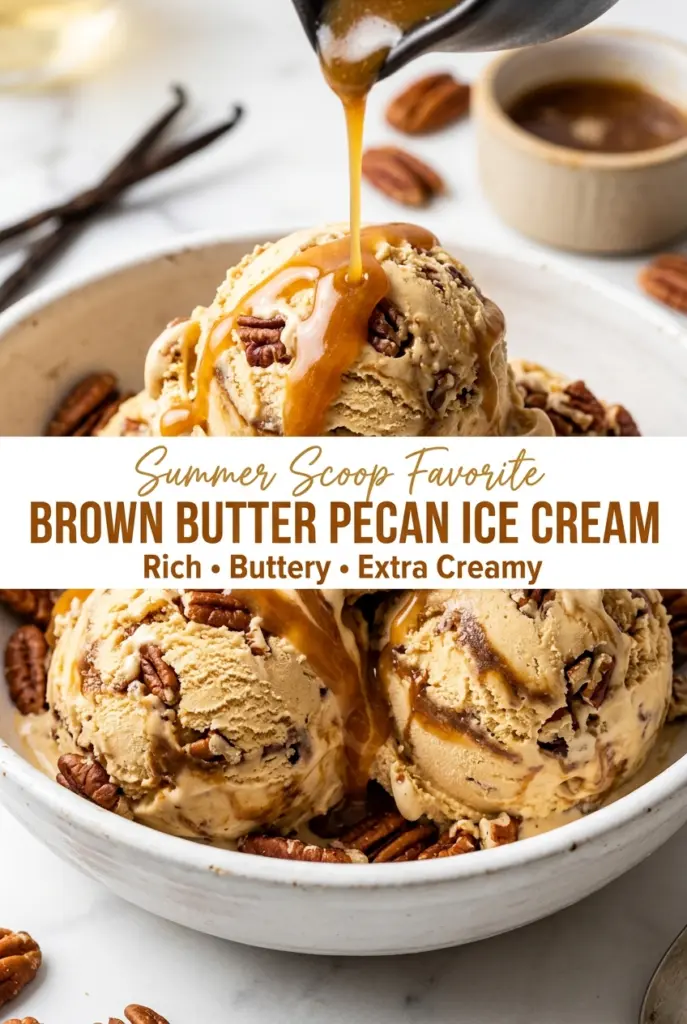
Brown Butter Pecan Ice Cream
Brown butter pecan ice cream has that rare homemade balance of deep caramel notes, toasted nuttiness, and a custard base that stays silky instead of icy. The browned butter gives…
Tip: save now, cook later.Brown butter pecan ice cream has that rare homemade balance of deep caramel notes, toasted nuttiness, and a custard base that stays silky instead of icy. The browned butter gives the pecans a richer, almost toffee-like edge, and the vanilla custard keeps every scoop smooth enough to pile into a bowl or tuck between cookies without turning crumbly.
What makes this version work is the way the flavors are built in layers. The butter is browned first so it brings actual nutty depth before the pecans even hit the pan. Then the custard base is cooked slowly, just until it coats the spoon, which keeps the eggs from scrambling and the finished ice cream from feeling heavy. That extra bit of care is what gives you a clean, creamy scoop instead of a dense frozen block.
Below, I’ve included the small details that matter most: how dark the butter should get, when the custard is thick enough to stop cooking, and the easiest way to keep those pecans crunchy after they’re folded in.
The browned butter gave the pecans this toasted caramel taste, and the custard came out perfectly smooth after chilling overnight. I churned it for about 25 minutes and it scooped like a dream the next day.
Brown Butter Pecan Ice Cream with that nutty caramel swirl is the one to pin for a creamy homemade dessert that churns up rich and scoopable every time.
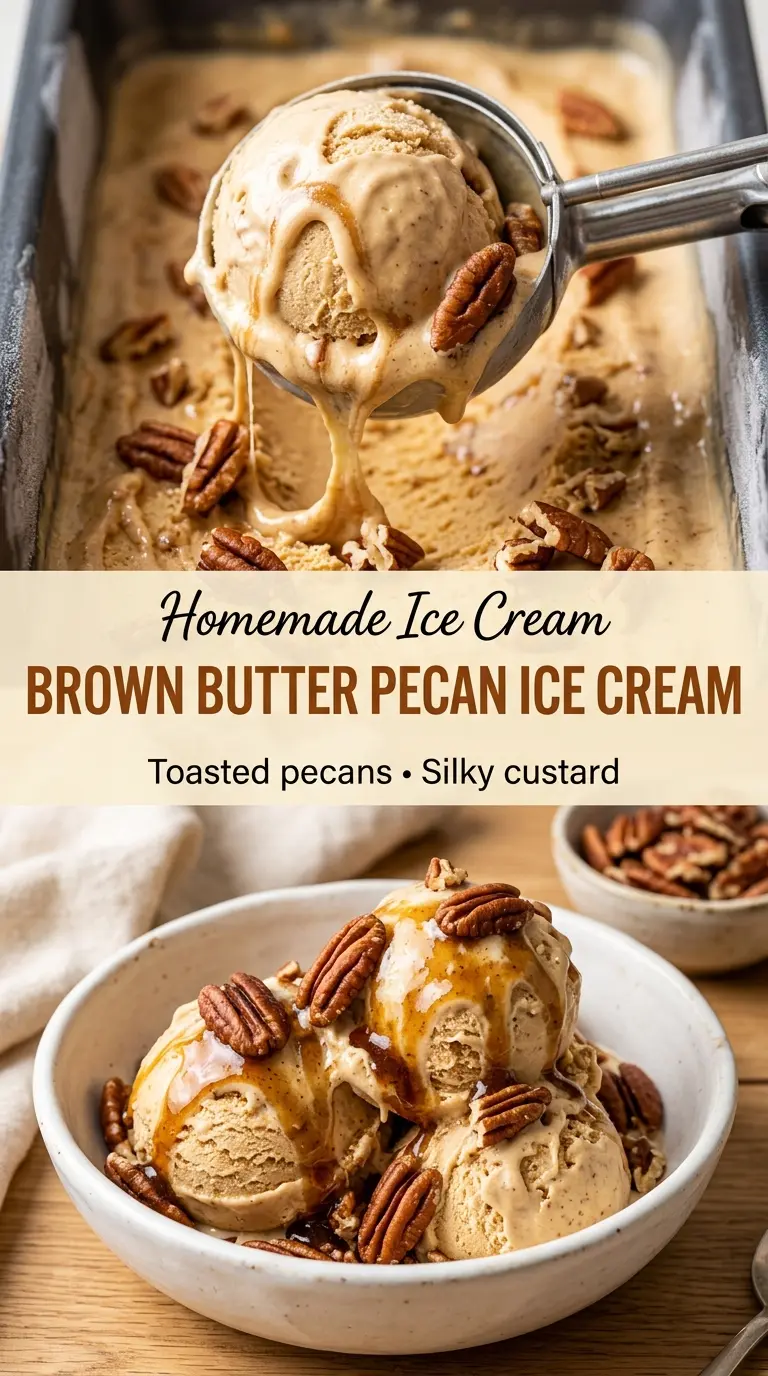
The Secret to Keeping Brown Butter Pecan Ice Cream Creamy Instead of Icy
Ice cream turns icy when the custard base is thin, undercooked, or rushed through the chilling stage. This recipe avoids that by using enough egg yolks to give the base body and by cooking the custard only until it lightly coats the back of a spoon. Once it gets there, stop. If you keep going, the eggs tighten too far and the texture turns grainy after freezing.
The other place people go wrong is the pecans. Adding them too early makes them soft and dull inside the churn. Cooling them completely before folding them in keeps the brown butter coating intact, so you get little crunchy bits instead of chewy filler.
- Egg yolks — These are what give the ice cream its custard texture and help it stay scoopable. Whole eggs can work in a pinch, but the base won’t taste as rich.
- Heavy cream and whole milk — The cream brings body, and the milk keeps the base from becoming too thick or greasy. Using all cream makes the finished ice cream heavier and harder to scoop.
- Brown sugar — A little brown sugar in the pecans deepens the caramel note and helps the coating cling. Light or dark brown sugar both work; dark brown sugar gives a stronger molasses edge.
- Pecan halves — Fresh pecans matter here. Stale pecans taste flat and can turn soft faster once they’re mixed into the custard. Rough chopping gives you enough texture without making the churn awkward.
Building the Custard and Folding in the Pecans
Browning the Butter First
Cook the butter over medium heat until the foam subsides and the milk solids at the bottom turn amber and smell nutty. That shift happens fast at the end, so stay close and pull the pan as soon as you see deep golden flecks. If it goes past nutty and starts smelling sharp or burnt, the flavor turns bitter and the whole batch suffers.
Stir in the pecans, brown sugar, and sea salt while the butter is still warm. The sugar melts onto the nuts and gives them that glossy caramel coating. Let them cool completely before they go anywhere near the churn or they’ll soften the custard.
Cooking the Vanilla Custard
Warm the cream, milk, and half the sugar until the mixture is steaming, not bubbling. Whisk the yolks with the rest of the sugar until they look pale and a little thick, then stream in a small amount of the hot dairy while whisking constantly. That step keeps the yolks from curdling when they hit the pan again.
Return everything to the saucepan and cook over medium-low heat, stirring without breaks, until the custard coats the back of a spoon. Drag a finger through the coating; the line should stay clean. If the heat is too high, you’ll get tiny bits of cooked egg, and once that happens the texture never fully recovers.
Chilling and Churning
Stir in the vanilla and salt off the heat, then chill the custard until it’s completely cold. Warm custard churns sluggishly and usually freezes with larger ice crystals, which is why the overnight chill is worth it. When the base is cold, it thickens faster in the machine and tastes cleaner.
Churn until the mixture looks like soft-serve and holds gentle swirls on the paddle. Fold in the pecans near the end so they stay distributed without sinking. Transfer to a freezer-safe container and freeze until firm enough to scoop, but don’t let it sit uncovered or the surface will get brittle and frosty.
How to Adapt This for Different Diets and Kitchen Setups
Dairy-Free Version
Use full-fat coconut milk in place of the whole milk and cream, then cook the custard a little more gently because coconut milk can separate if it gets too hot. The flavor changes, but you still get a rich base with the same brown butter pecan idea if you use a plant-based butter substitute for the pecans.
No Ice Cream Maker
Freeze the custard in a shallow dish and stir it every 30 minutes for the first 3 hours to break up ice crystals. The texture won’t be as airy as churned ice cream, but it will still taste rich if the custard is fully chilled before freezing.
Nut-Free Swap
Swap the pecans for toasted sunflower seeds or crushed pretzels if you need the crunch without nuts. You’ll lose the classic buttery pecan flavor, but the browned butter base still carries enough depth to keep the dessert balanced.
Storage and Freezing
- Refrigerator: The custard base can sit covered for up to 2 days before churning. It will thicken slightly as it chills.
- Freezer: The finished ice cream keeps well for about 2 weeks. After that, the texture starts to lose some of its creaminess and the pecans soften.
- Reheating: Let the container stand at room temperature for 5 to 10 minutes before scooping. If it’s rock hard, the freezer is too cold or the base didn’t chill long enough before churning.
Answers to the Questions Worth Asking
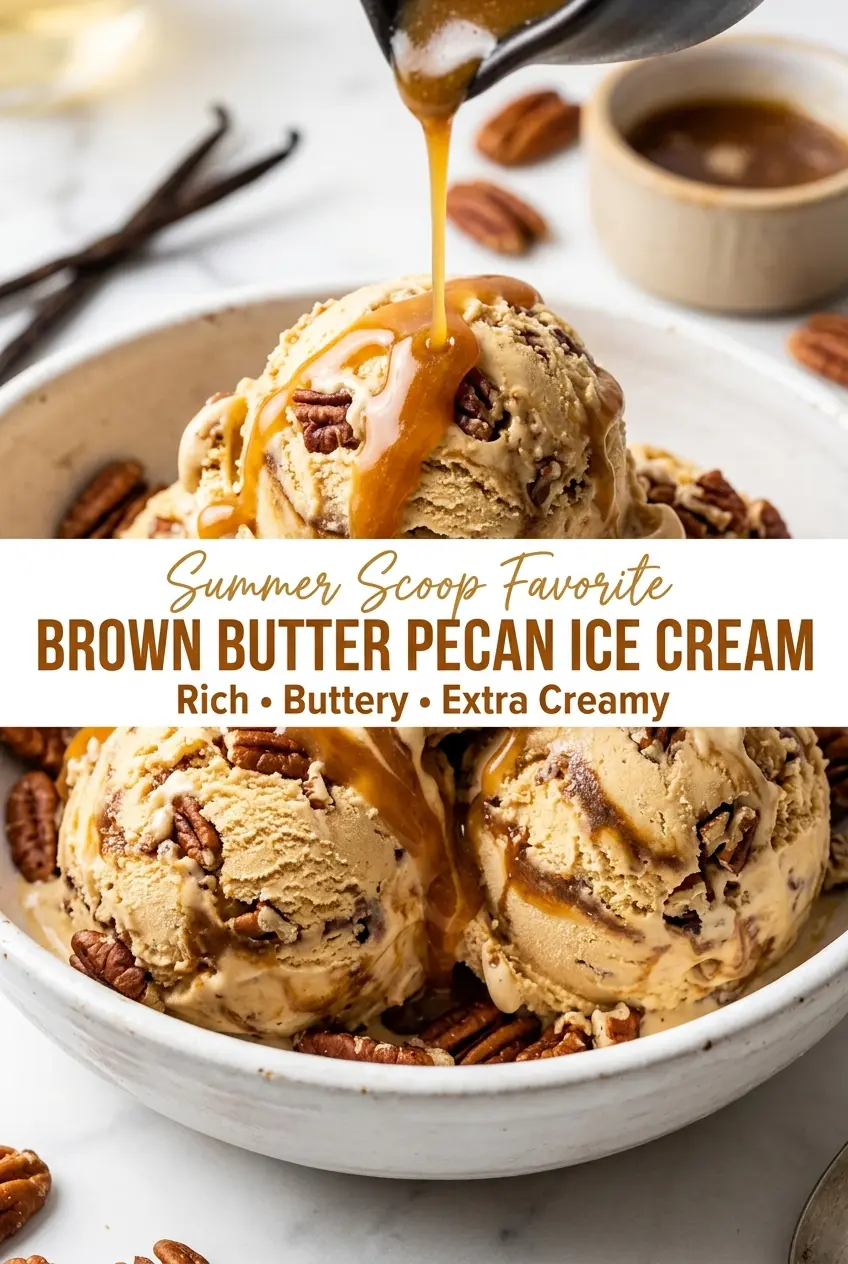
Brown Butter Pecan Ice Cream
Ingredients
Equipment
Method
- Melt the unsalted butter in a medium saucepan over medium heat. Continue cooking for 4–6 minutes until it turns deep golden brown and develops a nutty aroma.
- Stir in the pecan halves, brown sugar, and sea salt. Cook for 2–3 minutes until the pecans are lightly caramelized, then transfer to a plate and cool completely.
- Heat the heavy cream, whole milk, and half of the granulated sugar in a saucepan over medium heat until steaming but not boiling. Keep it hot while you prepare the yolks.
- Whisk the egg yolks with the remaining granulated sugar until pale and smooth. Scrape the sides so the mixture stays evenly blended.
- Slowly pour a small amount of the warm cream mixture into the egg yolks while whisking constantly to temper them. Keep whisking so the yolks don’t scramble.
- Return the tempered mixture to the saucepan. Cook over medium-low heat for 5–7 minutes, stirring constantly until the custard thickens enough to coat the back of a spoon.
- Remove from the heat and stir in the vanilla extract and salt. Let the custard cool to warm before chilling.
- Chill the custard for at least 4 hours or overnight until completely cold. Cover to prevent a skin from forming.
- Churn the chilled custard in an ice cream maker according to the manufacturer’s instructions. Churn until thickened to a soft-serve texture.
- Fold in the cooled brown butter pecans during the last 2 minutes of churning. Mix just enough to distribute the pecans evenly.
- Transfer the ice cream to a freezer-safe container and freeze for 3–4 hours before serving. Freeze until scoopable and firm.
