
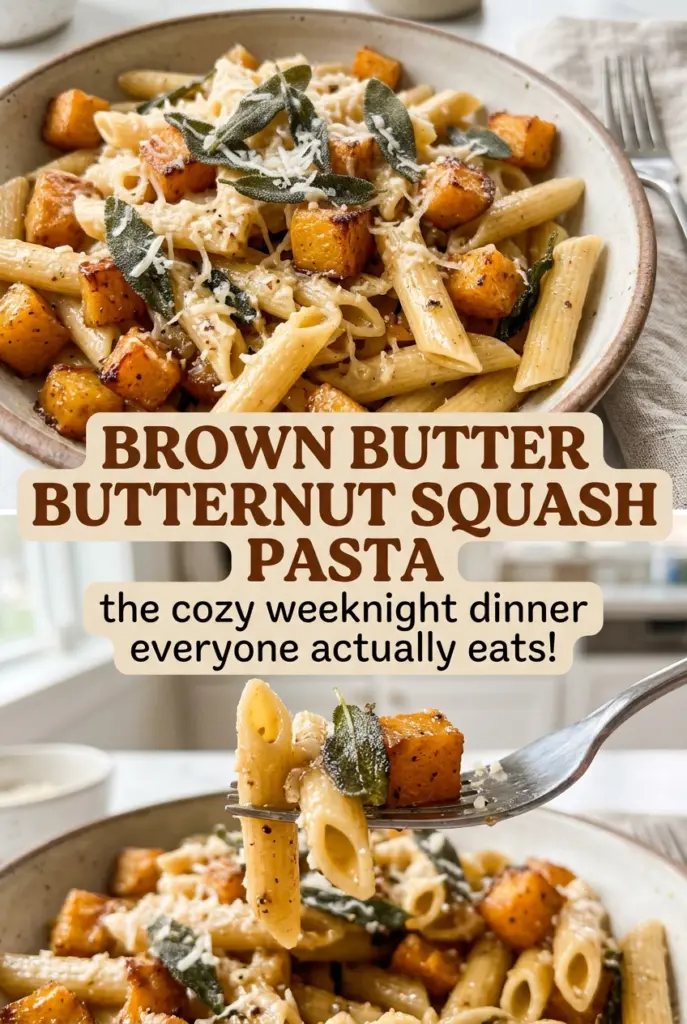
Brown Butter Butternut Squash Pasta
The squash comes out of the oven with browned edges and a soft center, while the pasta water is still bubbling on the stove. That timing makes this brown butter…
Tip: save now, cook later.The squash comes out of the oven with browned edges and a soft center, while the pasta water is still bubbling on the stove. That timing makes this brown butter butternut squash pasta feel like a cozy, complete dinner without leaving you with a pile of pans. I like using rigatoni when I want little pockets for the squash and sauce, though fettuccine works beautifully too.
The sauce stays light because the butter coats the pasta rather than turning into a heavy cream sauce. A little reserved pasta water helps everything cling, and the Parmesan goes in after the skillet leaves the heat. The result is tender squash, fragrant sage, and noodles with a glossy coating that lets each part of the dish keep its own texture.
Kitchen Note
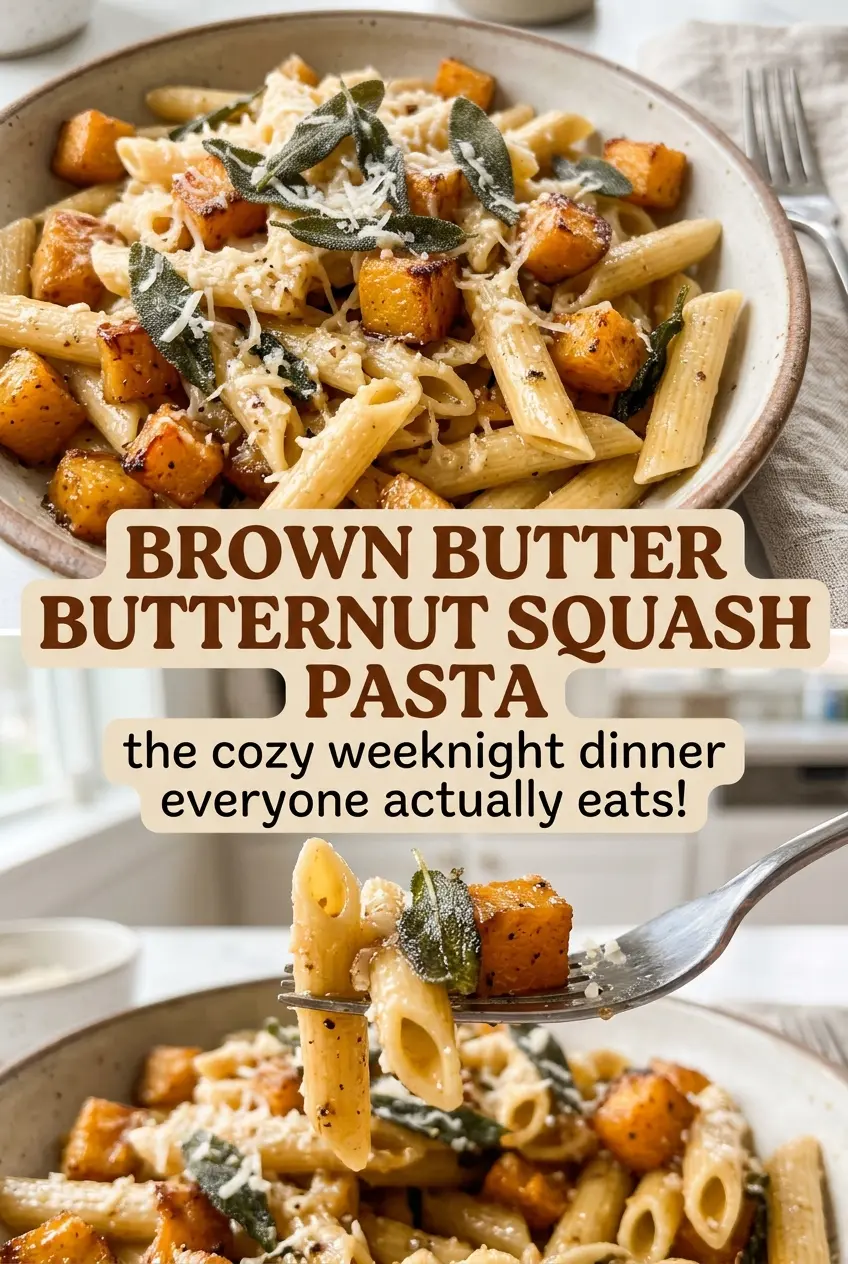
Finely grate the Parmesan before you start; the smaller pieces melt into the pasta instead of sitting in clumps. I like to have it ready beside the skillet before the squash comes out.
Save this brown butter butternut squash pasta for a cozy dinner with nutty butter, tender squash, and fresh sage.
Why the Squash Stays in Pieces Instead of Becoming a Sauce
It’s easy to assume butternut squash pasta should have a smooth squash puree coating every noodle. Here, the browned cubes are meant to stay whole. They bring a soft, sweet bite alongside the pasta, while the brown butter and sage give the dish its savory backbone. That contrast is what keeps the bowl from tasting one-note.
Keeping the squash in pieces also means you can taste the roasting instead of burying it in a blended sauce. The little browned edges add depth, and the centers stay tender enough to break apart gently as you toss. The Parmesan brings a salty finish that balances the squash’s natural sweetness without covering up the sage. It’s a simple combination, but each component has a clear job: soft squash, buttery noodles, and a savory finish.
The Ingredients That Make the Brown Butter and Squash Work Together
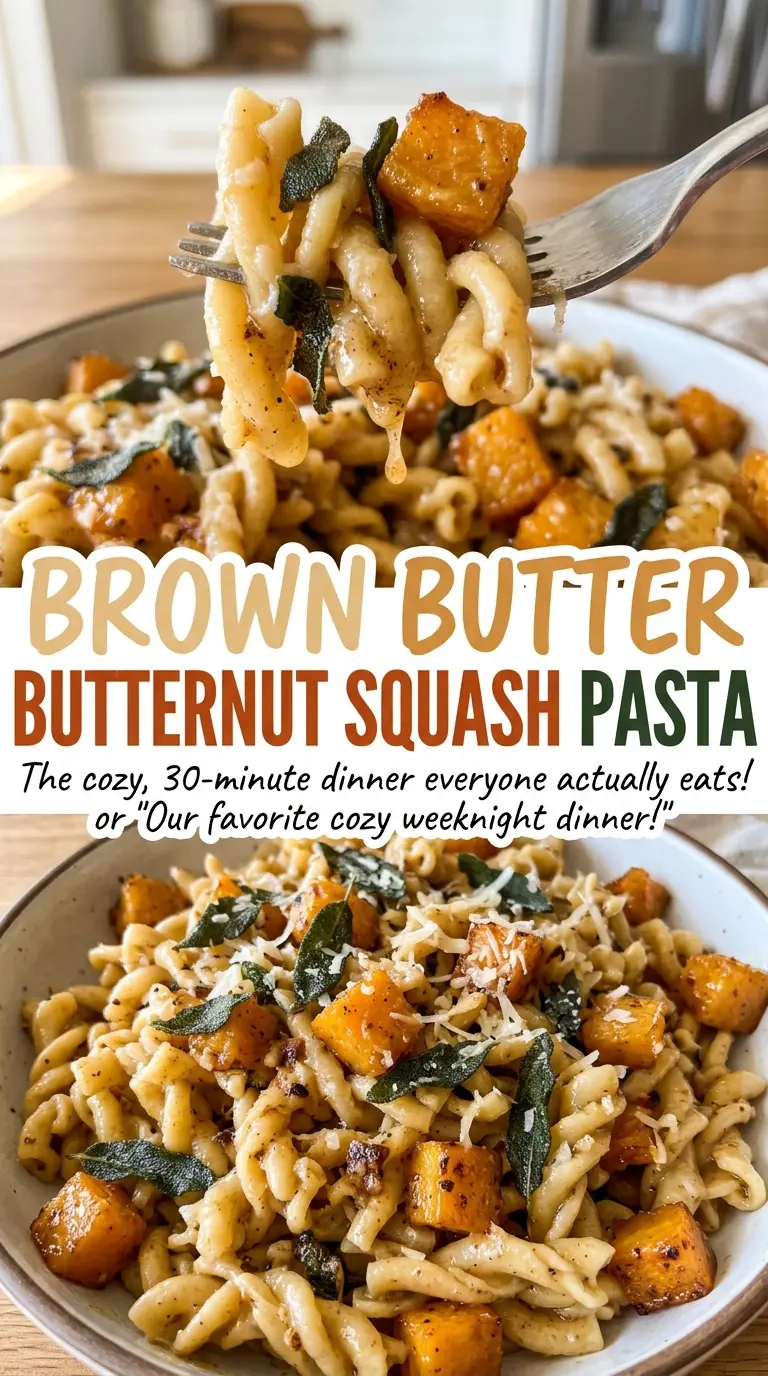
- Butternut squash — Choose a firm squash without soft spots. Peeling, seeding, and cutting it evenly helps the cubes roast at the same pace; uneven pieces can leave you with a mix of browned edges and undercooked centers.
- Unsalted butter — Butter gives the sauce its nutty richness, and unsalted butter lets the kosher salt in the pasta water season the dish without making the finish too salty. A standard grocery-store butter works well here; there’s no need for a specialty brand.
- Fresh sage — Fresh leaves perfume the butter as they cook and give the finished pasta its distinctive earthy aroma. Dried sage won’t give you the same texture or fresh fragrance, so stick with fresh leaves for this version.
- Dried pasta — Rigatoni and fettuccine are both good choices, with different textures in the finished bowl. Use a shape you enjoy eating with a light butter sauce; the pasta water helps the sauce coat it.
- Finely grated Parmesan — Fine shreds blend into the warm pasta more evenly than thick shavings. A wedge you grate yourself is a good choice when you want the smoothest finish, though finely grated Parmesan from the store is convenient.
- Olive oil — A light coating helps the squash roast without sticking to the parchment. Use a regular olive oil rather than saving an expensive finishing oil for this job.
Roast the Squash, Brown the Butter, Then Bring It All Together
Roast Until the Edges Are Browned
Heat the oven to 425°F and line a rimmed baking sheet with parchment paper. Toss the squash with the olive oil, 1/2 teaspoon of the kosher salt, and the black pepper, then spread it in an even layer. Roast for 25 to 30 minutes, tossing once halfway through. Look for tender centers and browned edges; pale squash needs more time to develop that roasted flavor.
Cook the Pasta and Save Its Water
Bring 4 quarts of water to a boil in a 6-quart pot, then stir in the remaining 2 1/2 teaspoons of kosher salt and the pasta. Cook according to the package directions until al dente, so the noodles still have a little bite. Before draining, set aside 1/3 cup of pasta water. That starchy water is part of the sauce, so don’t pour it all down the drain.
Brown the Butter and Fragrance the Sage
While the pasta cooks, melt the butter in a 12-inch skillet over medium heat, swirling the pan as it cooks. After 4 to 6 minutes, golden-brown flecks should form and the butter should smell nutty. Add the sage leaves and cook for 30 to 60 seconds. Remove the skillet from the heat after the sage has cooked.
Toss Until the Sauce Clings
Add the drained pasta, roasted squash, and reserved pasta water to the skillet. Toss over low heat for 1 to 2 minutes, until the pasta is coated. Take the skillet off the heat, add the Parmesan, and toss until the sauce clings to the noodles. If you add the cheese while the skillet is still over the burner, it’s more likely to clump instead of coating the pasta evenly.
Two Easy Ways to Adapt This Butternut Squash Pasta
Choose Rigatoni for a Chunkier Bite
Use rigatoni instead of fettuccine when you want sturdy noodles that hold the sauce inside their ridges. Fettuccine gives you a softer, more continuous tangle of pasta; both shapes work with the same squash and brown butter.
Make It Gluten-Free
Replace the dried pasta with gluten-free dried pasta and cook it according to its package directions. Save some of its cooking water before draining; the texture can vary by brand, so add the reserved water gradually as you toss until the butter coats the pasta.
Storage and Reheating
- Refrigerator: Store leftovers in an airtight container for 3 to 4 days. The pasta will soften as it sits and absorb some of the sauce.
- Freezer: Freezing isn’t the best choice; the pasta tends to turn soft after thawing, and the squash can lose its firm texture.
- Reheating: Warm leftovers in a skillet over low heat with a small splash of water, stirring gently until hot. High heat can dry out the pasta before the center warms through.
Questions That Come Up While Making This Pasta
Brown Butter Butternut Squash Pasta
Ingredients
Equipment
Method
- Heat the oven to 425°F.
- Line a rimmed baking sheet with parchment paper.
- Toss the squash with the olive oil, 1/2 teaspoon of the kosher salt, and the black pepper.
- Spread the squash in an even layer on the baking sheet.
- Roast for 25 to 30 minutes, tossing once halfway through, until tender and browned.
- Bring the water to a boil in a 6-quart pot.
- Stir in the remaining 2 1/2 teaspoons kosher salt and the pasta.
- Cook according to package directions until al dente.
- Reserve 1/3 cup pasta water, then drain the pasta.
- While the pasta cooks, melt the butter in a 12-inch skillet over medium heat for 4 to 6 minutes, swirling the pan, until golden-brown flecks form and the butter smells nutty.
- Add the sage leaves and cook for 30 to 60 seconds.
- Remove the skillet from the heat.
- Add the drained pasta, roasted squash, and reserved pasta water to the skillet.
- Toss over low heat for 1 to 2 minutes until coated.
- Remove from the heat.
- Add the Parmesan and toss until the sauce clings to the pasta.
