
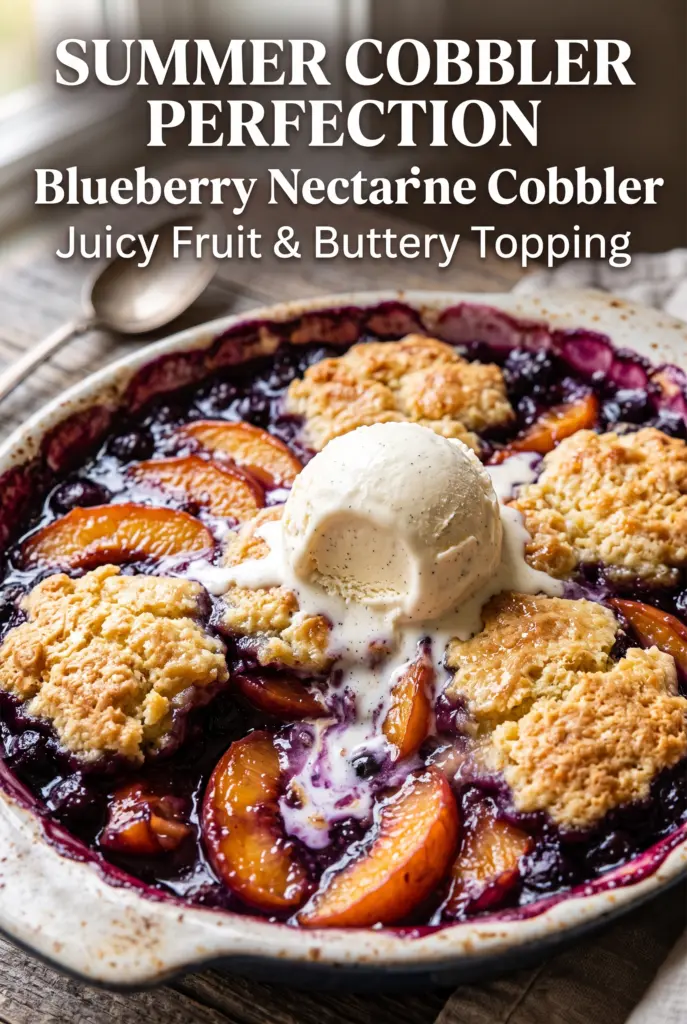
Blueberry Nectarine Cobbler
Blueberry nectarine cobbler brings together soft, syrupy fruit and a biscuit topping that bakes up golden at the edges and tender in the middle. The nectarines hold their shape just…
Tip: save now, cook later.Blueberry nectarine cobbler brings together soft, syrupy fruit and a biscuit topping that bakes up golden at the edges and tender in the middle. The nectarines hold their shape just enough, the blueberries burst into a deep purple sauce, and every spoonful lands somewhere between rustic and just polished enough to serve to company.
What makes this version work is the balance in the filling. A little cornstarch thickens the fruit juices without turning the cobbler gummy, and the lemon juice keeps the sweetness bright instead of flat. The topping stays old-fashioned on purpose: cold butter, a light hand with the dough, and spooned mounds rather than a full blanket so the fruit can bubble up around the sides.
Below, I’ll walk through the small details that keep the filling from going watery and the topping from turning dense. If you’ve ever had cobbler come out pale, soggy, or overly sweet, the fixes are in here.
The fruit baked down into the perfect jammy layer and the biscuit topping stayed crisp on the edges even after I served it with ice cream. I loved that it wasn’t runny at all after a short rest.
Save this blueberry nectarine cobbler for the nights when you want bubbling fruit and a buttery biscuit top with almost no fuss.
The Reason Cobbler Turns Watery Before the Oven Even Catches Up
Fruit cobbler goes wrong when the filling is treated like pie filling and the topping like cake batter. Nectarines and blueberries release a lot of juice once the sugar hits them, and if you don’t give that liquid something to bind to, it pools at the bottom of the dish and thins out the whole dessert. Cornstarch is what turns that fruit juice into a glossy sauce instead of a puddle.
The other common miss is overmixing the topping. Once the butter is cut in, the dough should still look rough and shaggy before it hits the fruit. That uneven texture is what bakes into a biscuit crust with crisp, browned spots instead of a heavy lid.
- Let the fruit sit for a minute after tossing. You want the sugar to start drawing out juices before baking; that’s how the cornstarch gets distributed evenly.
- Use ripe but not collapsing nectarines. If they’re too soft, they’ll break down into mush before the topping finishes baking.
- Drop the topping in mounds, not a smooth layer. The open spots let steam escape and keep the crust from turning doughy.
What Each Ingredient Is Actually Doing in This Cobbler
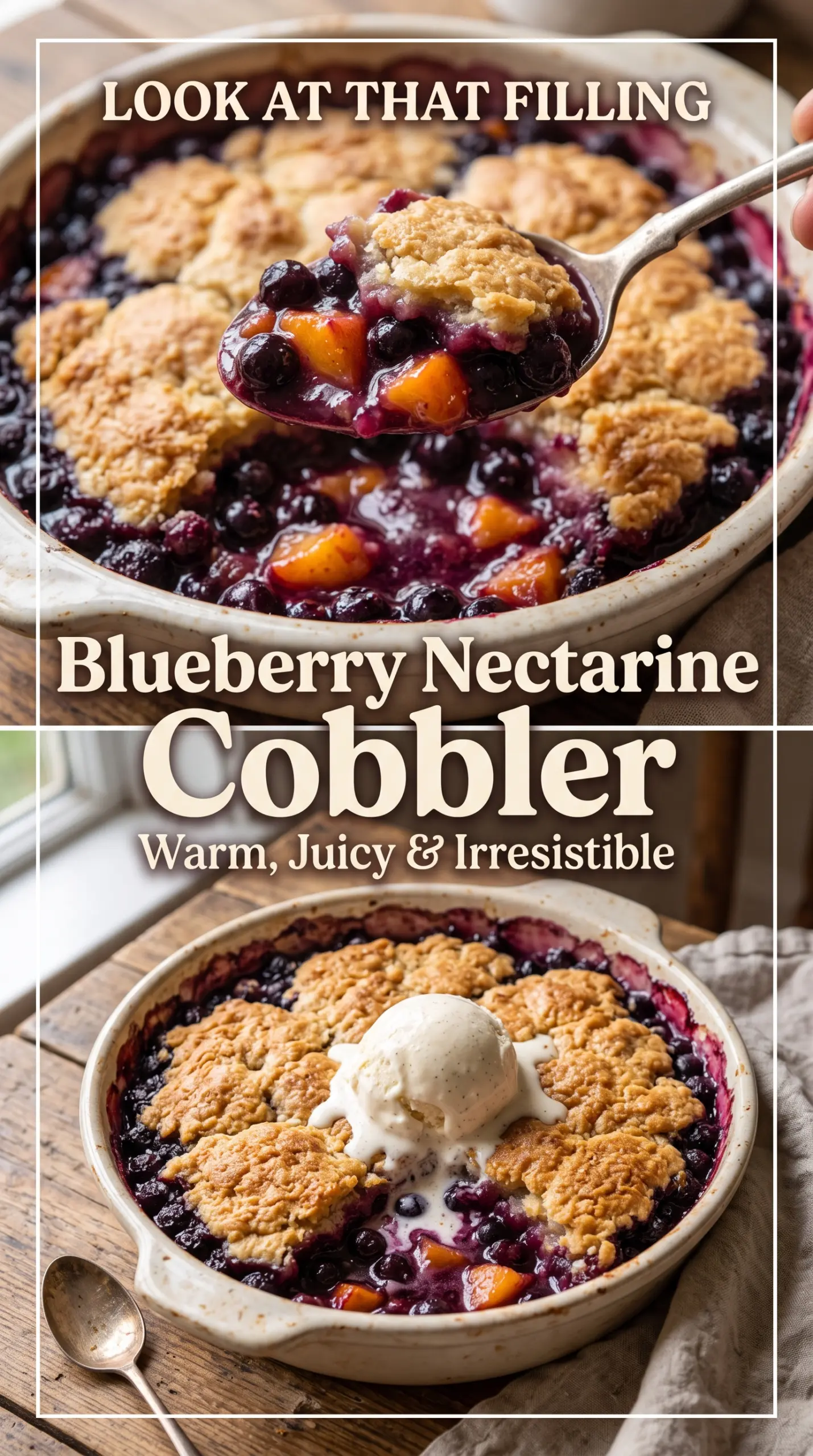
- Nectarines — These bring the soft, fragrant fruit base. Peaches work too, but nectarines keep a cleaner texture because you don’t have to peel them.
- Blueberries — They melt into the filling and deepen the color. Fresh berries hold their shape best, but frozen berries can work straight from the freezer; don’t thaw them first or they’ll leak too much juice.
- Cornstarch — This is the thickener that keeps the fruit from running all over the plate. Flour can be used in a pinch, but it gives a cloudier, heavier sauce.
- Cold butter — The butter needs to stay cold so the topping bakes up flaky and tender. If it softens too much before baking, the crust turns pasty instead of biscuit-like.
- Whole milk — It gives the topping enough richness to brown well without making it dense. Lower-fat milk works, but the crust won’t be as tender.
How to Get a Golden Topping Over Jammy Fruit, Not a Soggy Middle
Building the Fruit Base
Toss the nectarines, blueberries, sugars, cornstarch, lemon juice, vanilla, cinnamon, and salt until the fruit is evenly coated, then move it straight into the baking dish. The fruit will look wet, and that’s right; the cornstarch needs those juices to activate in the oven. If you let it sit too long after mixing, the filling can clump at the bottom instead of thickening evenly.
Cutting the Butter In
Work the cold butter into the dry topping ingredients until the mixture looks like coarse crumbs with a few pea-sized bits still visible. Those little pieces of butter melt in the oven and create tenderness. If the butter disappears completely, the topping bakes up tight and bready instead of light.
Knowing When It’s Done
Bake until the topping is deeply golden and the fruit is actively bubbling around the edges and through the center gaps. That bubbling matters; it tells you the cornstarch has fully thickened the filling. Pull it too early and the juices stay loose, which is why cobbler often seems perfect in the pan but runs all over the plate after serving.
Three Ways to Adjust This Cobbler Without Losing the Good Part
Make It Dairy-Free
Swap the butter for a solid dairy-free baking stick and use an unsweetened plant milk with some body, like oat milk. The topping won’t taste quite as rich, but it still bakes up tender and golden if the fat stays cold.
Make It Gluten-Free
Use a cup-for-cup gluten-free flour blend in the topping. The texture will be a little more delicate and less biscuit-like, but the fruit filling itself stays exactly the same.
Use Frozen Fruit
Frozen nectarines or blueberries can stand in when fresh fruit isn’t available, but keep them frozen until the moment you mix them with the sugar and cornstarch. They’ll release more liquid, so expect a slightly longer bake and a looser filling if you skip that extra time.
Storage and Reheating
- Refrigerator: Store covered for up to 4 days. The topping softens as it sits, but the flavor holds well.
- Freezer: Freeze baked cobbler in a tightly wrapped dish for up to 2 months. Thaw overnight in the refrigerator before reheating.
- Reheating: Warm individual portions in the oven at 325°F until the fruit is bubbling again and the topping firms back up. The microwave works in a pinch, but it softens the crust fast.
Answers to the Questions Worth Asking
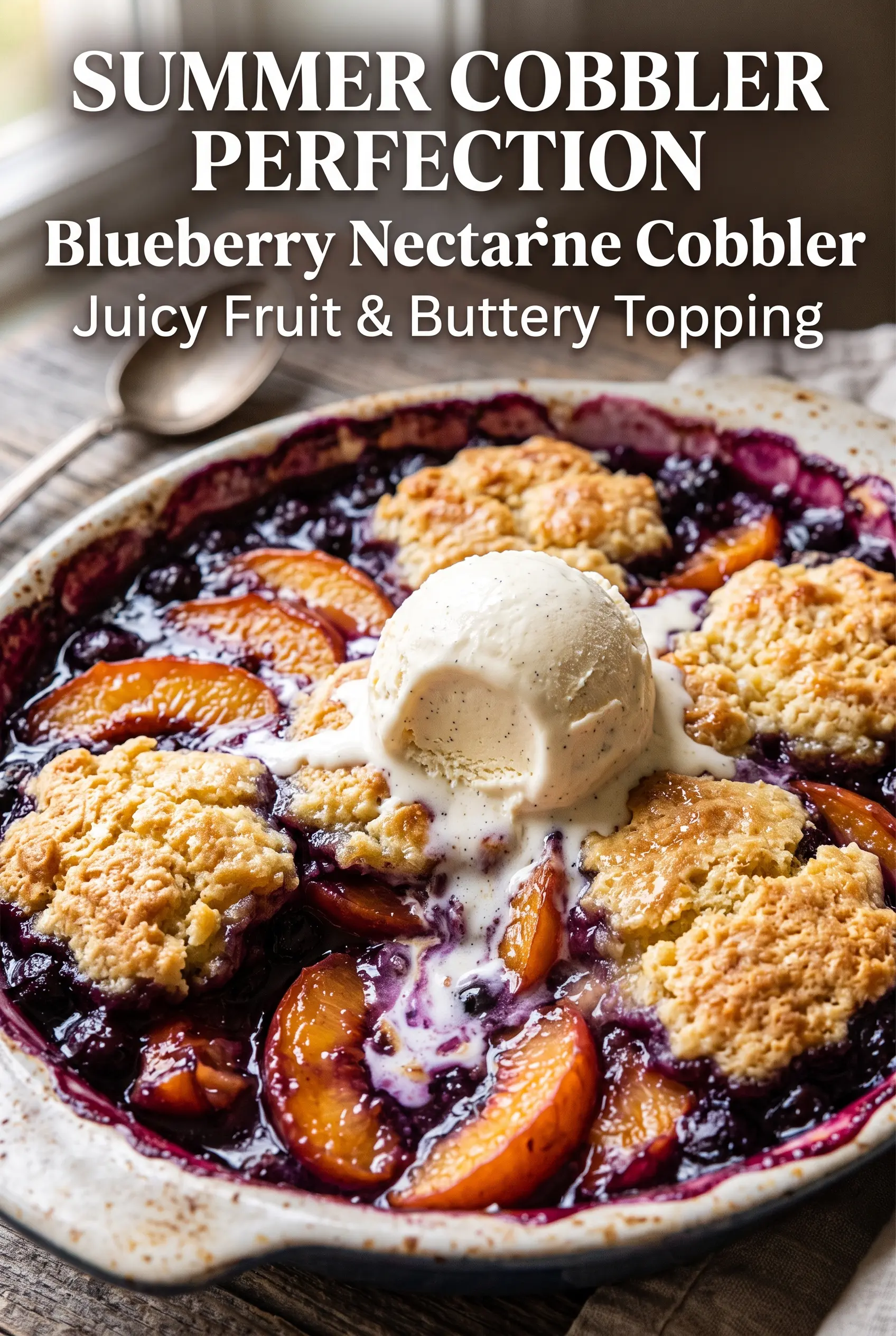
Blueberry Nectarine Cobbler
Ingredients
Equipment
Method
- Preheat the oven to 375°F (190°C). Set out a greased 9-inch baking dish so the fruit can go in right away.
- Toss the nectarines, blueberries, granulated sugar, brown sugar, cornstarch, lemon juice, vanilla extract, ground cinnamon, and salt together. Make sure the fruit is evenly coated with the thickening mixture.
- Transfer the fruit mixture to the prepared baking dish. Spread it into an even layer so it bakes uniformly.
- Whisk the flour, baking powder, granulated sugar, and salt in a bowl. Combine until the dry ingredients are evenly distributed.
- Cut in the cold unsalted butter until crumbly. Stop when the mixture resembles coarse crumbs.
- Stir in the whole milk and vanilla extract until just combined. The dough should look thick and slightly lumpy.
- Drop spoonfuls of dough evenly over the fruit. Leave small gaps so steam can release and bubbling fruit can show through.
- Bake for 40–45 minutes at 375°F (190°C). Bake until the topping is golden and the fruit is actively bubbling.
- Cool for 10 minutes before serving. This helps the filling set slightly so it slices or scoops cleanly.
- Serve warm with vanilla ice cream if desired and finish with fresh mint leaves if using. Add them right before eating for the best contrast.
