
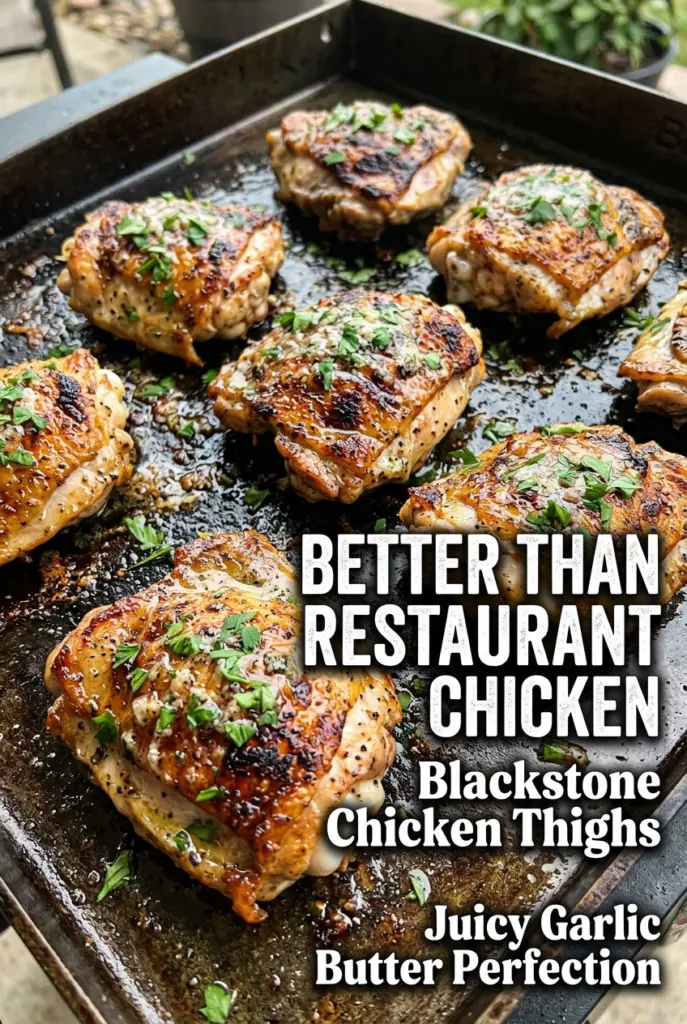
Blackstone Chicken Thighs Recipe
Juicy Blackstone chicken thighs earn their spot on the griddle because they deliver what chicken thighs do best: bronzed edges, tender meat, and enough fat to stay flavorful without turning…
Tip: save now, cook later.Juicy Blackstone chicken thighs earn their spot on the griddle because they deliver what chicken thighs do best: bronzed edges, tender meat, and enough fat to stay flavorful without turning greasy. The hot surface gives you that crisp, smoky finish fast, while the inside stays soft and succulent instead of drying out the way leaner cuts can.
The trick here is to season the thighs before they hit the heat and let the griddle do the work. A mix of olive oil, melted butter, smoked paprika, garlic, and Italian seasoning clings to the meat and helps build that deep golden crust. Bone-in thighs can work too, but boneless skinless thighs cook more evenly and are easier to move around when the edges start to caramelize.
Below, I’ll walk through the part that matters most: how to keep the griddle hot enough for color without scorching the spices, plus the few swaps that still give you juicy chicken if you need to change the seasoning or serve it a different way.
The seasoning browned up beautifully on the Blackstone and the thighs stayed juicy all the way through. I brushed on the extra butter at the end like you said, and it gave them that glossy finish my husband kept sneaking bites of.
Save these juicy Blackstone chicken thighs for the nights when you want crispy edges, smoky seasoning, and dinner on the table fast.
The Griddle Heat That Gives You Browned Chicken, Not Steamed Chicken
Blackstone chicken thighs can go wrong in one easy way: the griddle isn’t hot enough, so the meat gives off moisture before it has a chance to sear. That leaves you with pale chicken and a soft coating instead of the deep browned edges you want. Medium-high heat is the sweet spot here because it drives off surface moisture quickly and gives the spices time to toast instead of burning.
If the thighs sit in a wet marinade or go onto a cool surface, the butter and paprika will slump and steam. Pat the chicken dry first, then coat it lightly and cook on an already-hot griddle. If the seasoning starts to look dark too fast, the surface is too hot and you need a little more space between the chicken pieces so the temperature doesn’t spike from crowding.
What Each Seasoning Is Actually Doing on the Griddle

The chicken thighs carry most of the flavor here, so the seasoning blend has to work hard. Smoked paprika gives you that griddle-cooked depth, garlic and onion powder build a savory base without burning the way fresh garlic can, and Italian seasoning adds enough herbiness to keep the butter from tasting flat. Cayenne is optional, but even a small pinch wakes up the whole skillet without turning the dish overtly spicy.
- Boneless skinless chicken thighs — These stay juicy on a hot griddle and cook evenly in a short window. Chicken breasts can work, but they need gentler heat and less time or they’ll dry out.
- Olive oil and melted butter — Oil helps the seasoning coat the meat and protects the surface from sticking; butter adds flavor and helps the spices brown. If you only use butter, it can scorch faster on the griddle.
- Smoked paprika — This gives the chicken its smoky, almost char-grilled edge. Regular paprika works in a pinch, but you’ll lose that extra depth.
- Fresh parsley and lemon wedges — The parsley gives a clean finish, and the lemon cuts through the richness at the end. Don’t skip the acid; it sharpens the butter and makes the chicken taste finished.
The Few Minutes on the Griddle That Matter Most
Preheating Until the Surface Is Ready
Start by heating the Blackstone to medium-high and give it enough time to come fully up to temperature. A few drops of water should dance and evaporate quickly, not sit and hiss lazily. That heat is what creates the browned crust before the thighs lose too much moisture. If the surface isn’t ready, the chicken will stick and pale instead of sear.
Coating the Chicken Without Making It Wet
Mix the oil, butter, and seasonings into a loose paste, then coat the thighs evenly. You want the chicken slicked, not dripping; too much liquid turns the seasoning into a puddle on the griddle. Patting the thighs dry first helps the coating cling. If you skip that step, the spices slide off and the pan does the seasoning work instead of the meat.
Flipping for Color, Not Just Timing
Lay the chicken on the griddle and leave it alone long enough for the first side to develop a deep golden crust, usually 5 to 6 minutes. Flip when the edges look browned and the meat releases without tearing. Keep turning as needed until the center hits 165°F. The last minute is the time for the extra butter brush and parsley, not earlier, or the herbs and butter can burn before the chicken is done.
Make It Spicier or Keep It Mild
Add the cayenne for a warm finish, or leave it out if you want the smoked paprika and butter to stay front and center. The recipe still tastes complete without heat; the cayenne just gives the crust a little extra edge.
Dairy-Free Version
Swap the butter for more olive oil or avocado oil. You’ll lose a little of that glossy finish, but the chicken still browns well and stays tender on the griddle.
Using Bone-In Thighs Instead
Bone-in thighs need a lower, steadier heat and a longer cook time so the center finishes before the outside gets too dark. They bring a little more flavor, but they’re less weeknight-friendly because you can’t rush them the same way.
Storage and Reheating
- Refrigerator: Store in an airtight container for up to 4 days. The crust softens a bit, but the chicken stays juicy.
- Freezer: These freeze well for up to 2 months if you cool them first and wrap them tightly. Thaw overnight in the fridge before reheating.
- Reheating: Warm in a skillet over medium-low heat with a splash of water or broth and cover just until heated through. High heat dries out the thighs and makes the seasoning taste harsh.
Answers to the Questions Worth Asking
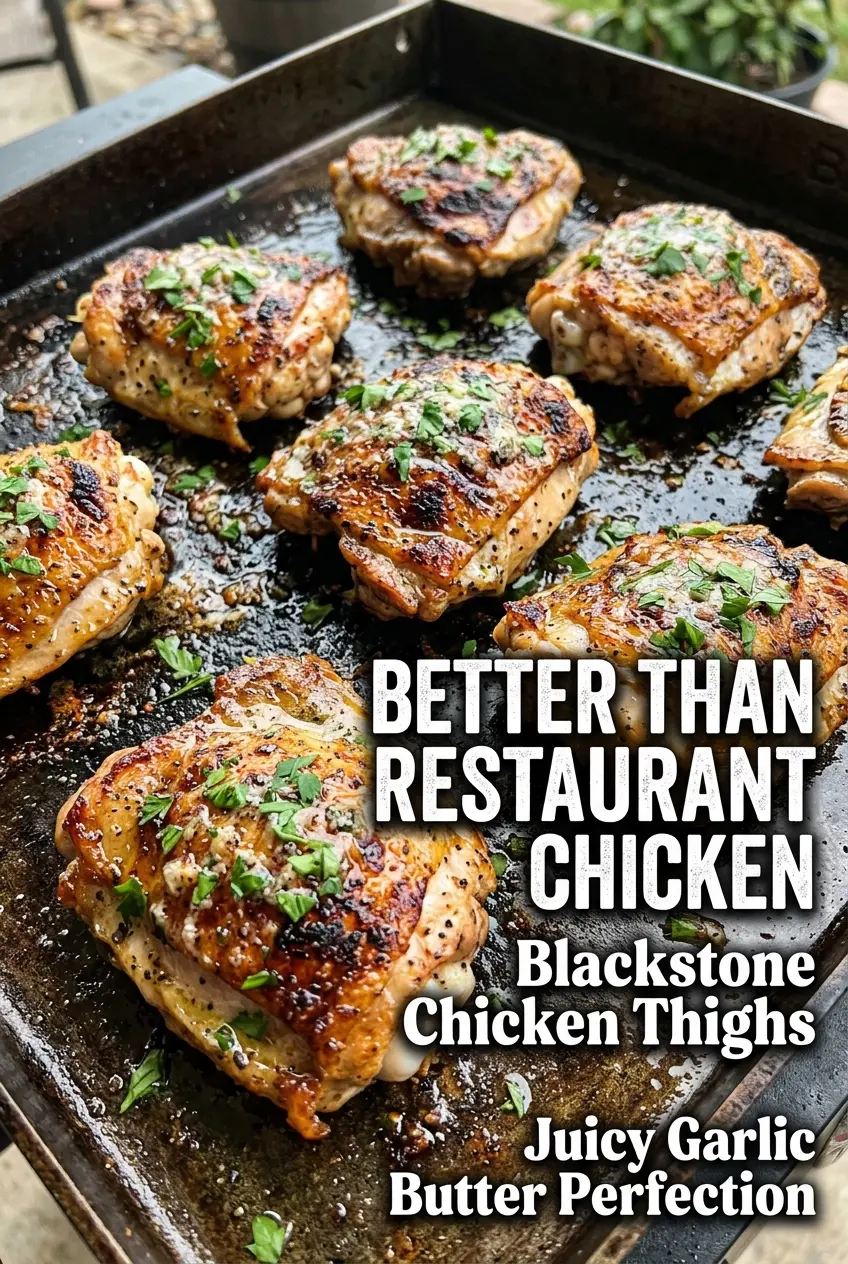
Blackstone Chicken Thighs Recipe – Juicy Garlic Butter Chicken on the Griddle
Ingredients
Equipment
Method
- Preheat the Blackstone griddle to medium-high heat. Keep the surface hot and ready so the chicken sears immediately.
- Pat the chicken thighs dry. This helps create crispy, golden edges instead of steaming.
- Mix the olive oil, melted butter, garlic powder, onion powder, smoked paprika, Italian seasoning, kosher salt, black pepper, and cayenne pepper (optional). Stir until the seasoning looks evenly combined.
- Coat the chicken thighs evenly with the seasoning mixture. Make sure every surface is covered.
- Lightly oil the hot griddle. Spread a thin film so the chicken releases easily.
- Place the chicken thighs onto the griddle. Arrange them in a single layer with space for browning.
- Cook for 5–6 minutes. Look for browned edges and a steady sizzle.
- Flip the chicken thighs and cook another 5–6 minutes. Continue until both sides are deeply golden.
- Continue turning until the internal temperature reaches 165°F. Pull the chicken as soon as it hits 165°F for juicy, tender results.
- Brush with extra melted butter during the final minute. Apply it near the end so it forms a glossy finish without burning.
- Sprinkle with fresh parsley. Add it right off the griddle for bright, fresh flavor.
- Serve immediately with grilled vegetables, potatoes, or rice. Offer lemon wedges on the side and squeeze to brighten the flavors.
