
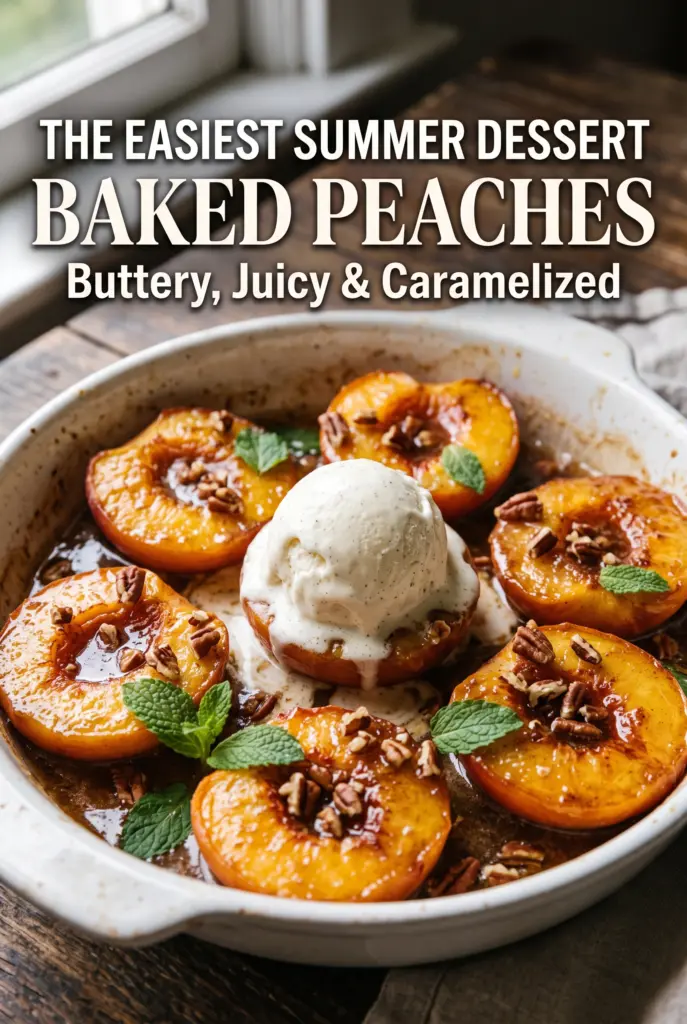
Baked Peaches
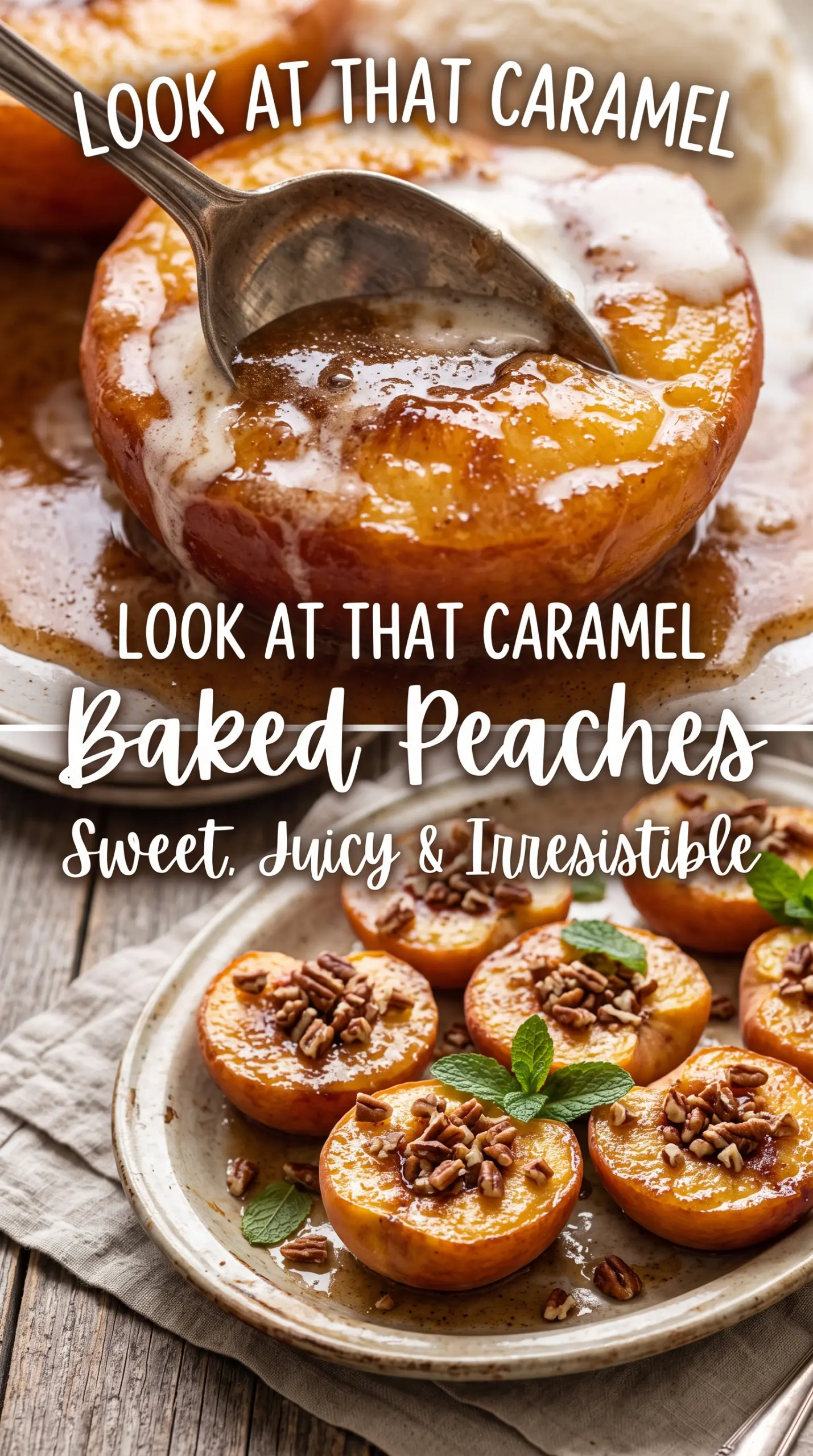
Warm baked peaches turn soft and jammy in the oven, with the edges caramelizing into a glossy syrup that tastes like summer dessert should taste. The fruit stays tender without…
Tip: save now, cook later.Warm baked peaches turn soft and jammy in the oven, with the edges caramelizing into a glossy syrup that tastes like summer dessert should taste. The fruit stays tender without collapsing, and the buttery brown sugar topping melts into the peach juices instead of sitting on top in a grainy layer. Serve them as-is, or give them a scoop of vanilla ice cream and watch the whole thing turn silky and spoonable.
The part that makes this version work is balance. Ripe peaches bring enough natural sugar to caramelize, so the topping doesn’t need much help beyond brown sugar, butter, cinnamon, and a little honey for shine. A small pinch of salt keeps the sweetness from going flat, and baking cut-side up lets the fruit soften while holding its shape. If your peaches are firm, they’ll need the full bake time; if they’re already very ripe, pull them when the centers are just tender and the sauce around them looks thick and bubbling.
Below, I’ve included the timing cues that matter most, plus a few smart variations if you want to change the topping or serve them a different way. This is one of those desserts that looks simple on paper but depends on a few small details done right.
The peaches turned perfectly soft without falling apart, and the sauce at the bottom got thick and buttery after the halfway baste. I served them with vanilla ice cream and my husband went back for a second bowl.
Sweet, buttery baked peaches with cinnamon and vanilla are the kind of simple dessert that disappears fast—save this one for the nights you want something warm and elegant without extra work.
The Reason Baked Peaches Caramelize Instead of Turning Watery
Fresh peaches can go wrong in the oven in one of two ways: they can collapse into mush, or they can leak enough juice that the topping washes off and turns thin. The fix is using ripe but still structured peaches and baking them cut-side up so the sugar melts into the fruit instead of running all over the pan. That keeps the sauce concentrated and gives you those syrupy edges people actually want.
The other detail that matters is the balance of fat and sugar. Butter helps the sugar brown and gives the sauce a glossy finish, while honey adds a little extra stickiness so the topping clings to the peaches after baking. If the peaches are pale and underripe, they’ll stay firm and taste flat. If they’re overripe, they’ll break down before the sauce has a chance to thicken.
What Each Ingredient Is Doing in These Baked Peaches
- Peaches — Choose ripe peaches that still feel slightly firm when you press near the stem. They need enough structure to hold their shape through baking. If yours are a little hard, let them sit at room temperature for a day or two before you bake them.
- Butter — Melted butter gives the topping body and helps the sugars brown instead of dry out. Use unsalted butter so you control the seasoning. Salted butter works in a pinch, but the final taste can skew a little blunt if you don’t adjust the salt.
- Light brown sugar — This is what creates the caramel-like coating. The molasses in brown sugar adds depth that white sugar just doesn’t give you. Dark brown sugar will work too, but the flavor will be a little heavier.
- Cinnamon and nutmeg — These spices give the peaches warmth without overpowering their flavor. Freshly opened cinnamon makes a difference here because the recipe is short and there’s nowhere for stale spice flavor to hide. Nutmeg should stay in the background, not dominate.
- Vanilla extract and honey — Vanilla rounds out the sauce, and honey helps it glaze the fruit as it bakes. If you don’t have honey, maple syrup can step in, though it gives the peaches a deeper, woodsy note. Use a good-quality vanilla if you have it; the flavor shows up clearly.
How to Build the Sauce So It Stays Glossy in the Oven
Setting Up the Peaches
Place the peach halves cut-side up in a baking dish with a little space between them. Crowding traps steam, and steam is what turns a caramelizing dessert into a watery one. A dish that fits them snugly is fine, but the peaches should sit in a single layer so the sauce can bubble around them.
Mixing the Topping
Whisk the melted butter, brown sugar, cinnamon, nutmeg, vanilla, honey, and salt until the sugar looks evenly moistened. You’re not looking for a perfectly smooth sauce; you’re looking for something that pours and clings. If the butter is too hot, it can make the vanilla taste dull, so let it cool for a minute after melting before you mix everything together.
Baking to the Right Texture
Spoon the mixture over the peaches and bake until the fruit gives easily at the center but still holds its shape. Halfway through, baste the peaches with the sauce from the pan so the tops stay glossy and the sugar doesn’t dry out around the edges. If the sauce looks thin when the peaches are tender, give them a few more minutes; it should bubble and thicken slightly before you pull the dish from the oven.
Serving While the Sauce Is Hot
Spoon the pan sauce over the peaches as soon as they come out of the oven. That’s when the syrup is at its loosest and most fragrant. If you wait too long, it thickens in the dish and loses some of that glossy finish, which is part of what makes the dessert feel special.
How to Adapt These Baked Peaches for Different Toppings and Diets
Dairy-Free Baked Peaches
Swap the butter for a dairy-free butter alternative or refined coconut oil. Butter gives the richest flavor, but the fruit still caramelizes well without it. Coconut oil adds a light tropical note, while plant-based butter keeps the flavor closer to the original.
Make It Gluten-Free Without Changing Anything
This dessert is naturally gluten-free as written, so the only thing to watch is your toppings. Use certified gluten-free ice cream, whipped cream, or caramel sauce if cross-contamination matters in your kitchen. The baked peaches themselves need no adjustment.
Nutty Finish for More Texture
Chopped pecans or walnuts add crunch and a toasted note that plays well with the brown sugar sauce. Stir them in during the last few minutes of baking or sprinkle them on right before serving if you want them to stay crisp. Toasting them first gives the best flavor.
Storage and Reheating
- Refrigerator: Store leftovers in a covered container for up to 3 days. The peaches soften more as they sit, and the sauce thickens as it chills.
- Freezer: They freeze, but the texture gets softer after thawing, so I don’t recommend freezing them if you want the best finish.
- Reheating: Warm them in a 325°F oven until hot, about 10 minutes, or use short bursts in the microwave. Skip high heat; it can make the peaches collapse before the sauce loosens again.
Answers to the Questions Worth Asking
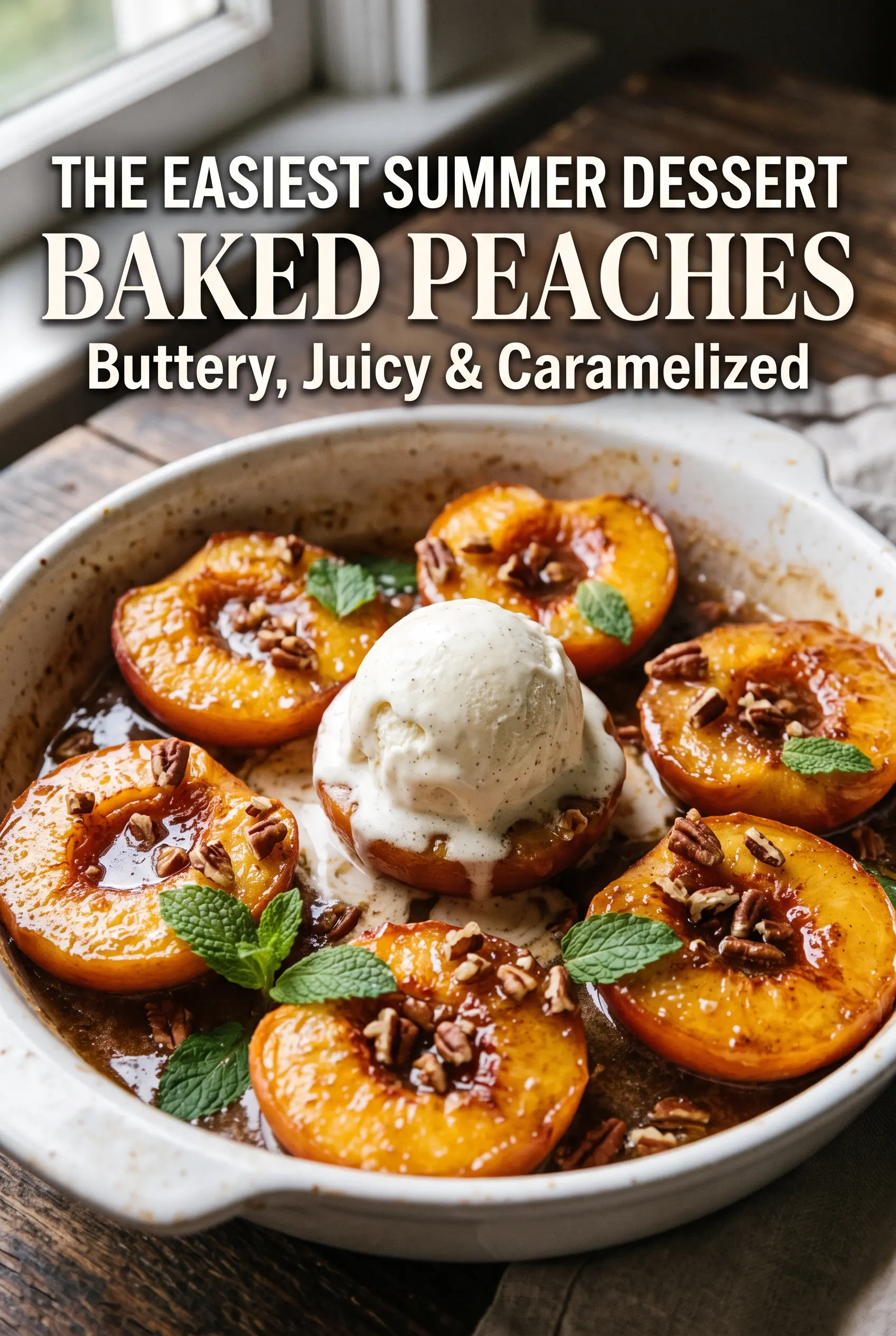
Baked Peaches
Ingredients
Equipment
Method
- Preheat oven to 375°F (190°C). Make sure the oven rack is set to the middle so the peaches caramelize evenly.
- Arrange the peach halves cut-side up in a baking dish. Keep them snug in a single layer so they bake at the same rate.
- Whisk together the melted butter, brown sugar, cinnamon, nutmeg, vanilla, honey, and salt in a small bowl. Whisk until the mixture looks glossy and smooth.
- Spoon the mixture evenly over each peach. Use a spoonful on each cut surface so every peach gets a coating.
- Bake for 20–25 minutes, basting once halfway through. The peaches should look softened and lightly caramelized around the edges.
- Spoon the warm sauce over the peaches. Coat the tops with the pooled caramel sauce for extra juiciness.
- Serve warm with vanilla ice cream, whipped cream, or yogurt. Add any preferred toppings for a cold-and-warm contrast.
