
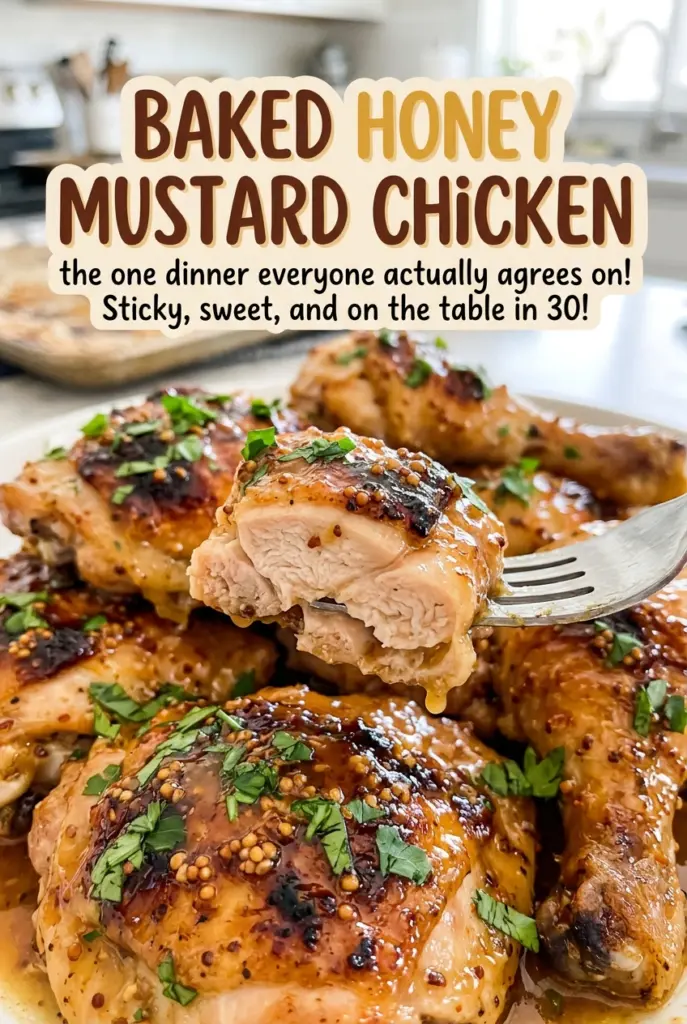
Baked Honey Mustard Chicken
When the baking dish comes out of the oven, the honey mustard sauce is glossy over the chicken, with a little extra pooled around the edges. The garlic smells mellow,…
Tip: save now, cook later.When the baking dish comes out of the oven, the honey mustard sauce is glossy over the chicken, with a little extra pooled around the edges. The garlic smells mellow, and the Dijon keeps the honey from tasting flat or candy-sweet. That balance is what I want from baked honey mustard chicken: a sweet-tangy coating, tender chicken, and no separate pan of sauce to fuss over.
I whisk the sauce ingredients together in one bowl, then pour it right over the chicken before baking. The sauce stays close to the meat as it cooks, and the olive oil helps it spread instead of clumping in one spot. Pounding the breasts to an even thickness gives everything a fair chance to finish at the same time, so the thinner ends don’t dry out while the centers catch up.
Kitchen Note
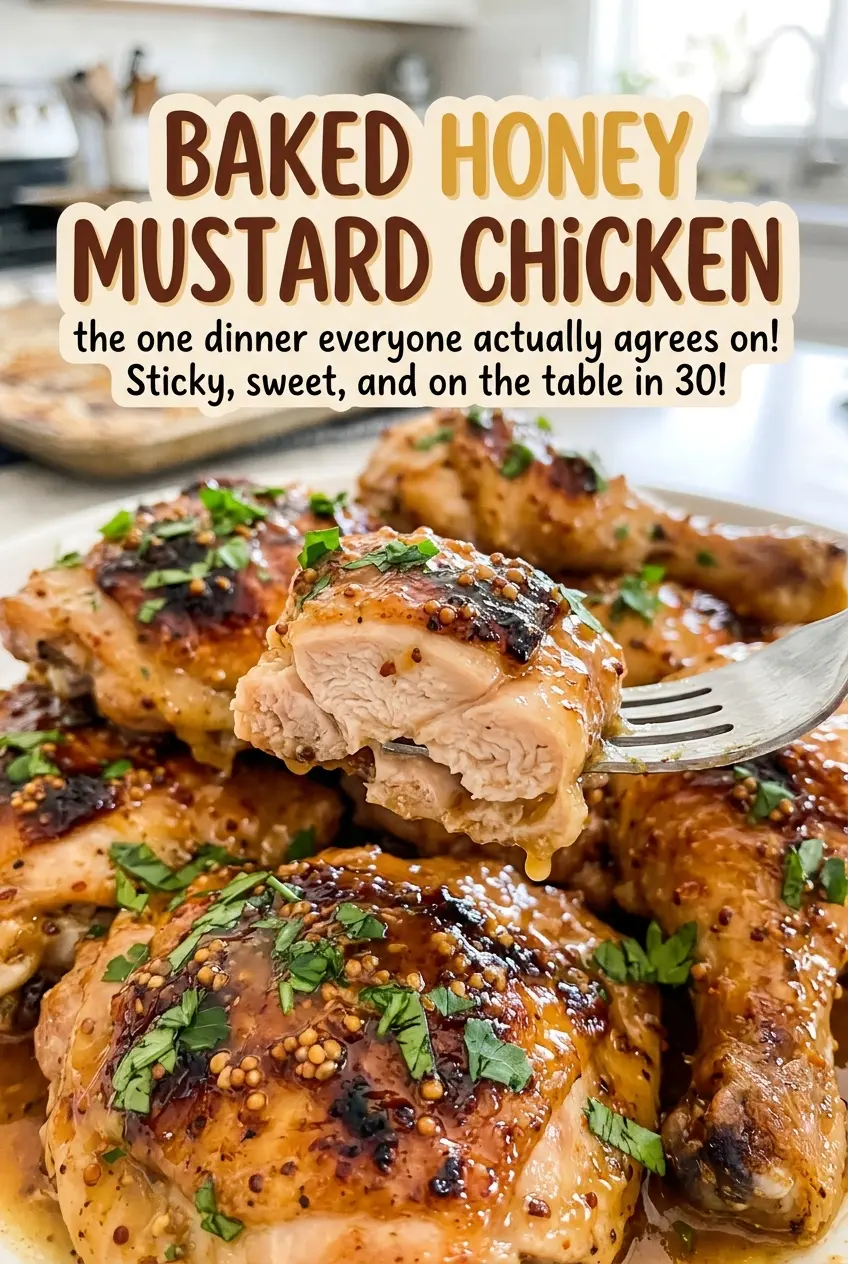
Give the chicken its full 5-minute rest before cutting. The juices settle back into the meat instead of running straight onto the plate, and the sauce has a moment to cling to each breast.
Save this Baked Honey Mustard Chicken for a weeknight dinner with tender chicken and a glossy, sweet-tangy sauce.
Why even thickness matters more than extra sauce
Chicken breasts rarely come out of the package with the same shape. One end can be much thicker than the other, and two breasts in the same dish may differ just as much. In the oven, that unevenness means the thin parts cook through first while the thickest centers are still catching up. By the time those centers are ready, the narrow ends have had longer in the heat and can turn dry.
Pounding each breast to an even 3/4-inch thickness solves that mismatch before it starts. The goal isn’t to flatten the meat paper-thin; it’s to bring the thickest areas down and make the whole breast a consistent shape. Use steady strokes and check the thickness across the middle and tapered end. When all four pieces are similar, the sauce and heat reach them more evenly, and checking each thickest part is much less of a guessing game.
More sauce won’t correct uneven chicken. It can coat the surface, but it can’t make a thick center cook at the same pace as a thin edge. Taking a minute to even out the breasts is what makes the short bake time practical and gives you tender meat beneath the honey mustard coating.
What Dijon, honey, and olive oil each bring to the sauce

- Dijon mustard — Its sharp, savory tang keeps the honey in check and gives the sauce its familiar mustard character. A fresh jar with a clean, pungent aroma matters more than an expensive brand. Whisk it thoroughly so it disperses through the honey instead of sitting in streaks.
- Honey — Honey provides the sweetness and helps the sauce coat the chicken. A plain, mild honey keeps the mustard and garlic in focus; a strongly flavored honey will be more noticeable in the finished sauce. If it has crystallized, warm the container gently until it pours easily before measuring.
- Olive oil — The oil loosens the honey and mustard into a sauce that spreads over the chicken. A standard everyday olive oil is fine here; a costly finishing oil won’t have much chance to show off in the oven. Whisk until the mixture looks even before pouring.
- Garlic — Freshly minced cloves bring a sharper, more fragrant note than dried garlic. Mince the cloves finely so the pieces distribute through the sauce rather than landing in a few concentrated spots.
- Paprika — It adds gentle warmth and a little color without turning the sauce spicy. Ground paprika that’s been open for a long time can taste dusty, so use one that still smells lightly sweet and aromatic.
How to bake the chicken evenly under its honey mustard coating
Set up the dish and even out the breasts
Heat the oven to 400°F and lightly grease a 9×13-inch baking dish. Pound the chicken breasts to an even 3/4-inch thickness, then arrange them in the dish without folding or overlapping the meat. Even pieces make the bake more predictable, so take a moment to compare their thickness before they go in. If a breast still has a thick bulge, flatten that area rather than pounding the whole piece thinner.
Whisk a smooth sauce
In a small bowl, whisk together the honey, Dijon mustard, olive oil, minced garlic, paprika, fine salt, and black pepper. Keep whisking until the oil is blended in and there are no thick streaks of honey at the bottom of the bowl. The garlic and paprika should look evenly scattered through the mustard-colored mixture. Pour it over the arranged chicken, spreading it across the tops so each breast gets coated.
Bake until the thickest part is cooked through
Bake for 18–22 minutes, checking the thickest part of each breast with a meat thermometer. The chicken is ready when each one reaches 165°F; breast size and shape can make the exact timing vary within that window. The sauce should look glossy and settled over the chicken, not dry and crusted at the edges. Take care not to judge doneness by color alone, since the honey and mustard tint the surface.
Let the juices settle
Take the dish out of the oven and let the chicken rest for 5 minutes before serving. Keep the breasts in the baking dish during that pause so they stay with the sauce. Cutting immediately sends more of the juices onto the board, while a brief rest gives the meat time to settle. Spoon some of the sauce from the dish over the chicken as you serve it.
Ways to change the mustard or chicken without losing the balance
Use whole-grain mustard for texture
Replace the Dijon with the same amount of whole-grain mustard. The sauce will have little mustard seeds throughout and a milder, less smooth finish, while the honey still rounds out the sharpness.
Choose boneless, skinless thighs for a darker cut
Use about 1 1/2 pounds of boneless, skinless chicken thighs in place of the breasts, keeping the sauce the same. Thighs have a richer taste and a different shape, so rely on the temperature in the thickest pieces rather than assuming they’ll finish at the breast timing.
Keep it gluten-free with certified Dijon
For a gluten-free table, choose a Dijon mustard labeled gluten-free and use it in the same amount. The sauce stays sharp and balanced, and the dish is already dairy-free without needing a milk or butter replacement.
Storage and Reheating
- Refrigerator: Store cooked chicken in a covered container for 3–4 days. The sauce may set up as it chills, and the chicken will be firmer when cold.
- Freezer: Freeze the chicken with some sauce in an airtight freezer-safe container for up to 3 months for best quality. Thaw it in the refrigerator before reheating.
- Reheating: Warm covered in a 325°F oven until hot throughout, or use short bursts in the microwave. Keep the chicken with its sauce and stop as soon as it’s heated; prolonged reheating dries the breast meat.
Questions that come up before this chicken goes in the oven
Baked Honey Mustard Chicken
Ingredients
Equipment
Method
- Preheat the oven to 400°F.
- Lightly grease a 9x13-inch baking dish.
- Pound the chicken breasts to an even 3/4-inch thickness.
- Arrange the chicken breasts in the prepared dish.
- Whisk the honey, Dijon mustard, olive oil, garlic, paprika, salt, and pepper in a small bowl.
- Pour the sauce over the chicken.
- Bake for 18–22 minutes, until the thickest part of each breast reaches 165°F.
- Rest the chicken for 5 minutes before serving.
