
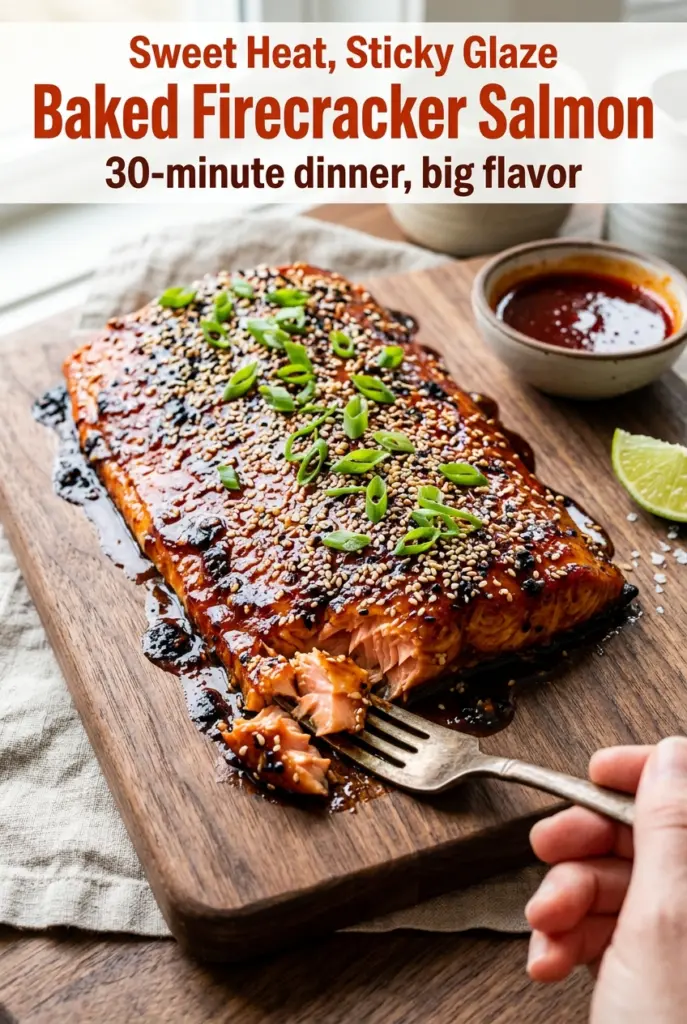
Baked Firecracker Salmon
Baked firecracker salmon hits that sweet spot between bold and low-effort: sticky, glossy glaze on top, tender flakes underneath, and just enough heat to keep every bite interesting. The honey…
Tip: save now, cook later.Baked firecracker salmon hits that sweet spot between bold and low-effort: sticky, glossy glaze on top, tender flakes underneath, and just enough heat to keep every bite interesting. The honey caramelizes in the oven, the sriracha brings the kick, and the lime at the end keeps the whole dish from leaning too heavy. It tastes like you spent a lot longer on dinner than you actually did.
What makes this version work is the balance in the glaze and the way it’s handled in two stages. Simmering the sauce for a few minutes takes the raw edge off the garlic and ginger and gives the honey a head start on thickening, so it clings to the salmon instead of running off the pan. Brushing on a little more glaze near the end keeps the top shiny and lacquered without overcooking the fish. If you’ve ever had salmon go from perfectly done to dry in a minute, this method gives you a much safer window.
Below, I’ve included the part that matters most: how to get that sticky finish without burning the sugars, plus a few smart swaps if you want to dial the heat up, cut it back, or make it gluten-free.
The glaze thickened up just enough on the stove and stayed glossy in the oven. I used the broiler for a minute at the end and the salmon came out flaky with those caramelized edges everyone fought over.
Sticky baked firecracker salmon with glossy glaze and caramelized edges is the one to pin for fast dinners that still feel special.
The Trick to Keeping the Glaze Sticky Instead of Burnt
Honey-based glazes can go wrong fast because sugar and heat don’t always cooperate. If the oven is too hot, the glaze can darken before the salmon is cooked through. If it’s too thin, it runs off the fish and pools on the pan, where it burns before it ever gets a chance to set.
The fix is a light pre-simmer in the saucepan and a short roast on the salmon itself. That quick simmer starts the thickening process and gives the garlic and ginger time to soften, while the reserved glaze goes on near the end so it caramelizes on top instead of drying out in the oven. The broiler is optional, but it’s the last little push that gives the edges that lacquered, restaurant-style finish.
What Each Ingredient Is Actually Doing in This Dish
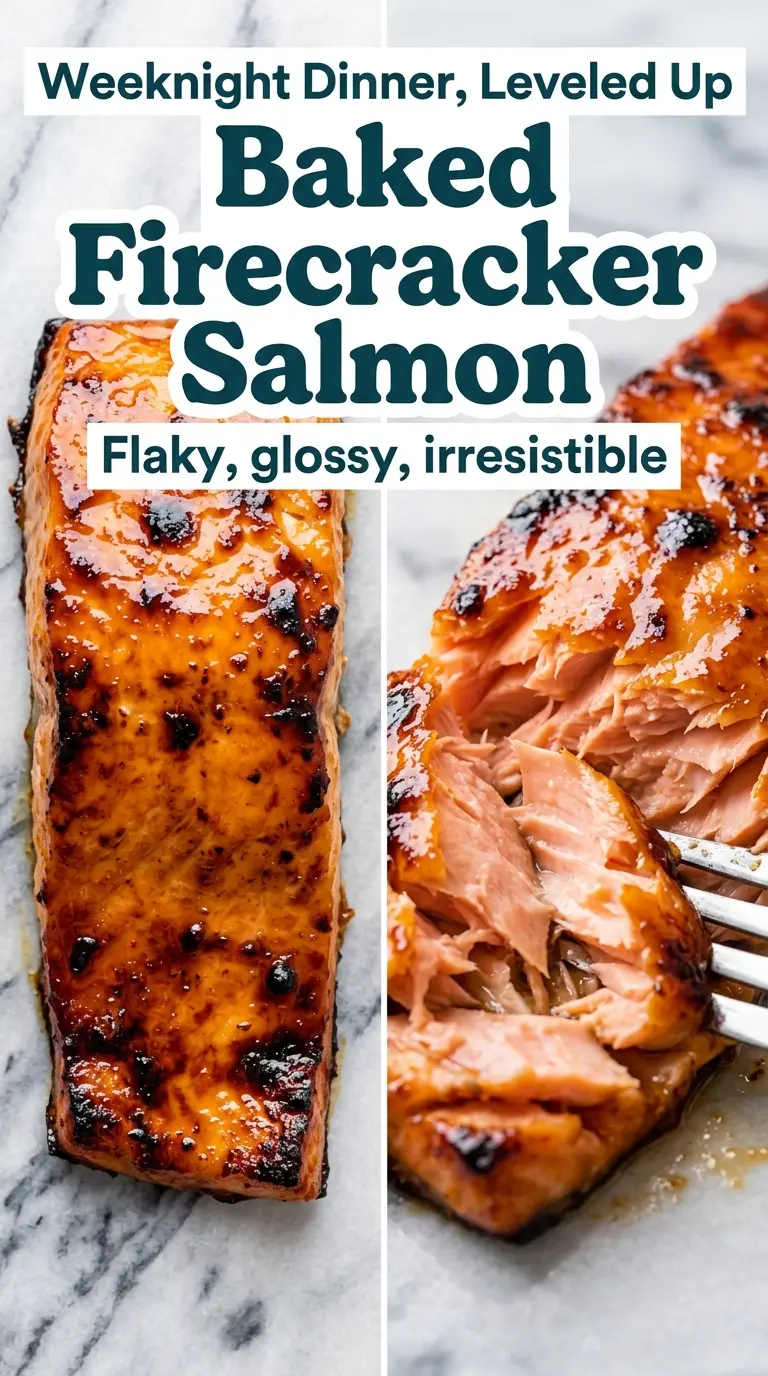
- Salmon fillets — Rich salmon stands up to the bold glaze and stays tender even with the short bake time. Skin-on works well because it helps insulate the fish, but skinless is fine if that’s what you buy.
- Honey — This is what gives the glaze its shine and sticky finish. There isn’t a perfect substitute for the way honey caramelizes, but maple syrup will work in a pinch; expect a slightly looser glaze and a deeper, woodsy sweetness.
- Sriracha — This brings heat, tang, and a little garlic all at once. If you want less spice, cut it back to 2 tablespoons and add a teaspoon of ketchup for body; if you want more bite, add a pinch of red pepper flakes.
- Soy sauce — It adds salt and depth so the glaze tastes layered instead of just sweet and hot. Use low-sodium soy sauce if that’s what you keep on hand. For a gluten-free version, tamari works cleanly.
- Rice vinegar — The acid keeps the glaze from tasting flat. Don’t swap in a strong vinegar like distilled white vinegar unless you dilute it a bit; you want brightness, not sharpness.
- Garlic and ginger — These two give the glaze its backbone. Fresh is worth using here because powdered versions won’t soften and bloom the same way in the hot glaze.
- Sesame seeds, green onions, and lime — These aren’t decoration. The seeds add nutty crunch, the green onions bring a fresh sharp finish, and the lime wakes everything up right before serving.
Building the Glaze, Baking the Fish, and Finishing at the Right Moment
Making the Firecracker Glaze
Set the honey, sriracha, soy sauce, rice vinegar, garlic, and ginger over medium heat and let it bubble gently for 3 to 4 minutes. You’re looking for a sauce that looks slightly thicker and a little shinier, not a paste. If it boils hard, the honey can take on a bitter edge, so keep the heat moderate and stir often.
Coating the Salmon
Pat the fillets dry first. That dry surface helps the glaze cling instead of sliding off. Season with salt and pepper, then brush on a generous layer of glaze so it covers the top evenly. If the salmon is wet, the glaze thins out and the baked finish gets patchy instead of lacquered.
Baking to Tender Flakes
Bake at 400°F for 10 to 12 minutes, depending on thickness. The salmon should flake easily with a fork, but the center can still look a touch glossy when it comes out. That carryover heat finishes the job. If you wait until it looks fully opaque in the oven, you’re usually a minute or two too late.
Broiling for the Last Bit of Color
Brush on the reserved glaze, then broil for 1 to 2 minutes if you want deeper caramelization. Stay right by the oven, because the line between glossy and scorched is short with honey in the mix. Pull it when the edges look browned in spots and the glaze has turned shiny and sticky.
Three Ways to Work This Salmon Into Your Own Routine
Gluten-Free Firecracker Salmon
Swap the soy sauce for tamari or coconut aminos. Tamari keeps the same savory depth, while coconut aminos taste a little sweeter and less salty, so you may want an extra splash of vinegar to keep the glaze balanced.
Milder Heat, Same Sticky Finish
Cut the sriracha down to 1 to 2 tablespoons and add an extra tablespoon of honey if you want a softer burn. The glaze will still caramelize and cling, but the heat sits in the background instead of leading the bite.
Maple-Sweet Version
Use maple syrup in place of honey for a deeper, slightly earthier sweetness. It won’t get quite as sticky as honey, so reduce the glaze a bit longer on the stove before brushing it on.
Storage and Reheating
- Refrigerator: Store leftovers in an airtight container for up to 3 days. The glaze will set up more firmly in the fridge, but the flavor holds well.
- Freezer: It freezes fine, though the texture is best fresh. Wrap portions tightly and freeze for up to 2 months. Thaw overnight in the fridge before reheating.
- Reheating: Reheat gently in a 300°F oven, covered loosely with foil, until just warmed through. High heat dries salmon fast and can turn the glaze sticky in the wrong way.
Answers to the Questions Worth Asking
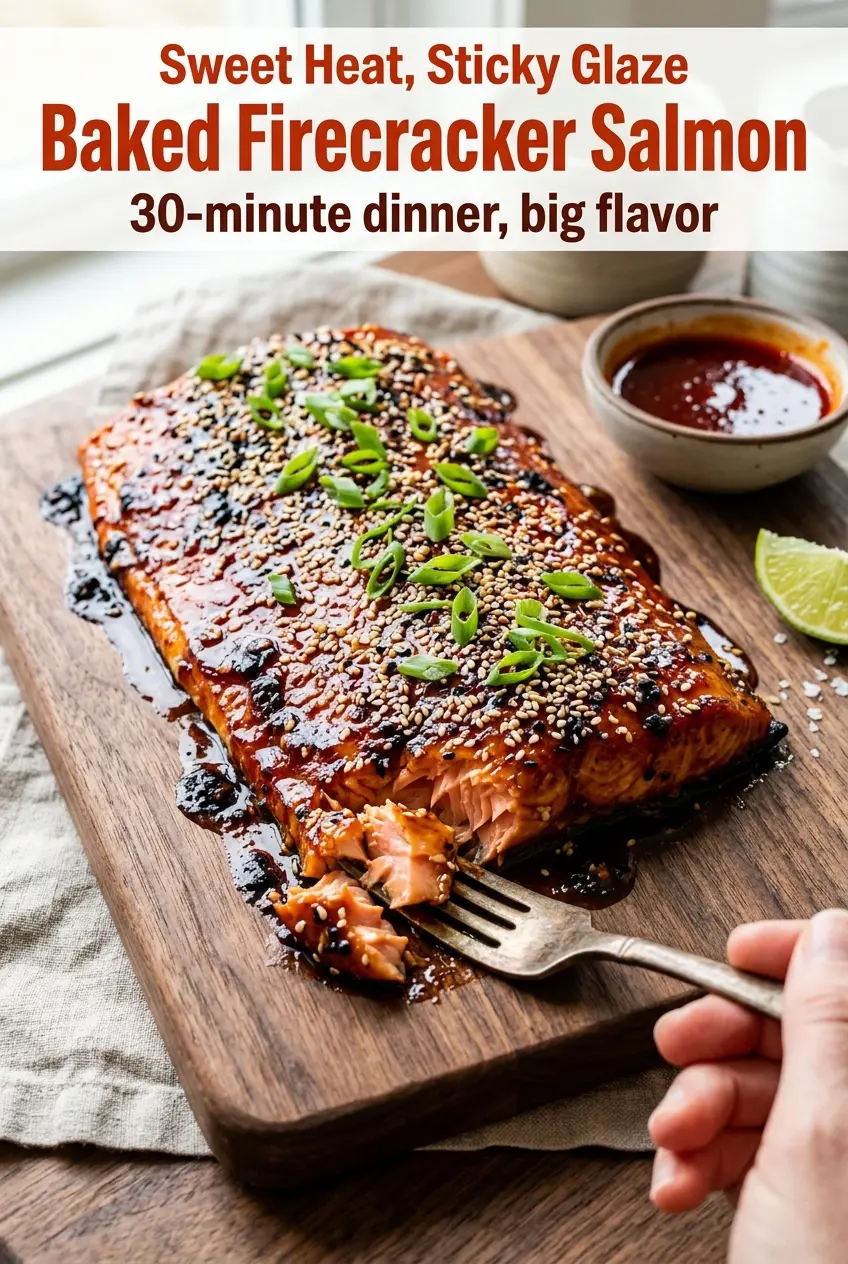
Baked Firecracker Salmon
Ingredients
Equipment
Method
- Preheat the oven to 400°F and line a baking sheet with foil or parchment, then lightly brush with the olive oil for a nonstick surface.
- Pat the salmon fillets dry, then season with salt and black pepper and place them on the baking sheet in an even layer.
- In a small saucepan over medium heat, whisk together honey, sriracha, soy sauce, rice vinegar, minced garlic, and grated ginger.
- Simmer the glaze for 3–4 minutes until slightly thickened, then set aside a few tablespoons for basting later while you bake.
- Brush the salmon generously with the firecracker glaze so the tops are well covered with an even, glossy layer.
- Bake for 10–12 minutes until the salmon flakes easily with a fork and the tops look glossy with early caramelized spots at the edges.
- Brush with the reserved glaze and bake 2–3 more minutes until the glaze looks caramelized and shiny over the fish.
- Broil on high for 1–2 minutes at the end, watching closely until you see deeper caramelization without burning.
- Sprinkle the sesame seeds and green onions over the salmon right after broiling for fresh color and texture.
- Serve with lime wedges on the side so each portion can get a squeeze of lime right before eating.
