
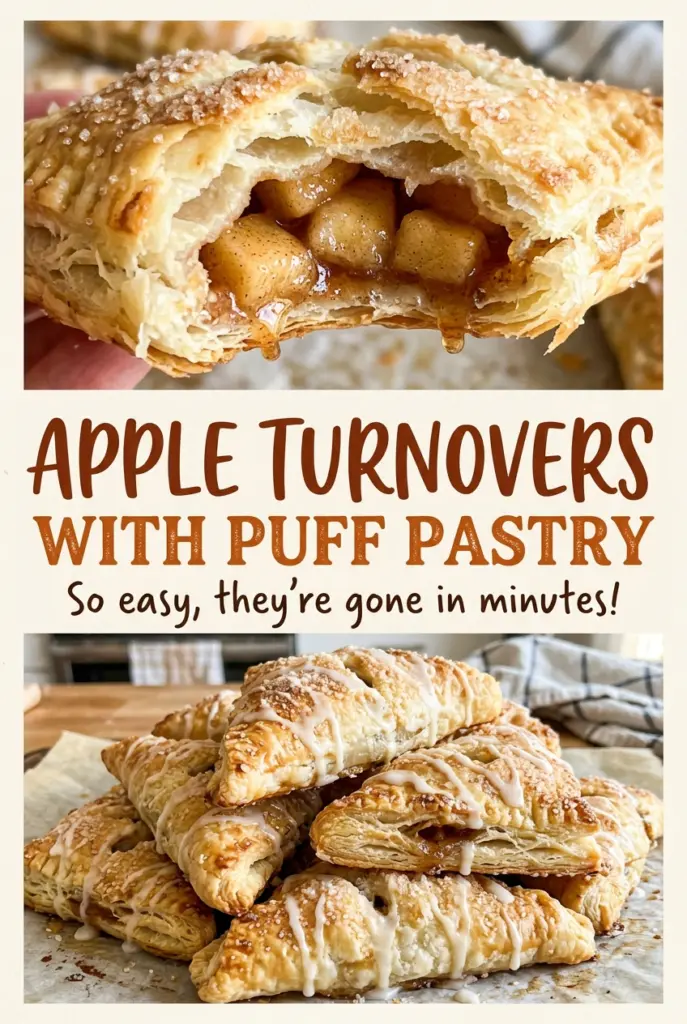
Apple Turnovers with Puff Pastry
The apples go into the skillet pale and crisp, then turn tender as their juices thicken around the cinnamon. Cooking the filling first gives these apple turnovers with puff pastry…
Tip: save now, cook later.The apples go into the skillet pale and crisp, then turn tender as their juices thicken around the cinnamon. Cooking the filling first gives these apple turnovers with puff pastry a soft, fragrant center without putting a wet pile of raw fruit against the pastry.
Frozen puff pastry takes care of the layers, so the hands-on work is mostly cutting squares, folding them into triangles, and sealing the edges with a fork. I keep the filling on one half of each square and leave a clear border; that gives the edges room to press together instead of catching apple bits.
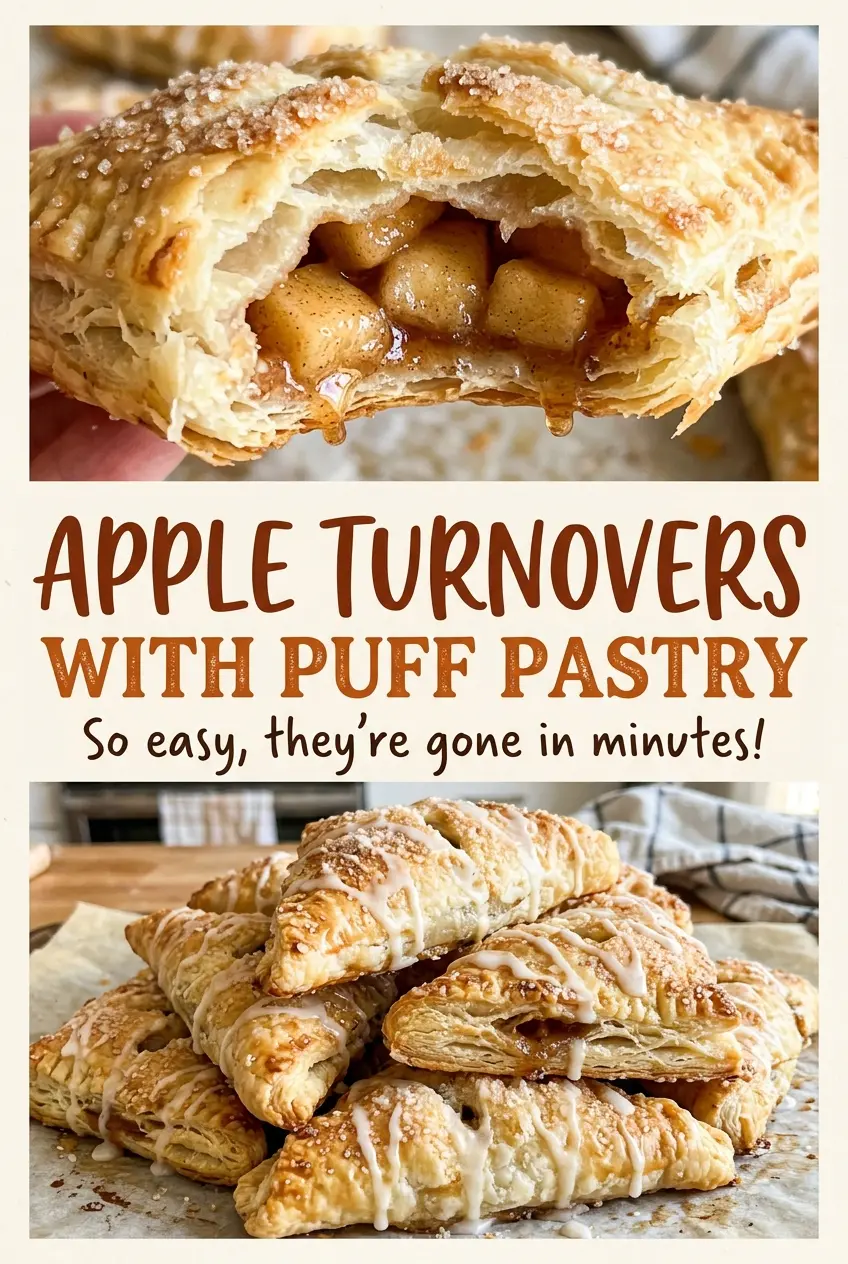
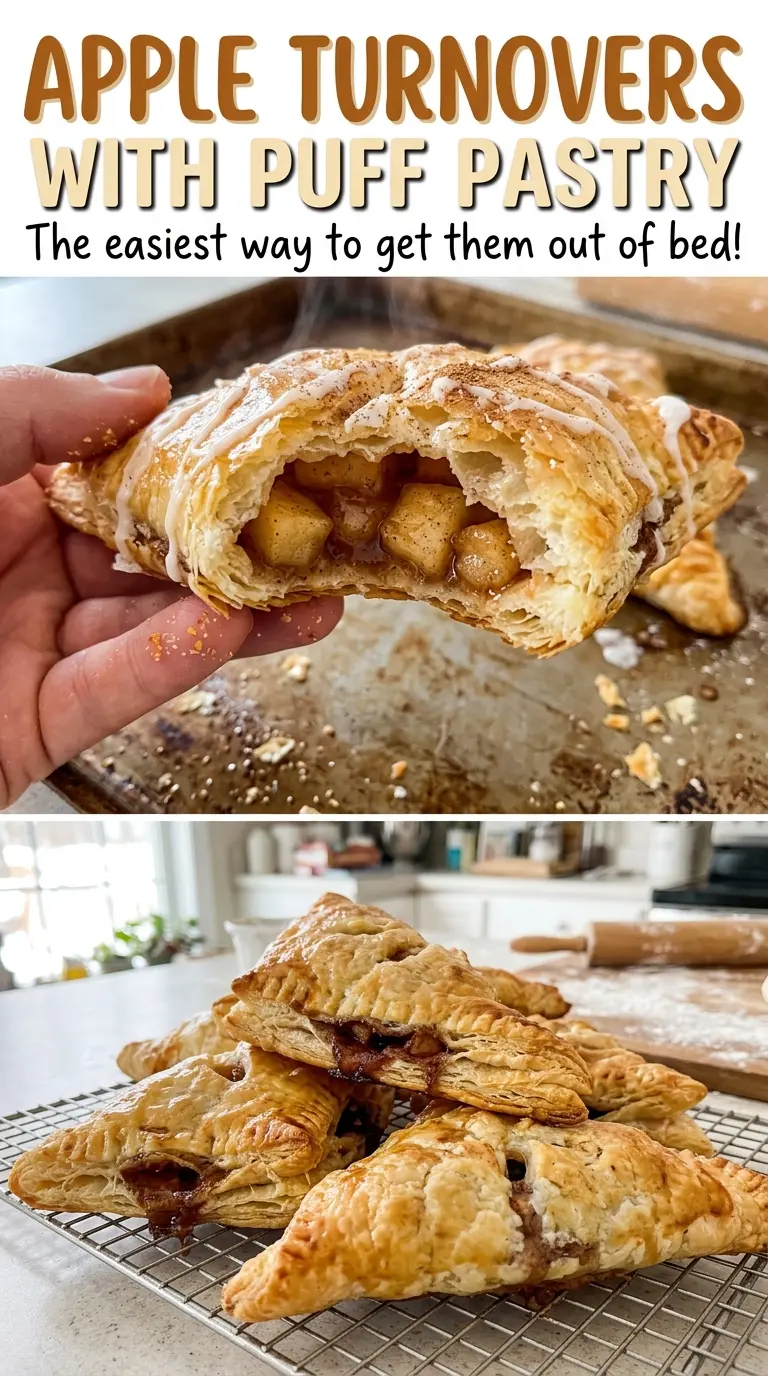
After a short rest in the refrigerator, the turnovers bake until the layers puff and the tops turn deep golden brown. The coarse sugar adds a light crunch, while the warm apple filling stays tender and pleasantly tart.
Kitchen Note
Give the assembled turnovers their full 15 minutes in the refrigerator before baking. That brief chill helps the pastry go into the oven cold, which is what you want for distinct, flaky layers.
Save these apple turnovers with puff pastry for a flaky, golden bake filled with cinnamon apples and finished with crunchy sugar.
Why Raw Apples Can Leave Puff Pastry Turnovers Soggy
Apples release liquid as they cook. If they go into a pastry pocket raw, that moisture has nowhere to go: the pastry can bake up damp where it meets the fruit, even when the outside looks done. Cooking the diced apples in a skillet first gives the liquid time to reduce before the filling goes anywhere near the dough.
The cornstarch helps thicken those juices into a glossy coating rather than a puddle. Stir often as the apples cook so the mixture thickens evenly and doesn’t catch on the bottom of the skillet. You’re looking for tender apple pieces and juices that cling to them. Cooling the filling before assembly matters, too: hot filling softens the pastry and makes neat folding harder.
This filling is meant to be generous but contained. Keeping the apple pieces small makes it easier to portion them evenly and close each turnover without stretching the pastry. Granny Smith apples bring a tart edge that balances the sugar, while cinnamon gives the cooked fruit its familiar warmth.
What the Apples, Pastry, and Topping Each Bring
- Granny Smith apples — Their tartness keeps the filling from tasting overly sweet, and their firm texture holds up as the fruit cooks. Another firm baking apple, such as Braeburn, is a workable swap; a sweeter variety will make the filling taste sweeter.
- Frozen puff pastry — The layers do the heavy lifting here, so thaw the sheets according to the package directions and handle them gently as you unfold them. A standard grocery-store package works well; a butter-based pastry tends to taste richer, while other frozen puff pastries still provide the flaky structure.
- Cornstarch and lemon juice — Cornstarch thickens the apple juices, and lemon juice brings a little brightness to the filling. Keep the cornstarch in the mixture; leaving it out makes the filling more likely to run. Bottled lemon juice is fine here if that’s what you have.
- Unsalted butter and cinnamon — Butter rounds out the cooked fruit, while cinnamon adds warmth without covering up the tart apples. Use a familiar everyday cinnamon; there’s no need for a specialty variety.
- Egg and coarse sugar — Beaten egg brushed over the pastry helps the tops bake to a deep golden color. Coarse sugar adds a crisp finish that regular granulated sugar won’t quite match.
From Skillet Filling to Flaky, Sealed Turnovers
Cook the apples until the juices thicken
Toss the diced apples with the granulated sugar, lemon juice, cinnamon, salt, and cornstarch until the pieces are evenly coated. Melt the butter in a 10-inch skillet over medium heat, then add the apple mixture. Cook for 5 to 7 minutes, stirring often, until the apples are tender and the juices have thickened. If the mixture still looks watery, keep stirring over the heat until the liquid clings to the fruit.
Cool the filling and cut the pastry
Scrape the filling into a shallow bowl and let it cool completely, about 20 to 30 minutes. While it cools, heat the oven to 400°F and line a large rimmed baking sheet with parchment paper. Unfold each thawed puff pastry sheet on a clean work surface and cut each one into 4 equal squares. If a sheet cracks as you unfold it, let it soften a little longer according to its package directions before handling it.
Fill, fold, and seal each triangle
Place about 2 tablespoons of cooled filling on one half of each square, leaving a 1/2-inch border around the edges. Fold the opposite corner over the filling to make a triangle, then press the edges closed with a fork. Keep apple pieces out of the border so the pastry edges can meet and seal. Cut 2 small vents in the top of each turnover, then arrange them on the prepared baking sheet.
Brush, chill, and bake until deep golden
Beat the egg with the water and brush the mixture over the turnovers, then sprinkle with coarse sugar. Refrigerate them on the baking sheet for 15 minutes. Bake for 20 to 25 minutes, until puffed and deep golden brown; don’t pull them while the pastry is still pale. Let the turnovers cool on the baking sheet for 10 minutes before serving, since the filling will be hot straight from the oven.
Three Small Changes for a Different Turnover
Make the turnovers dairy-free
Choose frozen puff pastry labeled dairy-free and replace the unsalted butter with the same amount of plant-based butter. The apple filling will still cook and thicken, though the pastry’s richness and browning may vary by brand. The egg wash is still part of this version, so it isn’t egg-free.
Let the apples lead, without cinnamon
Leave out the ground cinnamon and prepare the filling the same way. The result is a cleaner apple-and-lemon flavor, with the tart Granny Smiths more noticeable in every bite.
Skip the crunchy sugar top
Leave off the coarse sugar but keep the egg wash. The tops will still brown, though they won’t have that crisp, sparkling finish and will taste a little less sweet.
Storage and Reheating
- Refrigerator: Store cooled turnovers in an airtight container for up to 4 days. The pastry softens in storage, even though the filling keeps well.
- Freezer: Freeze fully cooled turnovers in a single layer until firm, then transfer them to an airtight freezer container for up to 2 months. Thaw them in the refrigerator before reheating.
- Reheating: Warm in a 350°F oven for about 8 to 10 minutes, until the pastry is crisp again. The microwave heats them quickly but leaves the layers soft.
Questions That Come Up When Baking Apple Turnovers
Apple Turnovers with Puff Pastry
Ingredients
Equipment
Method
- Toss the apples with the granulated sugar, lemon juice, cinnamon, salt, and cornstarch until evenly coated.
- Melt the butter in a 10-inch skillet over medium heat, add the apple mixture, and cook for 5 to 7 minutes, stirring often, until the apples are tender and the juices are thickened.
- Transfer the filling to a shallow bowl and let it cool completely, about 20 to 30 minutes.
- Heat the oven to 400°F and line a large rimmed baking sheet with parchment paper.
- Unfold each puff pastry sheet on a clean work surface and cut it into 4 equal squares.
- Divide the cooled filling among the squares, placing about 2 tablespoons on one half of each and leaving a 1/2-inch border; fold each square diagonally over the filling to form a triangle.
- Press the edges closed with a fork, cut 2 small vents in the top of each turnover, and place them on the prepared baking sheet.
- Beat the egg with the water, brush it over the turnovers, and sprinkle with the coarse sugar.
- Refrigerate the turnovers on the baking sheet for 15 minutes.
- Bake for 20 to 25 minutes, until puffed and deep golden brown.
- Let the turnovers cool on the baking sheet for 10 minutes before serving.
