
Apple Cider Pancakes
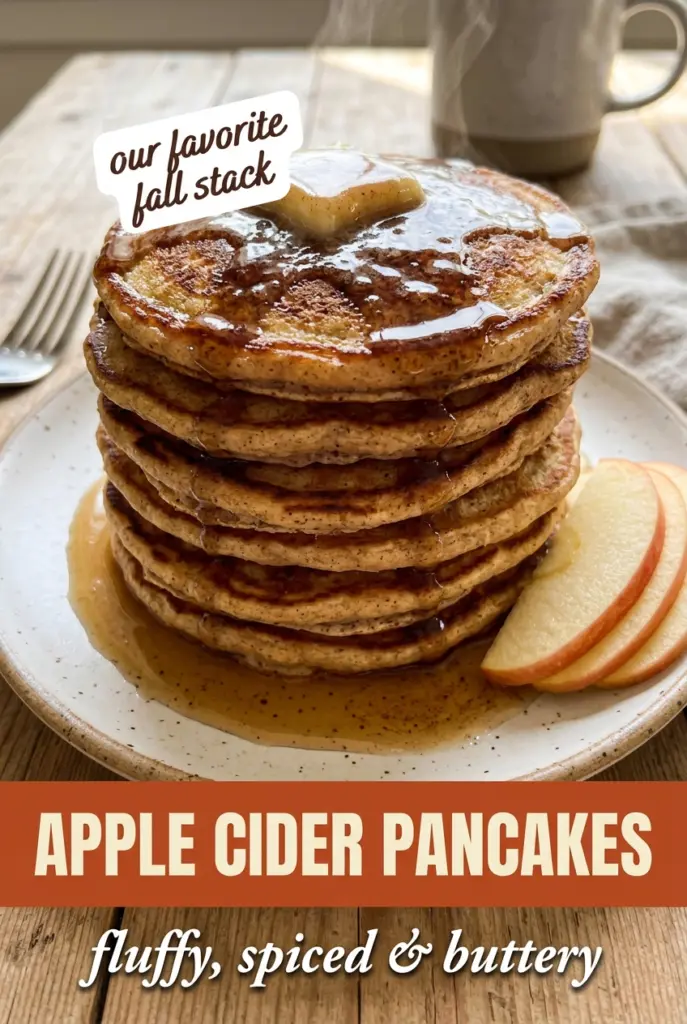
Apple cider pancakes earn their place at the table fast: they’re tall, tender, and carry a real apple flavor that doesn’t disappear under the syrup. The reduced cider is the…
Tip: save now, cook later.Apple cider pancakes earn their place at the table fast: they’re tall, tender, and carry a real apple flavor that doesn’t disappear under the syrup. The reduced cider is the difference here. Instead of adding liquid that tastes thin and watery, you concentrate the cider first, which gives the batter a deeper orchard note and a little extra body. The result is pancakes that taste like they came from an actual pile of apples, not just a spice cabinet.
The grated apple keeps the middle moist without turning the batter heavy, and the buttermilk gives the pancakes enough tang to balance the sweetness from the maple syrup and cinnamon sugar. I like to let the batter rest for a few minutes after mixing. That short pause gives the flour time to hydrate and helps the pancakes rise with those crisp, defined edges instead of spreading flat on the griddle.
Below, I’ve laid out the exact point where the cider should be reduced, how to handle the grated apple so the batter doesn’t get wet, and the small griddle cue that tells you it’s time to flip. Those details are what keep this breakfast from being just “good pancakes” and turn it into the kind of stack people ask for again.
The cider reduction gave these pancakes such a deep apple flavor, and the grated apple kept them fluffy instead of soggy. I made a double batch and they still browned beautifully on the griddle.
Save these apple cider pancakes for the mornings when you want a fluffy stack with real apple flavor and maple cinnamon butter on top.
The Cider Reduction Is What Keeps These Pancakes From Tasting Flat
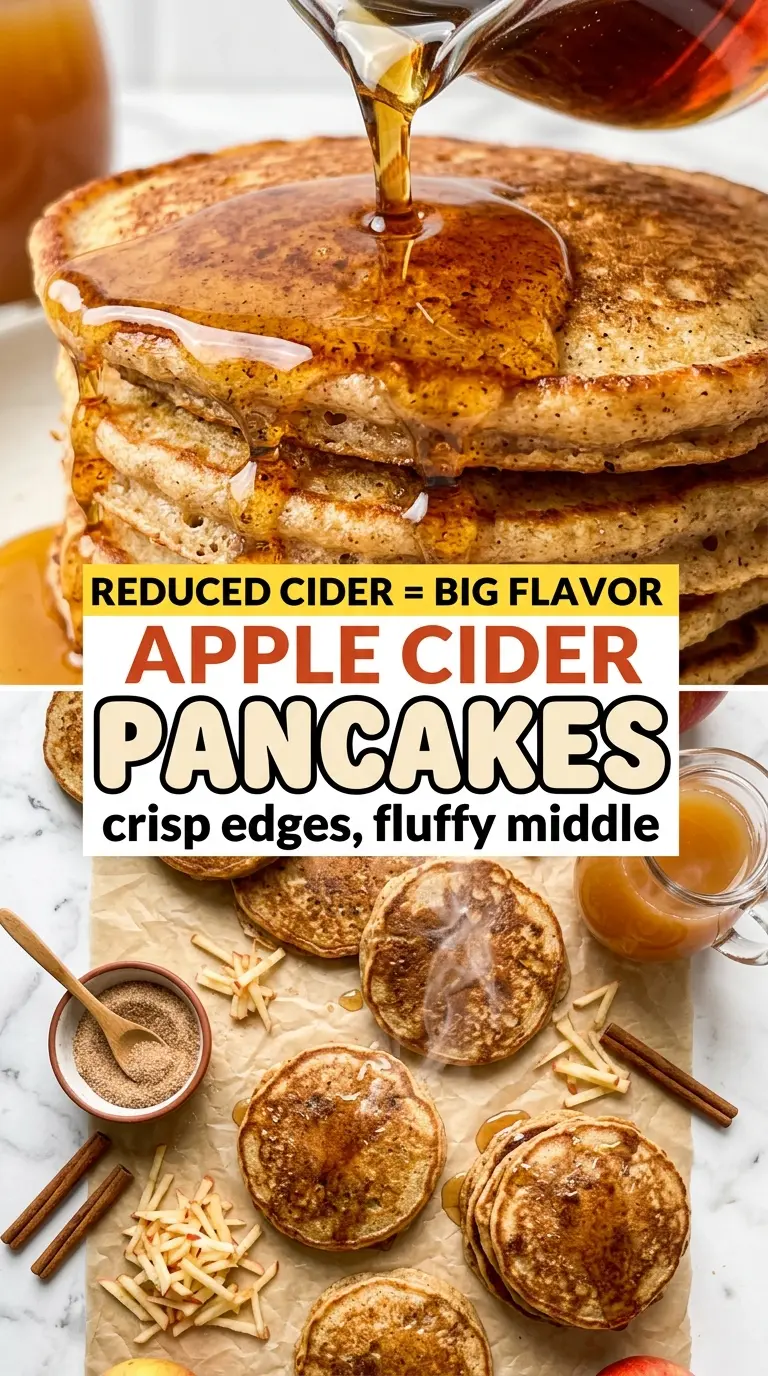
If you pour apple cider straight into pancake batter, most of what you notice is liquid, not flavor. Reducing it first concentrates the fruitiness and cooks off the watery edge, so the cider can actually stand up to the flour, butter, and syrup. That one extra pan on the stove is what gives these pancakes a true apple taste instead of a vague autumn spice note.
The other thing that matters here is balance. The baking soda reacts with the buttermilk for lift, but the batter still needs enough structure to hold those grated apple shreds without turning dense. If your pancakes spread too much, the batter is usually too wet from the apple or too warm from melted butter that went in before it cooled a bit. Resting the batter also helps; the flour hydrates, the bubbles settle into the mixture, and the pancakes cook up thicker.
- Apple cider — Reduce it down to 1/2 cup and let it cool before it goes into the batter. Warm cider can push the melted butter toward clumps and slightly thin the batter.
- Buttermilk — This gives the pancakes tang and helps the baking soda work. If you don’t have it, use whole milk plus 1 tablespoon lemon juice or vinegar per cup and let it sit for 5 minutes.
- Honeycrisp apple — A crisp, sweet-tart apple holds its shape and keeps the pancakes juicy. Grate it, then squeeze out the extra moisture so the batter doesn’t turn loose.
- Maple syrup — Use pure maple syrup for the butter and for serving. Pancake syrup will make the topping taste one-note and overly sweet.
Mix the Batter Gently, Then Let the Griddle Do the Work
Reducing the Cider
Pour the cider into a small saucepan and simmer it until it shrinks to about 1/2 cup and looks slightly syrupy. You want steam rising steadily, not a hard boil that can scorch the sugars on the bottom. Once it’s reduced, set it aside until it’s cool enough that you can dip a finger in without pulling away. Hot cider can partially cook the eggs or melt the butter too fast.
Building the Batter Without Overworking It
Whisk the dry ingredients in one bowl and the wet ingredients in another, then bring them together with a light hand. Stop stirring when the flour disappears and a few lumps are still visible. If you beat the batter smooth, the pancakes tighten up and lose that soft, cake-like middle. Fold the grated apple in at the end so it stays distributed instead of sinking to the bottom.
Cooking Until the Edges Set
Heat the griddle over medium heat and add just enough butter to coat the surface. Drop the batter in 1/4-cup portions and watch for bubbles that pop and leave little holes across the top. The edges should look matte and set before you flip. If the first pancake darkens too fast, lower the heat; burnt outsides with raw centers usually mean the pan is running hot.
Finishing With the Maple Cinnamon Butter
Beat the softened butter with maple syrup, cinnamon, and a pinch of flaky salt until it turns smooth and spreadable. Spoon it over the pancakes while they’re still warm so it melts into the cracks instead of sitting in a cold lump on top. The flaky salt keeps the butter from tasting flat and gives the sweetness a little edge.
How to Adapt These Apple Cider Pancakes for Different Mornings
Make Them Dairy-Free
Use a dairy-free butter in both the batter and the topping, and swap the buttermilk for unsweetened almond milk mixed with 1 tablespoon lemon juice per cup. The pancakes will still rise and brown well, though the crumb will be a touch less rich.
Make Them Gluten-Free
Use a 1:1 gluten-free flour blend that includes xanthan gum. The batter may look a little looser at first, so let it rest for the full 10 minutes before cooking; that gives the starches time to hydrate and keeps the pancakes from breaking when you flip them.
Add More Apple Flavor
If you want a stronger apple note, stir in a handful of finely diced apple along with the grated apple instead of adding more cider. Extra cider can thin the batter; extra fruit gives you more flavor without sacrificing structure.
Storage and Reheating
- Refrigerator: Store cooked pancakes for up to 3 days. They soften a little as they sit, but the flavor stays strong.
- Freezer: They freeze well. Lay them in a single layer, freeze until firm, then stack with parchment between each pancake and seal in a freezer bag for up to 2 months.
- Reheating: Warm them in a toaster or a 325°F oven until heated through. The biggest mistake is microwaving too long, which makes the edges rubbery and the centers dense.
