Ingredients
Equipment
Method
Cook the pasta
- Bring a large pot of salted water to a boil. Look for rolling bubbles that keep moving even after you stir.
- Cook the pasta until al dente according to the package directions. Taste one noodle near the end to confirm it still has a firm bite.
- Reserve ½ cup of the pasta water before draining. Measure it before you pour off the rest.
Make the lemon ricotta sauce
- Melt the butter in a large skillet over medium heat. Wait until it foams slightly, indicating it’s hot enough for the garlic.
- Add the garlic and cook for 30 seconds until fragrant. Watch for a fragrant aroma without letting it brown.
- In a bowl, combine the ricotta, Parmesan, lemon zest, lemon juice, heavy cream, Italian seasoning, salt, and pepper. Stir until smooth and evenly flavored.
Toss and finish
- Add the cooked pasta to the skillet. Toss to coat lightly with the butter and garlic.
- Pour in the ricotta mixture. Stir gently so the sauce begins to cling to the noodles.
- Gradually stir in the reserved pasta water until the sauce becomes silky and coats the pasta. Add a little at a time and stop when it looks glossy.
- Simmer gently for 1–2 minutes without boiling. Keep bubbles minimal so the sauce stays creamy.
- Stir in fresh basil and parsley. Fold just until wilted and fragrant.
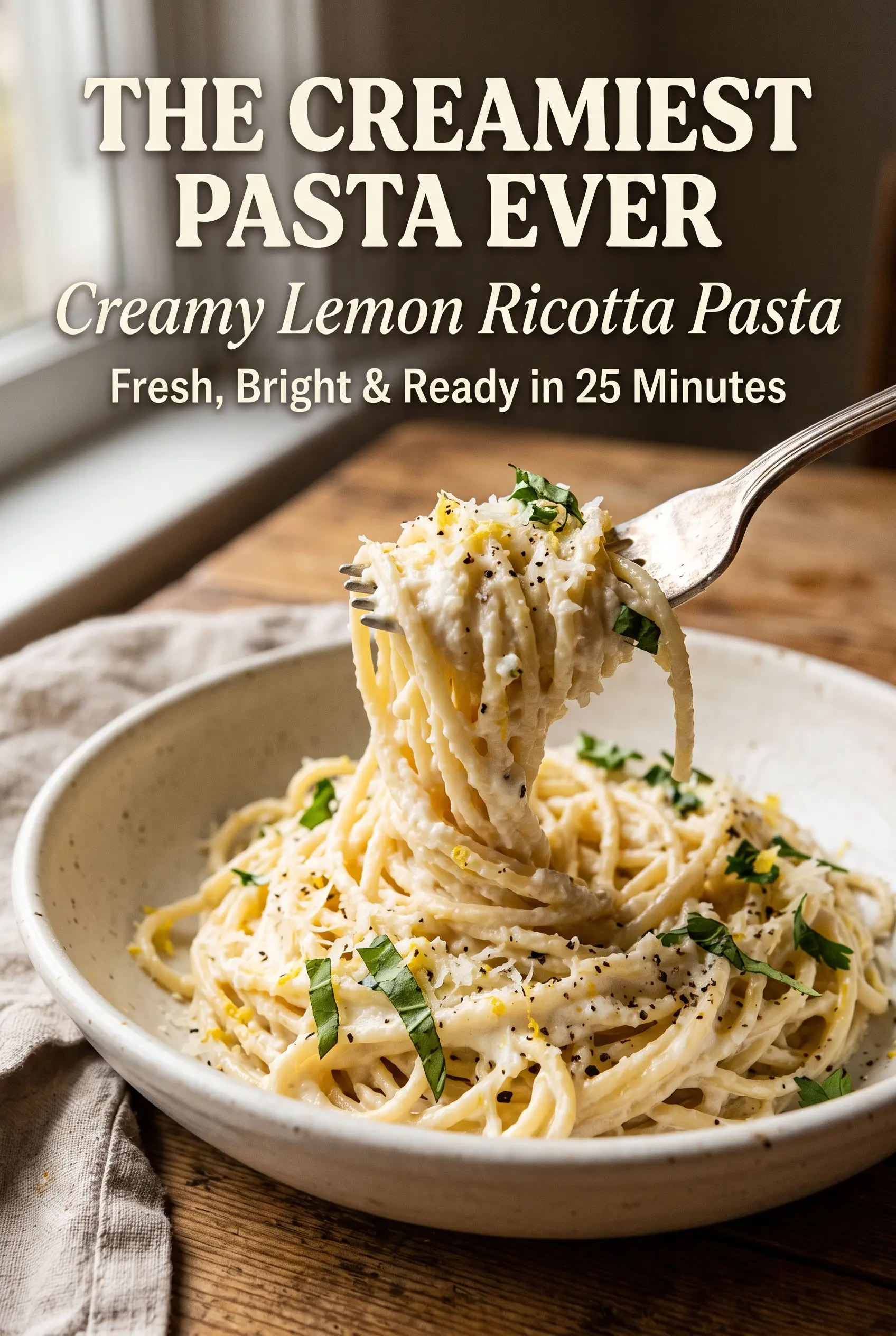
- Garnish with additional Parmesan, lemon zest, and cracked black pepper. Serve immediately with lemon wedges for brightness.
Notes
Pro tip: add pasta water gradually—start with a splash, then increase until the sauce turns glossy and coats the fettuccine. Refrigerate leftovers in an airtight container for up to 3 days; rewarm gently with a splash of water to loosen the sauce. Freezing isn’t recommended because ricotta-based sauces can grain when thawed. For a dietary swap, use lactose-free ricotta and lactose-free Parmesan (or a lactose-free hard cheese) to keep the same creamy texture.