Ingredients
Equipment
Method
Prep and dredge the beef
- Pat the beef cubes completely dry with paper towels, then season all over with salt, black pepper, and smoked paprika and toss lightly in flour to coat.
- Spread the coated beef in a single layer so the surface stays dry for better browning during the sear.
Sear and build the base
- Heat the olive oil in a large Dutch oven over medium-high heat until shimmering.
- Working in batches (don’t crowd the pan), sear the beef on all sides until deeply browned, about 3–4 minutes per side, then remove and set aside.
- Reduce heat to medium, add the onion and celery, and cook, stirring, for 3–4 minutes until softened and picking up the browned bits from the bottom.
- Add the garlic and cook for 1 minute more until fragrant, stirring to prevent scorching.
- Stir in the tomato paste and cook for 2 minutes until it darkens slightly and smells rich.
- Pour in the red wine and scrape up any remaining browned bits from the bottom, then let it bubble for 2 minutes.
Simmer until tender
- Return the beef to the pot and stir in the beef broth, Worcestershire sauce, fresh thyme sprigs, bay leaves, and dried rosemary to combine.
- Bring the stew to a gentle boil, then reduce heat to low, cover, and simmer for 1 hour 15 minutes, until the beef is starting to become tender.
Finish with vegetables and peas
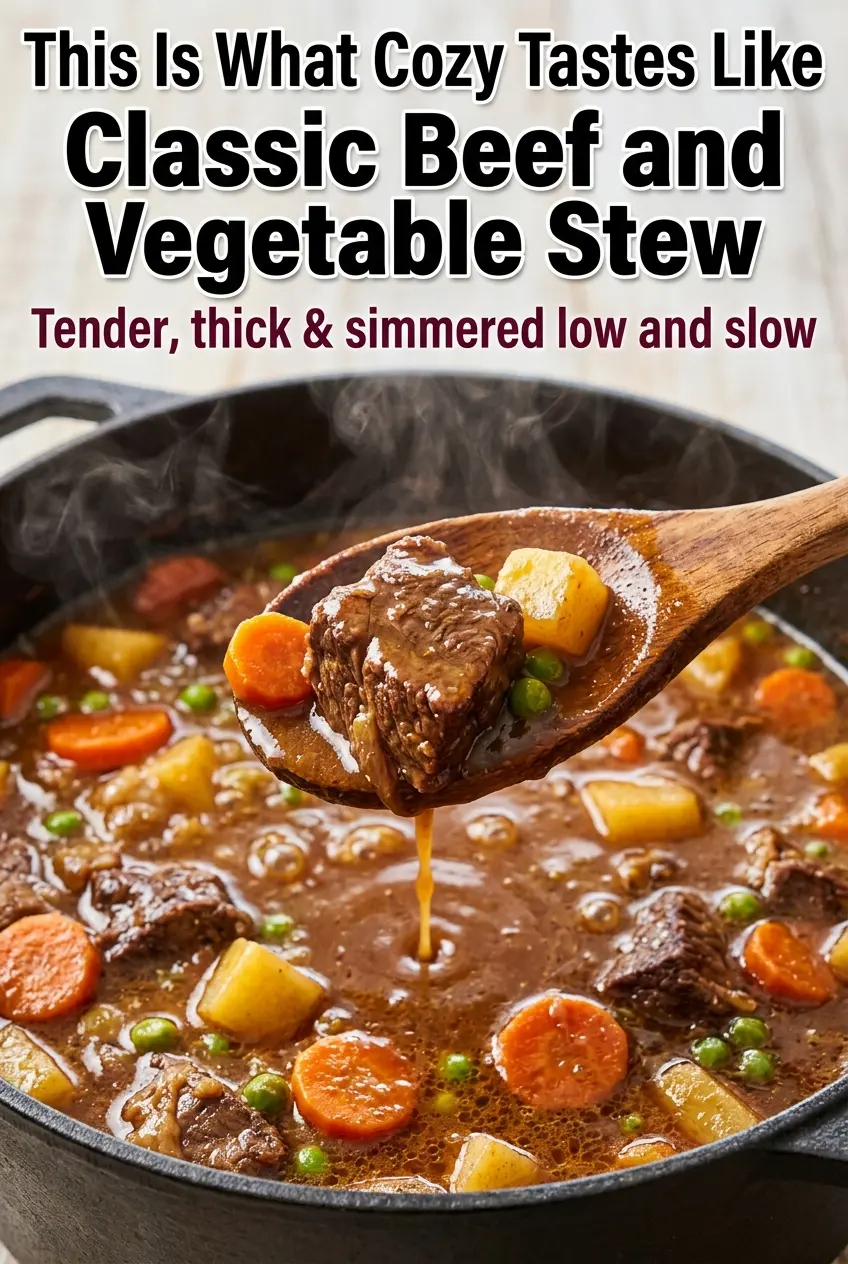
- Add the potatoes and carrots, stir gently, replace the lid, and continue simmering for 30–35 more minutes until the vegetables are fork-tender and the broth has thickened.
- Remove the thyme sprigs and bay leaves, then stir in the frozen green peas and cook for 3 minutes.
- Taste and adjust salt and black pepper, then serve hot in deep bowls.
Notes
For the best sear and thicker stew, keep the pot at true low simmer once the lid is on—furious boiling can make the meat tough. Refrigerate leftovers in an airtight container for up to 4 days; reheat gently on the stovetop or microwave. Freezing is yes: cool completely, freeze up to 3 months, and thaw overnight in the fridge; add a splash of broth while reheating if the texture tightens. For a lower-sodium swap, use low-sodium beef broth and reduce added salt at the end to taste.